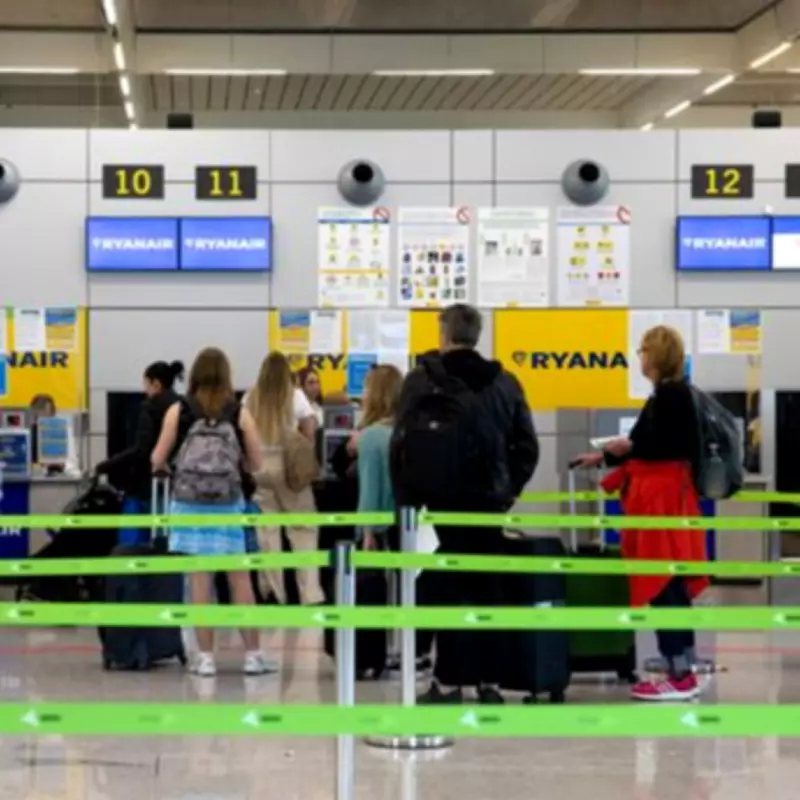
Significant delays are plaguing Spanish airports, with passengers reporting waiting times of up to three hours at border controls. The disruptions are primarily attributed to the full implementation of the European Union's new Entry/Exit System (EES), which officially launched on April 10, 2026, following a phased rollout that began in October 2025.
Non-EU Travellers Face the Longest Waits
According to Spanish travel association Aviba, one specific group is experiencing the most severe impacts: non-European Union nationals. The EES replaces manual passport stamping with a digital system that records entries, exits, and refusals for non-EU citizens on short stays. This process involves capturing facial images, fingerprints, and personal data from travel documents, which inherently requires more time per passenger.
Pedro Fiol, president of the association, highlighted the situation at Balearic airports, particularly Son Sant Joan in Mallorca. "The implementation of the new European Border and Security System is already beginning to be felt," he stated, noting that a hybrid operational model is still in use. "At certain times, it is causing some slowdowns in the controls, especially for non-EU passengers."

Warnings of Summer Chaos and Inconsistent Operations
Fiol warned that this represents a structural change in European border management, where biometric registration is supplanting traditional methods. He described the current experience as inconsistent, with some days proceeding relatively smoothly while others see delays exceeding two hours from landing to baggage collection, occasionally nearing three hours.
Spanish media, including Ultima Hora, reports similar extensive waits at Palma airport, with parallel issues emerging in other European nations like France, Greece, and Italy. In response, Aviba is urgently calling for measures to prevent potential chaos during the upcoming summer peak travel season.
Official Responses and Contradictory Claims
The National Police in Spain have acknowledged the delays, though they claim no evidence of prolonged hold-ups. Sources indicate that additional staff have been deployed during peak hours to mitigate congestion at checkpoints.
However, the Airports Council International (ACI) European division reports that travellers in France, Germany, Belgium, Italy, Spain, and Greece are facing waits of several hours. Director Olivier Jankovec told the Financial Times, "This situation, in the coming weeks and certainly over the peak summer months, is going to be simply unmanageable."
Contrastingly, a European Commission spokesperson asserted that the system is working very well in most member states, with an average registration time of 70 seconds per passenger. The ACI, however, contends that the process can take up to five minutes. The Commission acknowledged technical issues in a few countries but stated they are being addressed, emphasising that implementation on the ground is the responsibility of individual member states.
Practical Advice for Travellers
Luke Fitzpatrick from independent travel agency Perfect Getaways advises passengers to plan ahead to navigate the new system smoothly. "It's about being as prepared as you can be," he told BBC Radio Merseyside, recommending arrival at the airport at least three hours early. He noted particular challenges for package holiday travellers due to coordinated transfers.
Fiol added that the delays are forcing a restructuring of transfer and pick-up operations at destinations to better coordinate timings and avoid additional downtime. Travel agencies express concern that without proper resource allocation at high-pressure airports like those in the Balearic Islands, significant queues and negative visitor experiences are likely.
What British Tourists Need to Know
For UK passport holders travelling to Schengen area countries for short stays, the gov.uk website clarifies that EES registration may be required upon arrival, involving biometric details like fingerprints and a photo. No pre-arrival action or cost is involved, but passengers should anticipate longer border waits than usual.

The Schengen area includes 29 European countries such as Austria, Belgium, France, Germany, Greece, Italy, Spain, and Switzerland. As the system beds in, travellers are urged to stay informed and allow extra time for their journeys to accommodate these new border procedures.