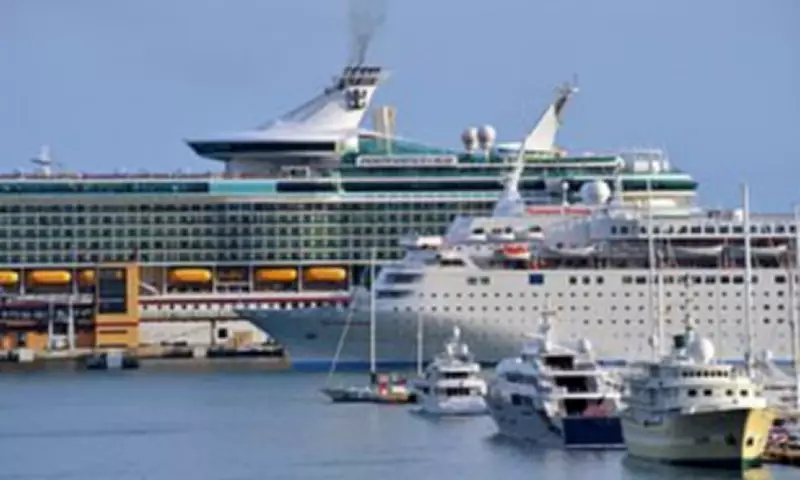
Palma Imposes Strict New Limits on Cruise Ship Passengers to Protect Historic Centre
A leading holiday destination is preparing to enforce significant restrictions on the number of cruise ship passengers arriving at its port. Palma, the capital city of Mallorca in Spain's Balearic Islands, will see the daily average number of permitted berths drop from 8,500 to 7,500 during the peak summer months of June through September, effective from 2027 until 2029. For the remainder of the year, the limit will stay at the current level of 8,500 berths per day.
Agreement Reached Between Authorities and Cruise Lines
This decisive action forms part of a formal agreement negotiated between the Balearic Government, Palma City Council, and twenty major cruise lines. The primary objective is to safeguard the city, with particular emphasis on preserving its historic centre from the detrimental effects of excessive tourism. According to reports from the Majorca Daily Bulletin, the agreement also guarantees a strict daily cap of no more than three cruise ships docking in Palma's port. Furthermore, only one vessel each day will be authorised to carry over 5,000 passengers.
Response to Widespread Resident Protests Against Overtourism
The new regulations arrive in direct response to escalating issues with overtourism across the region. In July of last year, tens of thousands of local residents marched through the streets of Palma, brandishing placards with slogans such as 'Your luxury, our misery'. Protestors blocked roads to demonstrate against soaring rental prices, severe overcrowding, and chronic congestion caused by cruise ships. Demonstrators explicitly demanded caps on cruise arrivals, mirroring similar grassroots movements that have emerged throughout the Balearic and Canary Islands.

European Trend of Cruise Ship Restrictions Gains Momentum
Palma is certainly not the first European hotspot to implement such limitations on maritime tourism. Since last summer, the French city of Cannes has enforced a ban on giant cruise ships carrying more than 1,000 passengers, as confirmed by city councillors. This initiative, aimed at combating overtourism and protecting the delicate Cannes coastline, aligns with a growing trend across the continent.
The neighbouring city of Nice introduced its own restrictions on cruise ships, which officially commenced on July 1, 2025. Large cruise vessels are now prohibited from docking in Nice, a policy designed to deter what local officials term 'low-cost clientele' from holidaying in the glamorous French Riviera town. The city's mayor, Christian Estrosi, a vocal critic of the cruise industry, declared that 'floating buildings' would not be permitted to dock in the port or in the adjacent Villefranche-sur-Mer.
Similarly, Venice pioneered this approach by banning large liners in 2021, a move subsequently followed by Amsterdam and Barcelona in 2023. Cruise operators have consistently criticised such restrictions, arguing they are damaging for both destinations and passengers, potentially harming local economies and limiting travel options.