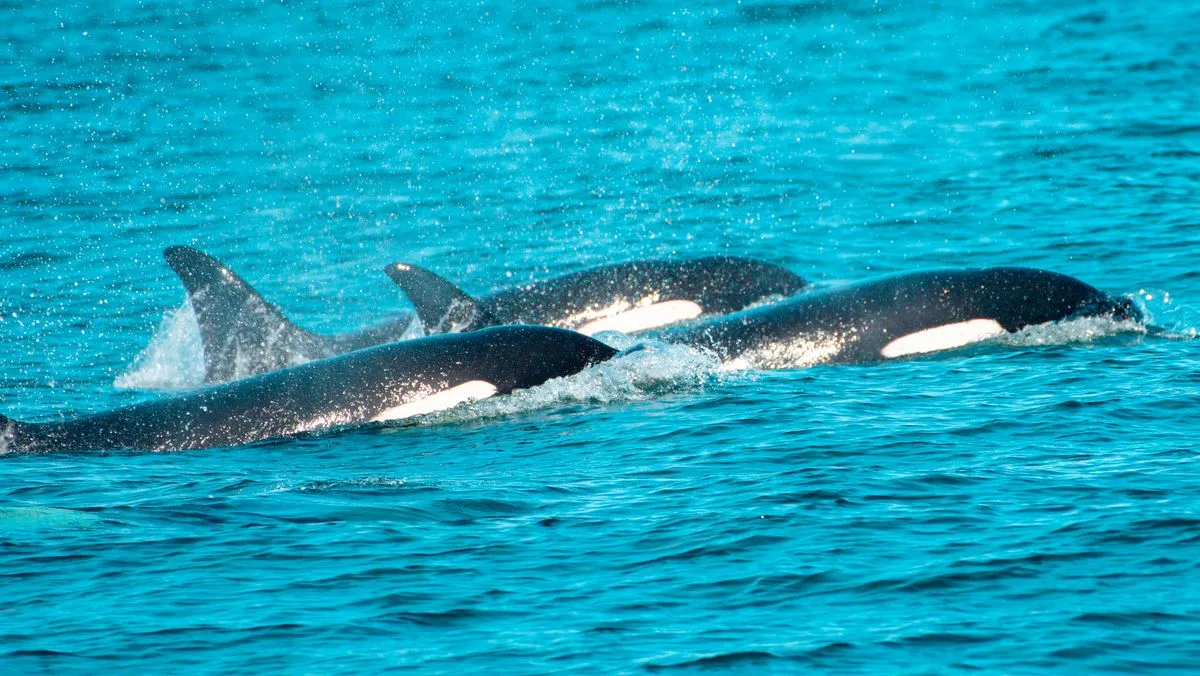
Boat tour operators report that sightings of orca whales and dolphins off the UK coast are giving a significant boost to tourism and staycation holidays. The latest sighting occurred near the Farne Islands off Northumberland, with killer whales spotted three times already in 2026, including this week during a public holiday.
Andrew Douglas, 54, from Serenity Farne Island Boat Tours, described the appearance of the marine mammals as 'wonderful', noting that they were seen on one of the busiest days of the year for boat trips. He attributed the increasing regularity of sightings to a government ban on sand eel fishing, which has brought more food for orcas, dolphins, and porpoises.
Douglas told the Mirror: 'The Government has put a ban on sand eel fishing as the Dutch were coming across in numbers. They were taking millions of tonnes a day. But the ban is bringing fish back to the area, so dolphins, orcas, and porpoises are following the food source.' He added that it was the best whale and dolphin watching he had experienced in 30 years working off the North East coast.
Last year, scientists identified a school of 'Geordie' dolphins off the coast of Northumberland. Using hydrophones to record their distinctive whistles, researchers discovered that the bottlenose dolphins are resident rather than transient. The microphones are anchored off Druridge Bay, Newbiggin-by-the-Sea, and St Mary's Island near Whitley Bay.
Martin Kitching, coordinator of the North East Cetacean Project, said it was unclear if the same pod was spotted off Beadnell in April, but he believed several groups of killer whales may be visiting the Northumberland coast. 'We think these are probably groups of animals that spend most of their time around Shetland and Orkney, and occasionally Iceland,' he said. 'What is clear is there is a genuine change in their distribution which is great to see.'