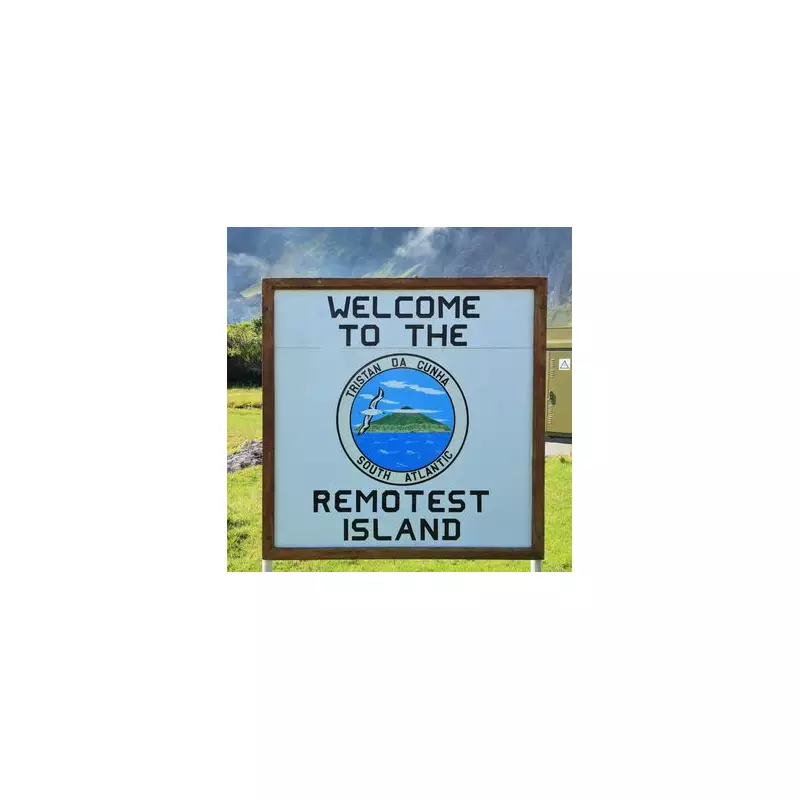
A British mother living on what is often called the world's most remote inhabited island has opened up about the stark realities of her family's life, particularly when hunger strikes and the community's sole shop is shut for the season.
Life on the Edge of the World
Kelly Green, 35, originally from East Sussex, has called the volcanic island of Tristan da Cunha home for over a decade. She moved there after visiting her parents, who had relocated due to her father's work. It was on the island that she met her husband, Shane, and where the couple are now raising their two children, who attend the settlement's only school.
The island, a British Overseas Territory, is accessible only by a six-day boat journey from Cape Town, South Africa. As of October 2018, it has a permanent population of just 250 people, all of whom hold British Overseas Territories citizenship. Kelly now runs the island's tourism office and documents their unique existence on social media.

The Winter Shutdown: A Test of Self-Sufficiency
The most significant logistical challenge arrives each winter. The island's single shop, along with the local government, closes from December 19th until January 12th. This means residents must plan meticulously, stocking up on essentials like toilet roll and any store-bought goods they might need for nearly a month.
"So living on the world's most uninhabited island, means that if you woke up one morning and fancied fish for supper, you can't just go to the local shop and buy it," Kelly explained in a TikTok video. Her solution, and that of her family, involves three direct actions.
Fishing, Foraging, and Farming
First, if the freezer is empty of fish, the family spends the day casting their lines into the Atlantic Ocean to catch their dinner. Second, they dig up fresh potatoes from their plots. "It's a fantastic day out," Kelly remarked, reframing the necessity as a family adventure.
Their diet is largely self-provided, supplemented by the annual visits of just two supply ships, which call nine times a year to export island produce like lobster and bring in fuel. Alongside fish and potatoes, they eat beef, mutton, lobster, and home-grown vegetables and fruit. While chicken and pork are sometimes available in the shop, local chickens are primarily kept for eggs.
Dogs as Indispensable Partners
Life on Tristan da Cunha relies heavily on community and working animals. Kelly highlighted the critical role of sheepdogs, which are not mere pets but essential workers. Since dogs are not bred on the island, they are carefully imported from Cape Town with health certificates. These hardy animals herd sheep across the rugged landscape, round up livestock, and provide loyal companionship to families in the Settlement, playing a practical role from the Potato Patches to the shoreline.
The tourism office Kelly manages notes that the island's first settlers were an extraordinary breed of people, ready to live at the margins. The harsh climate, heavy rains, high winds, rugged terrain, and lack of a natural harbour deterred early explorers, but this small community has not only settled but thrived in its profound isolation, maintaining its historic link to Britain since 1816.