
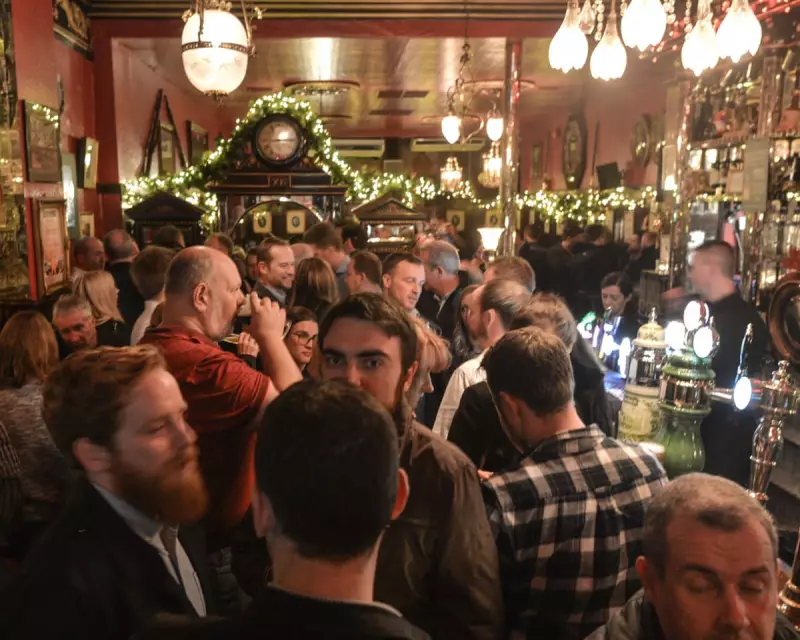
The Slow Demise of Ireland's Cultural Heartbeat
New academic research has delivered a sobering verdict on the future of Irish pubs, revealing that these cherished institutions are facing an unprecedented crisis. Despite their iconic status in global culture, appearing in films, literature and drawing tourists worldwide, pubs across Ireland are closing at an alarming rate.
Two significant new publications - The Irish Pub: Invention and Reinvention and The Dublin Pub: A Social and Cultural History - have subjected the traditional Irish pub to rigorous academic scrutiny. Drawing from history, sociology, architecture and cultural studies, these works celebrate the pub's importance while delivering worrying conclusions about its survival.
Vanishing Acts: The Stark Numbers Behind the Crisis
The statistics make for grim reading. Since 2005, Ireland has lost more than 2,100 pubs, representing a quarter of all drinking establishments nationwide. This translates to an average of 112 closures every year, with some villages witnessing the complete disappearance of their local pubs.
Donal Fallon, author of The Dublin Pub, describes this as a pivotal moment of transition. "Every Dubliner should drive through rural towns to see what's happening," he urges. "The pub has been knocked off its perch."
Urban areas aren't immune either. Perry Share, co-editor of The Irish Pub and head of social science at Atlantic Technological University, notes that modern housing developments frequently omit pubs entirely. "Planners are not insisting that pubs be put in. That could create problems in future in terms of loneliness and community cohesion," he warns.
Beyond the Pint: Understanding What's Being Lost
The crisis extends beyond mere business closures. Academics argue that pubs serve as vital social spaces that foster community interaction across class and gender divides. "In the pub it's OK to express emotion in a certain way and to grab someone and hug them," explains Share, highlighting the unique social function these establishments serve.
Despite the decline, pubs remain deeply embedded in Irish life and culture. Just over half of Ireland's population lives within 300 metres of one of the country's 7,000 remaining pubs. Their cultural significance continues to be reflected in contemporary Irish novels by authors like Sally Rooney and Paul Murray, as well as television dramas and Hollywood depictions.
Fallon criticises the modern tendency to rank and venerate certain pubs based on aesthetics rather than community value. "Something doesn't have to be the best to be important," he argues. "It has to be part of its community. If you've had the worst day in your life the nearest pub is probably the best pub."
The factors driving this decline are complex and multifaceted. Researchers point to high alcohol taxes, stricter drink-driving laws, rising property prices and decreasing alcohol consumption as primary contributors. While this trend mirrors the closure of traditional bars across Britain and Europe, the stakes are particularly high for Ireland given the pub's central role in national identity and social cohesion.
As Share poignantly observes, proposed alternatives like coffee shops cannot replicate the unique social alchemy of the traditional pub: "No one says they had great craic in the coffee shop."




