Australian travellers are facing a significant financial squeeze as hidden costs mount before they even board their flights, according to a new report. The New Australian Travel Index, conducted by travel company Send My Bag, has found that the average Aussie is being hit with an extra $172 in unexpected expenses prior to departure.
The Personal Toll of Rising Travel Costs
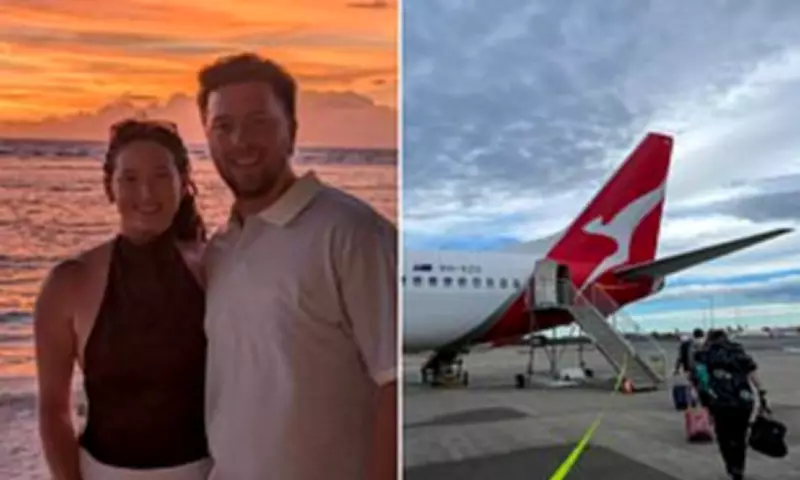
Melbourne couple Eoin Kelly and Rachel experienced this firsthand during their Christmas trip to Bali last year. Despite having already paid $1,200 each for return airfares, they were forced to rustle up an additional $405 before leaving Australian soil.
Their unexpected expenses included $80 for an Uber to Melbourne Airport, a $175 on-the-spot fee for failing to check in one of their bags, and another $150 on food and drinks. The financial burden didn't end there - when they landed in Bali, Ms Kelly's suitcase emerged from the baggage carousel with a broken wheel, requiring a $100 replacement. This brought their total additional expenses to $505 by the trip's conclusion.

Broader Trends in Travel Expenses
The Send My Bag report, which surveyed 2,000 Australians at the start of the Iran war, provides concerning insights into the broader travel landscape. The data shows that $142.95 is typically spent on transport to the airport and parking, while $29.80 goes toward food and drinks before flights.
Mr Kelly expressed his frustration to The Daily Telegraph, stating that travel has become 'unsustainable for the average person' as Australians grapple with higher costs across all aspects of life, including fuel, rent, and weekly shopping. 'I'm edging towards 30 now and have to start thinking about things like buying a house in this market, which is near impossible,' he added, highlighting how travel expenses compound broader financial pressures.
More Travellers Share Their Experiences
Sydney woman Oksana Koriakova reported similar challenges during a business trip to Melbourne. She spent $690 on a return flight but faced an additional $165 in costs before boarding. This included $70 for an Uber to the airport, $20 for food and drinks, and what she described as an 'unfair' $75 baggage fee at the gate.
'The issue wasn't that my suitcase was over 7kg. On its own, it was within the limit. What I didn't realise is that Jetstar combines everything you carry, including your handbag and laptop, into that same 7kg allowance,' Ms Koriakova explained. She noted that 'the fees, the gate-side scrutiny, and the added costs before even boarding completely overshadowed what should have been a simple one-night business trip.'
Industry Perspectives on Rising Costs
Send My Bag founder Adam Ewart warned that increasing fuel costs could lead airlines to further tighten baggage allowances or raise fees. 'Airfares are rising, baggage rules are becoming more complex, and travellers are trying to save money upfront by booking cheaper tickets that often come with stricter limits,' he stated.
Ewart added, 'When margins are tight, airlines look for other ways to recover costs, and that often means stricter baggage enforcement or reduced allowances. The 'cheap flight' is where people are getting caught out the most.'
Changing Travel Patterns Among Australians
The report also revealed significant shifts in travel behavior due to financial constraints. Almost half (48 percent) of cash-strapped Australians are opting to travel overseas less frequently this year, with 34 percent planning to book domestic trips instead as a cost-saving measure.
Airline Responses to Economic Pressures
These findings come amid recent announcements from major Australian airlines regarding capacity adjustments. Both Qantas and Virgin Australia have confirmed cuts to domestic flights following substantial increases in fuel prices.
Virgin Australia will reduce its capacity by one percent over the next four months, while Qantas will temporarily suspend five percent of its domestic flights. Virgin Australia notes that fuel costs constitute approximately 21 percent of their total expenses, with the airline using about 3.4 million barrels of oil in the first half of 2026.

Jet fuel prices have more than doubled since the Iran war began on February 28, and Virgin Australia has predicted that increased fuel costs could reach $40 million above previous estimates. This economic pressure on airlines is likely to translate into continued challenges for travellers navigating an increasingly expensive travel landscape.