
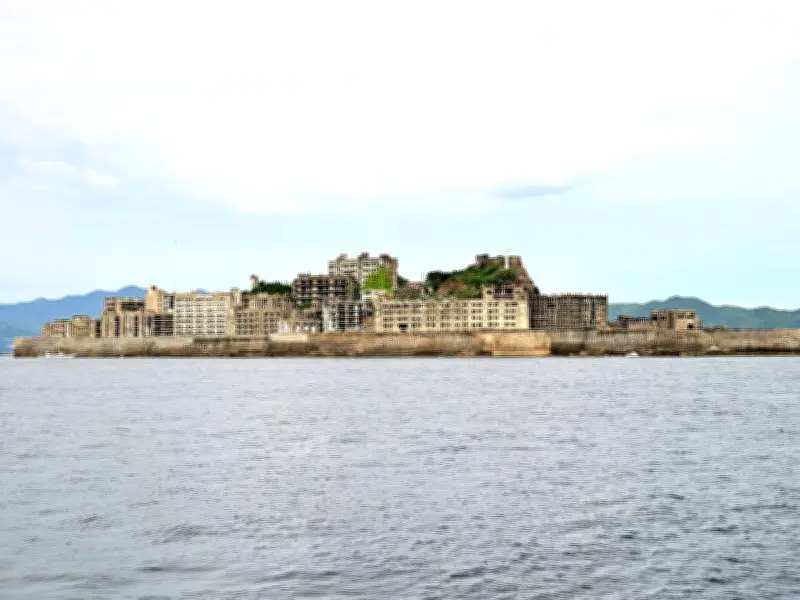
In the late 19th century, this isolated Japanese island was a bustling town fuelled by its coal-mining industry. Today, it's gradually being swallowed by the sea and reclaimed by nature, but given the island's sinister past, perhaps it's for the best that this once-thriving community has fallen into silence.
The Rise and Fall of Hashima Island
Hashima Island sits roughly 15 kilometres off Nagasaki, and was formerly a mining settlement. At its height in the late 1950s, the island housed more than 5,000 residents who lived in its towering apartment blocks — the ruins of which remain visible today.
Initially renowned for its undersea coal mines, the island also harbours a deeply troubling history.
The island was purchased by Mitsubishi in the late 19th century, and in 1916, work commenced on apartment blocks to house workers. There was a school, a kindergarten, a community centre and a hospital. For leisure, residents could head to the cinema or visit the numerous shops.
Forced Labour During World War II
Following the end of World War 2, Chinese and Korean prisoners of war were forced to labour on the island, either erecting buildings or toiling in the mines. These prisoners endured appalling and perilous conditions under Mitsubishi's control.
Many perished from exhaustion and starvation — the precise death toll on the island ranges from 137 to as many as 1,300. The people who laboured here dubbed the island "Jail Island" or even "Hell Island" — a stark contrast to the tranquil mining town it seemed to be.
Abandonment and UNESCO Controversy
By the 1970s, coal reserves had largely run dry and the industry was in terminal decline. This prompted many residents to abandon the island, and by the mid-70s, the mine had shut its doors for good, leaving the island completely deserted.
In 2009, Japan put forward a request for the island to be added to the UNESCO World Heritage List. The move drew sharp criticism from the governments of North and South Korea and China, with Seoul arguing it would "violate the dignity of the survivors of forced labour".
Eventually, South Korea and Japan struck a deal allowing the island to be included on the list, on the condition that Japan provided information acknowledging the use of forced labour. However, in 2021, it emerged that Japan had failed to honour its side of the agreement, having not displayed adequate information regarding the use of forced labour. The museum in Nagasaki, which documents the island's history, reportedly contains no testimonies from Koreans about forced labour or discrimination, and the sole Korean testimony on display actually denies that forced labour was ever used.




