A gentle breeze stirred the surface of Innominate Tarn, creating ripples that danced across the water as bogbean swayed at its edges. From a rocky vantage point on Haystacks, the view stretched out over the shimmering lakes of Buttermere and Crummock Water, with the formidable peaks of Pillar and Great Gable standing sentinel to the south. In this moment of Lakeland tranquillity, broken only by the call of ravens, it was impossible not to thank the two men, decades apart, who made this experience possible: the legendary fell-walker Alfred Wainwright, and the former Prime Minister, Rishi Sunak.
A Path Transformed: From Personal Sketch to National Treasure
Over fifty years ago, Alfred Wainwright, the revered chronicler of the fells, first drew his ambitious line across a map of northern England. His vision connected St Bees Head on the Irish Sea to Robin Hood's Bay on the North Sea, a 190-mile journey traversing the Lake District, the Yorkshire Dales, and the North York Moors national parks. Despite becoming one of Britain's most popular multi-day hikes, the route lacked official status, was absent from Ordnance Survey maps, and sections weren't on public rights of way.
This changed thanks to a campaign championed by Rishi Sunak, whose Richmond constituency covers the central section of the walk. In 2022, Natural England announced the path's designation as a National Trail, backed by £5.6 million in funding with work set for completion by early 2026. The project, managed by officers like Angela Hobson in the Dales and Bernie McLinden in the North York Moors, aims to preserve Wainwright's legacy for the future.

On the Ground: What the Upgrade Means for Walkers
The practical benefits of the new National Trail status are already becoming evident along the route. While the high fells of the Lake District will retain their un-signposted wild character, crucial infrastructure work is underway elsewhere. On the initial descent from Dent, new footbridges along Nannycatch Beck now bear subtle Coast to Coast markers. In Borrowdale, the charmingly named Willygrass Bridge over the River Derwent has been renewed.
The difference is particularly striking upon entering the Yorkshire Dales. On the peatlands approaching Nine Standards Rigg, a long, snaking line of heavy-duty stepping stones now protects the fragile ecosystem while keeping walkers' boots dry. Similarly, on White Mossy Hill, reclaimed mill flagstones have been laid to prevent the path from becoming a vast quagmire, a solution that safeguards the environment despite some debate about aesthetics.
"I took my daughter up there and told her, 'You'll be able to walk this with your children, and they with theirs,'" said Angela Hobson, beaming with pride at the lasting improvement.
Beyond the Hike: Environmental Protection and Community Benefit
The upgrades extend beyond mere convenience for the approximately 6,000 through-hikers who contribute an estimated £7 million to local economies annually. The work is fundamentally about conservation. The new stone paths in areas like Little Beck Wood in the North York Moors, laboriously laid by volunteers, replace slippery boardwalks and minimise erosion in beautiful, fragile woodland.
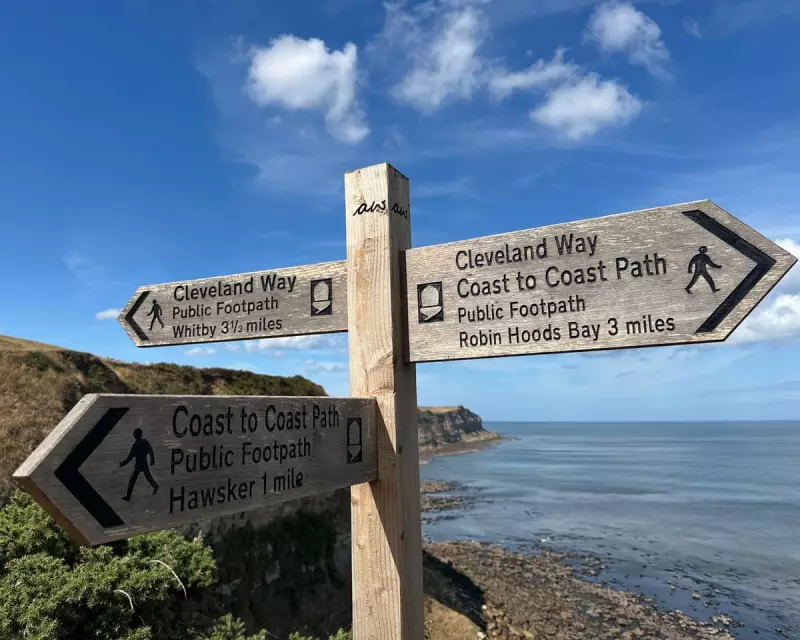
Bernie McLinden, the project officer for the North York Moors section, emphasises that the improvements—from new signage to replacing stiles with gates—are designed to benefit local residents as much as long-distance walkers. The realignment of paths around historic lead-mining sites in Swaledale also helps manage footfall and protect these cultural relics.
The culmination of the journey at Robin Hood's Bay now feels like the conclusion of a walk that has been thoughtfully curated and secured. The investment ensures that the sense of adventure Wainwright first mapped out will be accessible, sustainable, and clearly waymarked with the distinctive National Trail acorn for generations to come. It is a fitting tribute to the scribe of the fells, and a tangible legacy of a government-backed initiative to protect Britain's cherished landscapes.