Celebrated Chef Peter Gilmore Closes Quay Restaurant After 25 Years
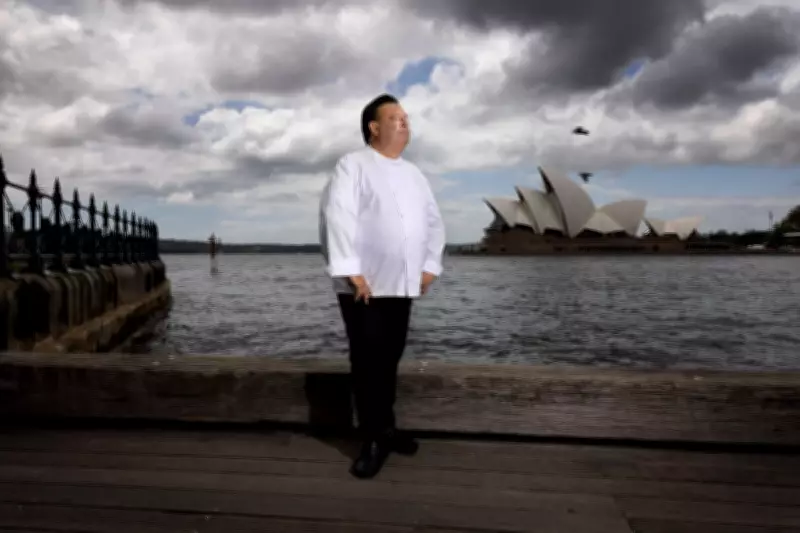
On a sunny Thursday at Campbells Cove in Sydney, Peter Gilmore stands in pristine chef's whites, a stone's throw from Quay, the fine-dining restaurant he has led for the past 25 years. The celebrated chef is closing the doors of Quay and Bennelong this year, marking the end of an era for Sydney's culinary scene.
The Iconic Snow Egg and MasterChef Fame
Gilmore is easily recognised on the streets, often due to his appearance on MasterChef. The snow egg, a soft meringue orb filled with custard apple ice-cream and draped in maltose tuile, had a starring role in the 2010 finale of the reality TV cooking show. The episode attracted a peak of 4.35 million viewers, making it the most watched non-sporting event in Australian TV history at the time.
"I see myself as quite a sort of humble person," says Gilmore. "[But] there is a sense of pride in being acknowledged as doing something good." For him, the snow egg represents a snowballing accomplishment rather than a limitation on his career.

Factors Behind the Closure
Quay will close on 14 February after 27 years of operation, following a $4 million renovation in 2018 and numerous national and international awards. Gilmore cites a "triple whammy" of factors: a decline in international diners, rising wages, and the cost-of-living crisis. The degustation at Quay costs $365 per person.
"We weren't at the stage where we had to close," Gilmore explains. "[But] we were breaking even rather than actually making a profit for the last three years. So, you know, you could say that after 24 years, all good things come to an end."
Gilmore's Culinary Journey and Legacy
Growing up in Ryde, in suburban north-west Sydney, Gilmore credits his mother, a keen home cook, for sparking his interest in food. By age 10, he was taking over the barbecue from his father. His multicultural upbringing, with Italian, Thai, and Chinese dishes at the family table, shaped his palate from an early age.
At 16, he began his apprenticeship at Manor House in Balmain, a French-influenced fine-dining restaurant. By 32, after a formative time in the UK, he became the head chef at Quay, tasked with making the menu "more modern and more Australian." This led to innovative dishes like the "sea pearls," featuring delicate spheres of greenlip abalone in dashi jelly.
Gilmore estimates that 600 chefs have worked in Quay's kitchen under his supervision. "Being able to train, inspire and influence all those chefs and ... where they go and how many people they influence, I'm really proud of that," he says.
Pioneering the Farmer-to-Chef Model
Gilmore is also an Australian pioneer of the farmer-to-chef model, working closely with small-scale producers to grow rare and heirloom vegetables. In Quay's early years, he would peruse seed catalogues and grow test produce in his home garden before commissioning commercial growers. His first attempt to source pea flowers was met with resistance from a farmer who dismissed the idea as impractical.
The Final Weeks and Future Prospects
When Quay announced its closure in December last year, bookings filled within 48 hours, and there are nearly 1,000 names on the waitlist. For its final weeks, Quay is the hottest ticket in town. The restaurant has hosted notable guests, including Vladimir Putin, who brought a personal taster to avoid poisoning.
Gilmore is now mulling over "interesting propositions" for his future. He and his wife, Kath, plan to move to Tasmania permanently, where he owns a farm. While it might sound like a retirement plan, Gilmore is open to opening something new in Tasmania if the conditions are right.
Reflections on Australia's Dining Landscape
Gilmore reflects on the challenges facing Australia's restaurant industry. Before Covid, about 40% of Quay's diners were international visitors, and these numbers haven't fully recovered. He notes that the Michelin Guide, which recently expanded to New Zealand, could have helped but wasn't supported by Australian governments.
"It just seems like the state governments and federal governments aren't willing to back the sector," he says. Despite Australia's rich produce and innovative chefs, the economic environment is causing restaurants to play it safe, risking a homogenised dining landscape.

As Gilmore ambles along the boardwalk, the future remains uncertain. There's no crystal ball or egg to predict what comes next, but his legacy in Sydney's culinary world is firmly established.