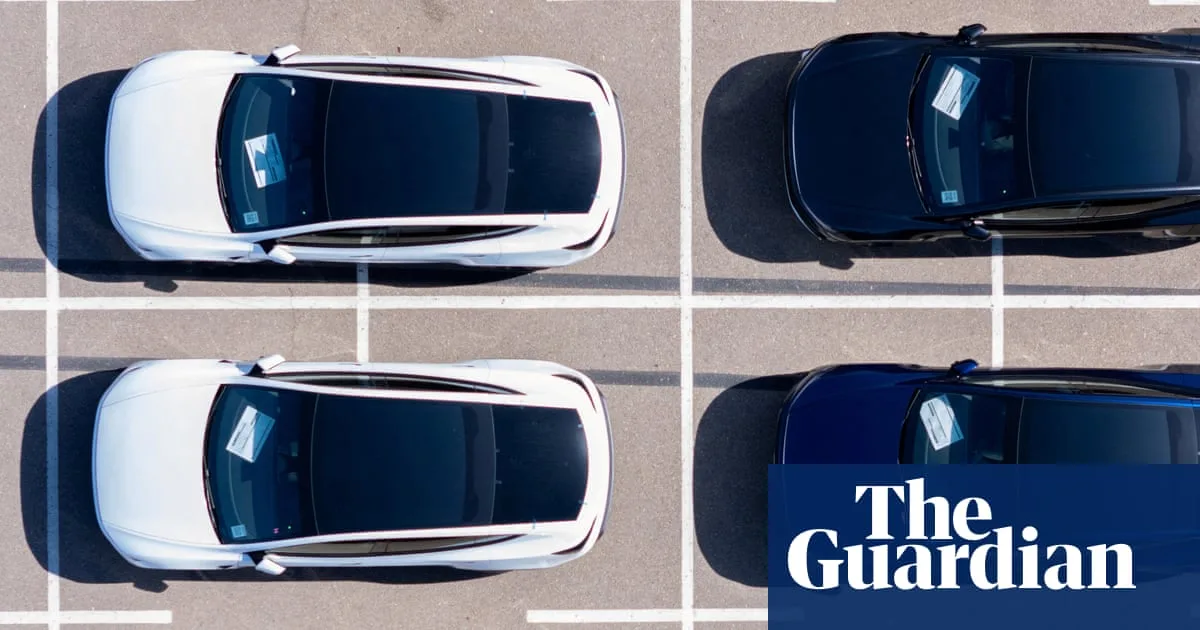
Tesla's new car registrations in the European Union fell by a third in November compared with the same month last year, as Chinese carmakers continued to gain ground. The Elon Musk-led brand sold 12,130 new cars across the EU last month, down from 18,430 in November 2024, according to data from the European Automobile Manufacturers' Association (Acea). Tesla's market share shrank from 2.1% to 1.4%.
Chinese carmaker BYD recorded the fastest sales growth, with registrations across Europe almost tripling year on year to 42,500 in the first 11 months. State-owned SAIC, owner of the MG brand, saw sales rise 26% to 217,000. Both brands produce battery electric cars as well as hybrids, which combine a smaller battery with a petrol or diesel engine.
Hybrid car sales, including plug-in hybrids, accounted for 44% of all EU sales, as European carmakers pushed more profitable hybrid models. This coincided with lobbying efforts to weaken electric car sales targets. Last week, the EU confirmed it would allow 10% of car sales to have internal combustion engines after 2035.
Despite the lobbying, battery electric cars accounted for 18.8% of the European market in the first 11 months, up from 15% a year earlier. Tesla remains the only pure electric brand tracked by Acea.
Tesla's sales slowdown began late last year, around the time Musk started intervening in European politics, backing Germany's far-right Alternative für Deutschland and appearing at events for British far-right groups. He also had a prominent alliance with Donald Trump, which later soured over electric car subsidy changes. Despite the slump, Musk's net worth is estimated at $647bn, with SpaceX and Tesla shares as major components.