The High Court has delivered a decisive blow to supermarket giant Morrisons, ordering it to pay a hefty £17 million tax bill following a long-running dispute with HM Revenue and Customs (HMRC) over the VAT status of its rotisserie chickens.
The Core of the 'Pasty Tax' Dispute
The legal battle stems from the controversial 2012 VAT reforms, often dubbed the "pasty tax," introduced by then-Chancellor George Osborne. The changes imposed the standard 20% rate on all hot takeaway food sold by bakeries and supermarkets, including items like Cornish pasties and sausage rolls. After public outcry, the Treasury revised the rules, stating that VAT would apply to food kept hot in a cabinet, but exempting products sold from a rack that were either cold or "incidentally hot" but intended to be eaten cold.
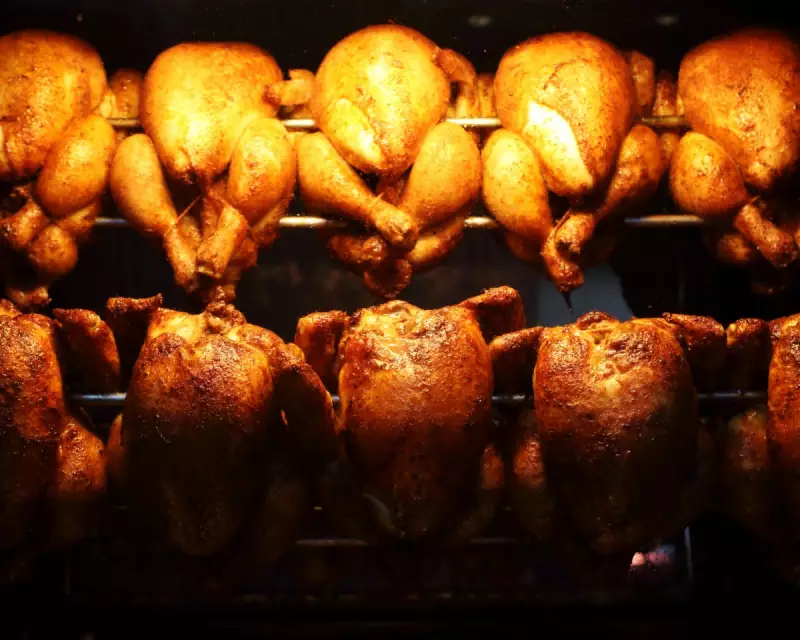
Morrisons mounted a defence centred on customer behaviour, arguing its whole cooked chickens should be zero-rated for VAT. The supermarket's key claim was that 80% of customers purchased the chickens to eat cold or to reheat later for a meal. It contended the products were therefore not supplied as "hot food" for immediate consumption.

Court Findings and Evidence
However, the court examined detailed evidence that undermined Morrisons' position. It was noted that the chickens were sold in foil-lined bags labelled "caution: hot product." Witness testimony revealed that chickens were taken off sale and discarded if unsold after two hours. Crucially, measurements showed that after this period, the chickens in their special bags maintained a temperature between 42C and 45C, significantly higher than the 31.8C of a naturally cooling chicken.
The judge concluded this proved the packaging was designed to retain heat, meaning the products were kept hot for sale and were not merely "incidentally hot." The ruling stated: "Morrisons failed to disclose the heat and grease/fluid retention features of the chicken paper bags and the fact that cool-down rotisserie chickens were taken off sale after two hours, whilst they were still well above ambient temperature."
Financial and Consumer Impact
During the hearings, former Morrisons finance director Richard Nichols highlighted the potential consequences of applying VAT. He stated the chickens were typically bought by people on lower incomes, with two-thirds of customers seeing £4.50 as the maximum price. The pre-VAT price was £4.40.
Nichols argued that adding the 20% tax, pushing the price to £5.28, "could have resulted in hundreds of thousands fewer chickens being bought every month." He warned this would have repercussions for the supply chain and the balanced diets of UK families. The court also noted that HMRC had not provided clear rulings in 2012-14 that the supermarket could have relied upon.
This ruling sets a clear precedent and results in a significant financial liability for Morrisons, which operates in what Nichols described as a "highly competitive industry sector with low profit margins." The decision reinforces HMRC's stance on the application of VAT to hot takeaway food, closing a loophole the supermarket had sought to exploit.