Chinese Scientists Develop Revolutionary Lithium Battery That Could Double EV Range
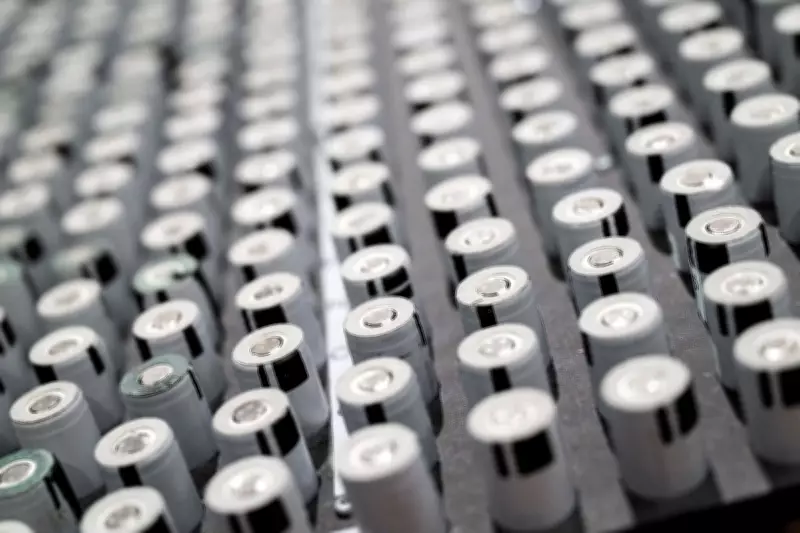
Chinese researchers have achieved a significant breakthrough in battery technology by developing a new type of lithium battery that could potentially double the driving range of electric vehicles. The innovation addresses long-standing limitations of conventional lithium batteries and could transform transportation technology.
Overcoming Traditional Battery Limitations
Conventional lithium batteries, which power most electric vehicles today, rely on interactions between lithium salts and oxygen atoms in a solvent to generate electricity. This process involves dissolving salts to allow lithium ions to travel through the electrolyte, creating electrical current. However, these systems require substantial quantities of solvent, making battery size reduction challenging.
Furthermore, traditional solvents perform poorly in low-temperature environments, limiting battery effectiveness in colder regions worldwide. Most existing lithium batteries operate near their theoretical limit of approximately 350 watt-hours per kilogram, prompting many manufacturers to explore solid-state alternatives.

Breakthrough Fluorinated Hydrocarbon Technology
The newly developed battery utilizes a "fluorinated hydrocarbon" solvent that enables efficient dissolution of lithium salts. This innovative approach replaces the traditional lithium-oxygen model with superior efficiency, significantly reducing the required electrolyte volume. According to research published in the prestigious journal Nature, this technology achieves remarkable energy densities exceeding 700 watt-hours per kilogram at room temperature and approximately 400 watt-hours per kilogram at -50°C.
Professor Zhao Qing from Nankai University explained the scientific advancement: "An electrolyte needs to release ions rapidly while facilitating quick charge transfer, but these two requirements typically conflict. Fluorine's weaker attraction to lithium helps resolve this fundamental challenge."
Performance Advantages and Practical Applications
The lithium-fluoride system enables rapid charge transfer processes even in extremely cold conditions, functioning effectively at temperatures as low as -50°C. Researchers state this breakthrough could double the capacity of existing lithium batteries without increasing their physical dimensions or weight.
Lead study author Chen Jun from Nankai University elaborated on the practical implications: "Electric vehicles with current ranges of 500 kilometers could potentially travel more than 1,000 kilometers on a single charge using our advanced battery technology." This innovation elevates the energy density of conventional lithium batteries to levels comparable with solid-state cells.
Beyond automotive applications, researchers anticipate the technology could prove invaluable for vehicles and drones operating at high altitudes, where extreme cold temperatures typically degrade battery performance. The development represents a significant step forward in energy storage technology with potential implications across multiple industries.