The travel industry has been plunged into chaos since February when Iran closed the Strait of Hormuz following attacks by the United States and Israel. The closure of this crucial waterway, which transports roughly 20% of the world's oil and liquefied natural gas, has caused global fuel shortages. With knock-on effects including soaring airfares, longer routes, and widespread delays, a string of airlines have collapsed under the pressure. Four of these are UK-based.
European Cargo
European Cargo, a cargo carrier based at Bournemouth International Airport, recently became the latest to go into administration, just months after expanding its UK footprint. The firm said that after its sale by former parent company European Aviation, which offloaded its 50.01% shareholding in European Cargo in November 2024, it suffered from rising fuel costs and reduced flight demand. Flight-tracking data reveals the airline's operations halted before it filed for administration on June 3, while 178 jobs had already been cut. A statement from administrators said: "The company has ceased trading and, regrettably, redundancies are being made. Affected employees are being contacted as a priority and the joint administrators are focused on supporting them through this process, while also engaging with customers, suppliers, creditors and other key stakeholders."
Ascend Airways
In April, Ascend Airways, a British ACMI (Aircraft, Crew, Maintenance, and Insurance) and charter airline, announced it had surrendered its Air Operator's Certificate (AOC) and ceased all operations. The 'wet-lease' carrier didn't sell seats directly to passengers, instead serving as a short-term supplier of fully-crewed planes, meaning their customers were other airlines. Ascend, which ran flights from Gatwick and Southend Airports, previously boasted well-known clients including TUI, Oman Air, and Air Sierra Leone. A company spokesperson told Flight Global that the ongoing Middle East conflict and rise in fuel prices resulted in a "challenging outlook" for the summer season, adding: "These external pressures have compounded the structural challenges of operating a UK AOC within the European [wet-lease] market. A lack of reciprocal wet-leasing rights for UK carriers, combined with a higher cost base, has made the UK certificate a more expensive and less agile option compared to EU AOCs."

Spirit Airlines
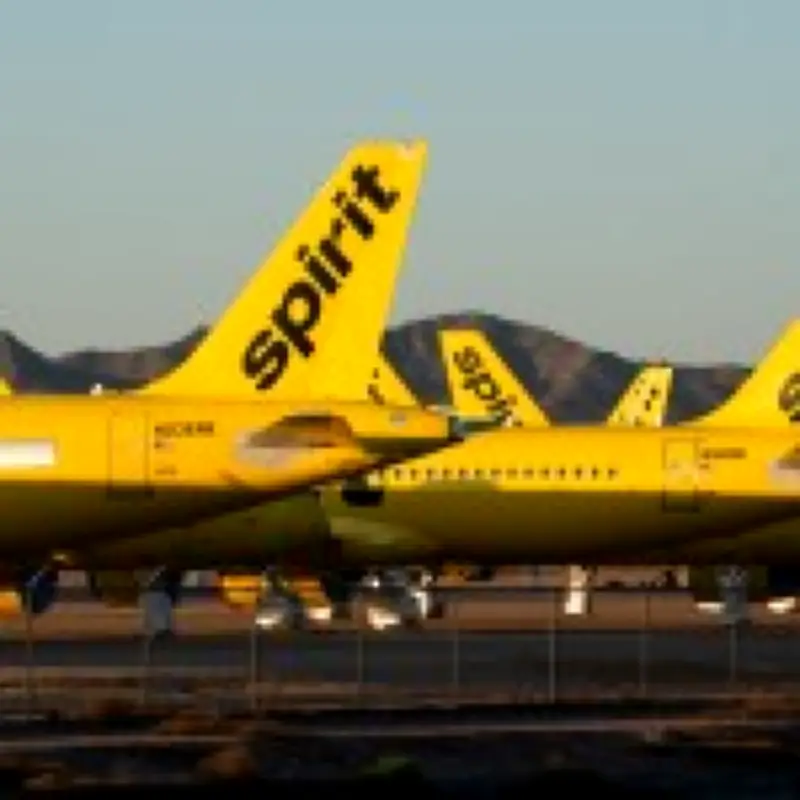
US budget airline Spirit Airlines shut down last month after failing to secure a $500m (£368m) bailout from the Trump administration. Spirit was recovering from its second bankruptcy filing in recent years when the US-Israel war in Iran began, but the resulting surge in jet fuel costs pushed it over the edge. The firm's sudden collapse stranded thousands of passengers across the US, with other airlines including Delta, United, and JetBlue stepping in to offer 'rescue fares' after Spirit cancelled all flights, halted customer service, and told travellers not to come to the airport. Spirit said it would automatically refund passengers for flights purchased with a credit or debit card, but for those who booked using a voucher, credit, or airline points, a bankruptcy court would determine compensation. Former CEO Dave Davis said in a statement: "In March 2026, we reached an agreement with our bondholders on a restructuring plan that would have allowed us to emerge as a go-forward business. However, the sudden and sustained rise in fuel prices in recent weeks ultimately has left us with no alternative but to pursue an orderly wind-down of the company." Transportation Secretary Sean Duffy disputed this, telling a news conference at Newark Liberty International Airport that Spirit was "in dire straits long before the war with Iran."

Zenith Aviation
UK charter airline Zenith Aviation Limited went into administration in May, causing 41 job losses. The airline, which provided private jet charter, aircraft management, and engineering services, was based at London Biggin Hill. Administrator Paul Hargreaves, of Nexus Corporate Solutions Limited, said the company was in an "insolvent position due to cashflow issues, debtors not paying, and historic ownership and management issues." He continued: "It is unfortunate for the company and the former employees, however we are assessing the assets of the company, assisting employees with claiming their statutory redundancy entitlements, and looking at options to include potential rescue, or buyout should that be appropriate."
EcoJet
EcoJet Airlines, the Edinburgh-based startup that aimed to become the world's first electric airline, formally entered liquidation last month without ever carrying a passenger. Founded in 2023 by Dale Vince, green energy industrialist and owner of Ecotricity, EcoJet hoped to launch routes between Edinburgh and Southampton before expanding across Europe, with the aim of converting existing aircraft to hydrogen-electric power and saving 90,000 tonnes of carbon emissions each year. After failing to secure the £20m in funding it required, these grand green plans have been put on hold. A spokesperson stated: "EcoJet was a start-up business and has no material assets. The members have elected to fund the liquidation process to ensure that the company's employees receive their full statutory entitlements." Despite this setback, Vince said he remains "committed to electrifying all forms of transport," calling aviation "the last frontier and the hardest."
Maeve Aerospace
Dutch electric aircraft developer Maeve Aerospace was officially declared bankrupt on May 28 by a court in The Hague after failing to secure a €20m funding round. The hybrid-electric regional startup was developing the Maeve Jet, a 76-100-seat hybrid-electric regional airliner. Major US carriers, including Delta and SkyWest, worked with the company shortly after it was established in 2020. SkyWest invested an undisclosed amount in the project in 2025, with CEO Chip Childs saying at the time: "SkyWest is committed to leading our industry forward, and we're pleased to invest in Maeve as the leading edge of technological, sustainable advancements for regional aviation."
Magnicharters
Low-cost Mexican carrier Magnicharters collapsed in May, filing for bankruptcy protection in the First District Court in Mexico City around a month after suspending all flights. At the time, it claimed the flight suspensions would last for a period of two weeks, initially blaming "operational problems" for the cancellations. Magnicharters has not released any official public statements regarding its bankruptcy.
Jetflite
Finnish airline Jetflite is preparing to shut down its operations as of this month. The charter carrier, which launched out of Helsinki in 1980, will start employee consultation proceedings on June 8 and is expected to let go of 53 employees across flight operations. Jetflite, part of the wider Wihuri Aviation group, operates several businesses, from charter routes to ambulance flights, packaging, daily goods, and technical trade transportation. A statement read: "The negotiations concern the planned discontinuation of the above-mentioned businesses and the potential termination of employment of the associated personnel. The decisions under consideration are driven by the prolonged unprofitable performance of these businesses."
Air Antilles
Last month, travellers were left stranded in the French Caribbean after a court ordered the permanent liquidation of Air Antilles at the end of April. The French regional airline, based at Pointe-à-Pitre International Airport in Guadeloupe, served the French Caribbean aviation market for almost 24 years, providing regional connectivity across islands including Martinique, Saint Martin, and Saint Barthélemy. The firm was placed into administration after heavy financial losses and the revocation of its operating licence, with French media reports estimating total debt at approximately €56m (£48m). In an April press conference, Louis Mussington, chairman of Air Antilles's board of directors and president of the Territorial Collectivity of Saint-Martin, explained the closure was a result of rising fuel prices, maintenance costs, and post-pandemic passenger recovery challenges, calling it a "bitter pill to swallow." He added: "Liquidation pronounced by the commercial court is a hard blow for the Collectivité but also for the French West Indies, which are deprived of healthy competition and air services that would have boosted the economy of our islands."
Lufthansa CityLine
Lufthansa shut down its subsidiary airline CityLine in April, citing "significantly increased kerosene prices" following the crisis caused by the Iran war. The German carrier said it would "permanently remove" the 27 aircraft used by its regional operation, cutting 20,000 short-haul flights from its summer schedule. This decision came into effect on April 18 in an effort to "reduce further losses of the loss-making airline." Till Streichert, chief financial officer of Lufthansa Group, said the move was "unavoidable," blaming rocketing fuel costs and geopolitical instability and describing the closure of CityLine as a "painful step."