Nestled in the hills of a tiny Californian town, a century-old grocery store operates as a rare bastion of tradition, where some of the world's wealthiest individuals shop alongside long-time residents, all served by human cashiers.
A Timeless Refuge in the Heart of Silicon Valley
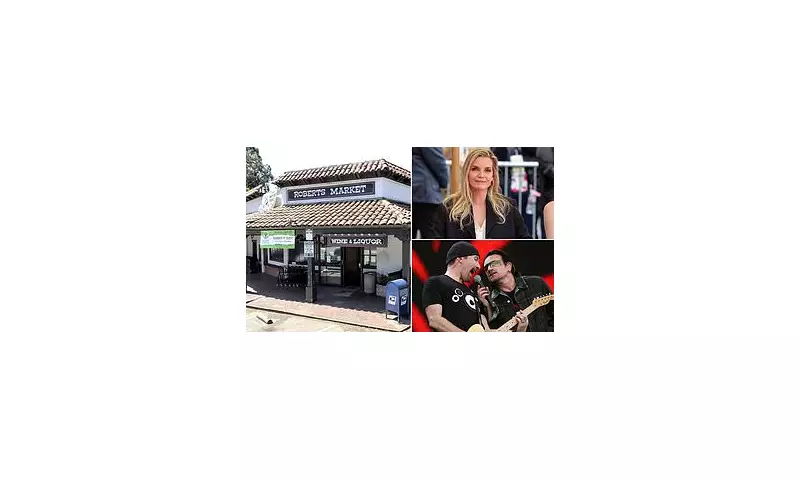
Roberts Market, a family-owned shop, stands as the sole grocery store in Woodside, a suburb of just over 5,000 people that is home to dozens of billionaires. Despite the dot-com boom transforming the surrounding Silicon Valley with super tech and record wealth, this 8,000-square-foot market has defiantly remained the same. The idea of installing self-checkout machines was never considered. "Oh my God, my customers would revolt," explained fourth-generation owner Christine Roberts. General manager Mike Kerr, with four decades of service, notes a universal trait among his clientele: "They don't like change."
Instead, customers cherish the human interaction, looking forward to chatting with checkers. Staff witness local children grow up, work in the store, and start families of their own. The market's reliability is a cornerstone; it stays open no matter what, even during frequent local power outages. Located roughly 30 miles south of San Francisco, Roberts was always intended as a community hub. "It's really important to me and to the town that we preserve that," Christine said. "It's such a big part of what makes it so charming."

Billionaires, Rock Stars and Ponzi Schemes: The Unassuming Clientele
Rubbing shoulders with celebrities and tech titans is standard at Roberts Market. The store's unpretentious aisles have been browsed by a staggering roster of famous faces. This includes singer-songwriter Tracy Chapman, physicist John Baez, NFL legends Bill Walsh and Joe Montana, and Larry Ellison, the world's fourth-richest person with a $243 billion fortune. U2's Bono and The Edge have been spotted, and general manager Mike Kerr recalls being starstruck when a makeup-free Michelle Pfeiffer asked him for matches one morning.
The billionaires of Woodside, like Charles Schwab ($13.9bn), Gordon Getty ($5.5bn), and Thomas Siebel ($4.1bn), often go unnoticed. Kerr once read about a massive $240 million Ponzi scheme and recognised one of the named investors, John Poitras, as a regular customer—a quiet man in jeans and flannel who bags his own groceries. Poitras had lost $15 million, remarking that the loss itself wasn't significant to him, but the principle was. "This was a guy who I've seen everyday," Kerr noted.
Yet, immense wealth doesn't always translate to grocery know-how. Kerr once assisted a bewildered billionaire sent by his wife, who stood in the produce section asking, "What's the format here?" It was likely his first time in a supermarket. Similarly, some are found anxiously selecting soap, worried about getting it wrong because "my maid will yell at me."
A Family Legacy of Community and Charm
The market's origins were far humbler. English immigrant W.F. Roberts opened it as a butcher shop in San Francisco in 1889. By 1919, rebranded as W.F. Roberts and Sons, it was a top city grocer with a robust home-delivery service. The modern Woodside chapter began in 1960 when George Roberts, grandson of the founder, bought a general store during a drive to a football game. He purchased the small shopping centre opposite for $280,000 and began transforming the site, knowing the wealthy enclave demanded quality, stocking items like quail eggs, fresh caviar, and homemade Cambridge sausage.
In 1980, the simple 'Roberts Market' sign went up. Today, the hand-made deli sandwiches are a major draw. Christine Roberts took the reins in 2023 after her father George's passing at 89, committed to sustaining his vision. "I'm so appreciative of what my father created," she said. "He had the wherewithal to meet their needs as it came along, and still retain our close-knit, country store feel."
For the residents of Woodside, preserving the town's rustic charm is a priority, and Roberts Market is central to that identity. It remains a place where, regardless of net worth, everyone queues at the same till, served by staff who know their names—a defiantly human experience in the heart of the world's most technologically advanced region.