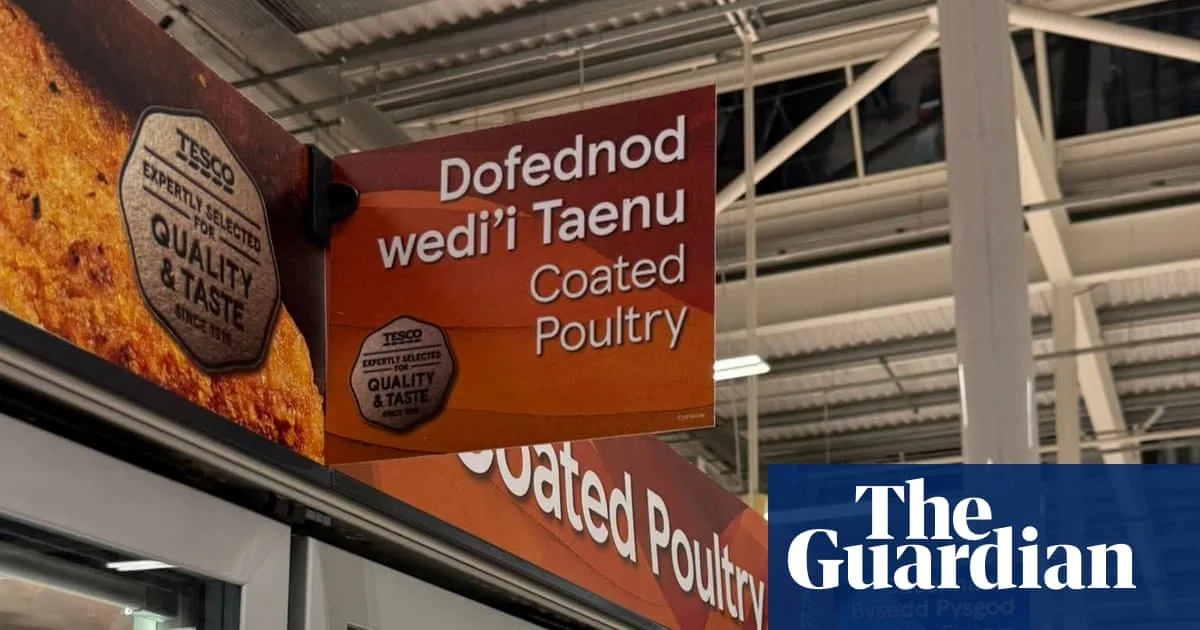
Tesco has apologised after putting up bilingual signs in Welsh at its store in Helston, Cornwall, instead of in the Cornish language. The signs directed shoppers to 'pysgod' (Welsh for fish) and 'tatws melys' (Welsh for sweet potato), rather than using the Cornish equivalents 'pysk' and 'aval dor melys'. The mistake has reignited discussions about the status and accessibility of the Cornish language.
Cllr Loveday Jenkin of Mebyon Kernow, a party advocating for greater self-government for Cornwall, said she appreciated the effort but was disappointed the signs were not in Cornish. She visited the store to thank staff for the attempt and requested the correct language be used. Jenkin noted that while Cornish and Welsh share similarities, the error highlights the need for better access to Cornish language resources.
The incident comes shortly after Cornish (Kernewek) was officially recognised under Part III of the European Charter for Regional or Minority Languages in January, granting it greater protection and status. Cornwall Council estimates there are around 500 advanced Cornish speakers and 2,000 with basic proficiency. The Mercury Prize-nominated singer Gwenno Saunders has recently called for wider teaching of Cornish in schools to preserve the language and culture.
Perran Moon, Labour MP for Camborne and Redruth, welcomed the new status for Cornish and said the mistake underscores the importance of access to the language. Garry Tregidga, co-director of the University of Exeter's Institute for Cornish Studies, described the error as embarrassing for Tesco but noted that it was positive the mistake was spotted, indicating growing recognition of Cornish. He offered assistance to Tesco for creating correct signs.
Welsh language campaigner Ffred Ffransis supported efforts to promote Cornish, urging major companies like Tesco to use bilingual signage consistently in Wales. The Welsh signs at the Helston store have been removed, and Tesco has apologised, stating that replacement signs in Cornish will be installed as soon as possible.