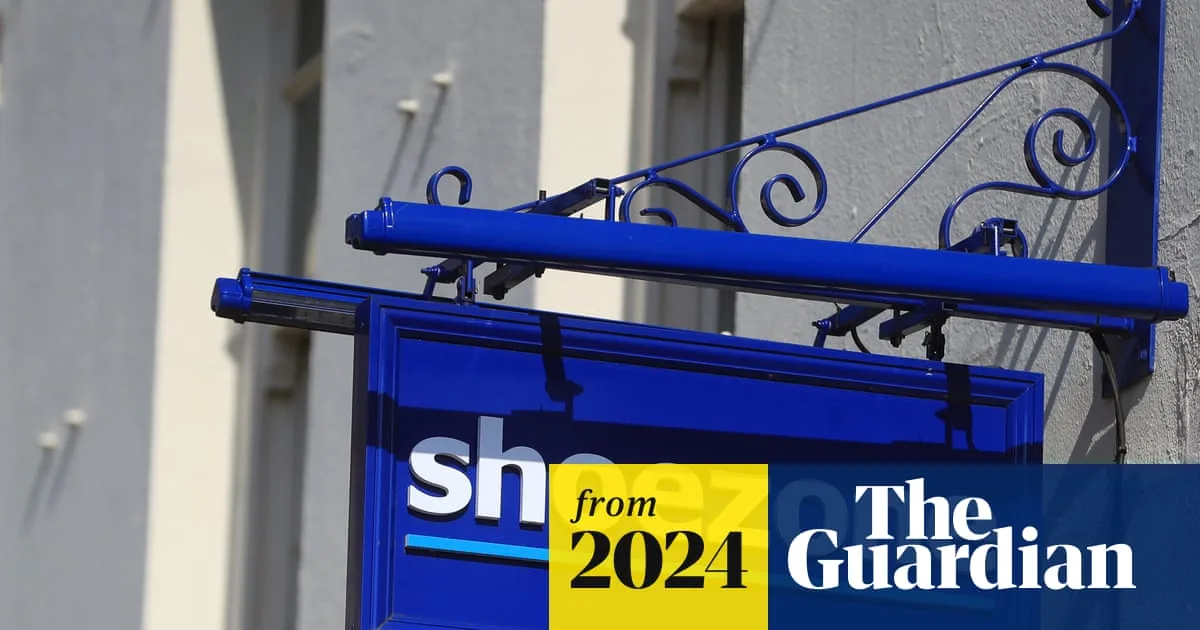
Shoe Zone has blamed increased costs from changes to wages and national insurance contributions (NICs) announced in October's budget, alongside weakening consumer confidence, for its decision to close stores. The low-cost footwear retailer said it experienced “very challenging trading conditions” between October and mid-December, citing lower consumer confidence and unseasonal weather, which led to falling sales and decreasing profit.
The group, which operates 297 stores and employs about 2,250 people in the UK, stated that consumer confidence weakened further after the budget on 30 October, making a number of its shops “unviable”. The company did not specify how many stores would close, though it had 309 stores at the end of March. The Guardian has approached Shoe Zone for clarification on the number of planned closures.
Shoe Zone said planned increases to employers' NICs and the national living wage would cause “significant additional costs”. In her budget, Chancellor Rachel Reeves announced an increase in employer NICs from 13.8% to 15% from April next year, and lowered the threshold at which employers start paying the tax on each employee's salary to £5,000 from £9,100. These measures, expected to raise £25bn a year, have drawn criticism from retailers and hospitality companies, who say they will be forced to cut jobs and raise prices.
The combination of higher costs and falling sales prompted Shoe Zone to issue its second profit warning of the year, halving its profit forecast. The company now expects an adjusted pre-tax profit of about £5m in the year to 27 September, down from previous estimates of £10m. It will also suspend its dividend for the financial year ending late September. In response, shares tumbled by as much as 44% to 75p, trading 66% lower than at the start of the year.
However, Russ Mould, investment director at broker AJ Bell, described Shoe Zone's decision to blame the budget as a “poor fit”, noting that UK-wide figures suggest consumer confidence has ticked higher since the budget. He added: “Perhaps Shoe Zone’s offering isn’t resonating with shoppers as much as it used to. At the very least, you would hope management is looking at what’s gone wrong rather than attributing everything to external factors.”