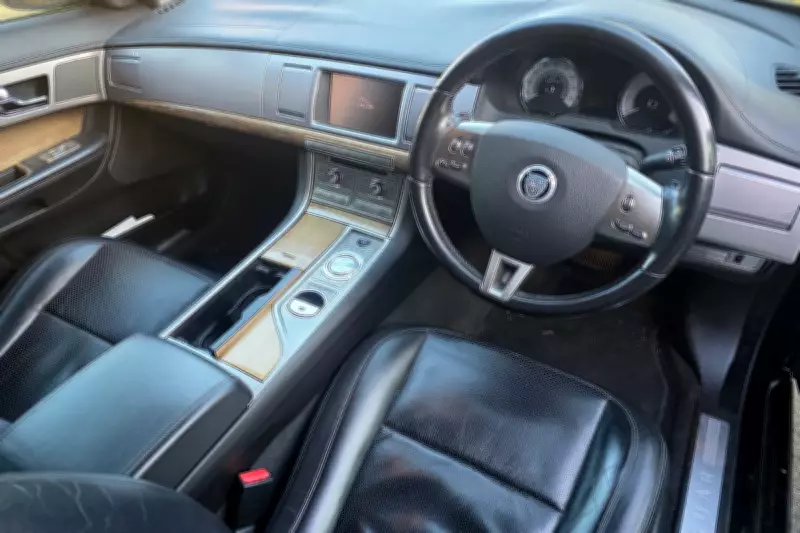
After nearly two decades of shared history, poet Frieda Hughes has reluctantly decided that her faithful car must be replaced. The vehicle, which has been in her possession for a full 18 years, has reached a point where its accumulating issues and natural wear make continued ownership impractical, despite the deep sense of contentment its familiarity provides.
A Long History of Grievances and Repairs
Hughes reflects that she has known the car's time with her was drawing to a close for as long as she can recall its series of minor complaints and progressively worsening ailments. The relationship began with significant investment early on; thirteen years ago, she faced substantial bills for what she describes as 'second-hand car surgery' shortly after taking ownership.
Now, however, the poet confronts a different kind of decline: a steady, inevitable wearing away of the vehicle itself. At eighteen years old, Hughes wryly notes the car should be old enough to vote in elections, highlighting its advanced age in human terms.

The Contradictions of an Aging Vehicle
The car presents a study in contrasts. On one hand, it retains impressive performance capabilities, accelerating with a speed Hughes compares to that of a cougar. On the other, it shows undeniable signs of terminal decay. The rusting undercarriage has developed a hole that she knows will inevitably be followed by others, signalling structural weakness.
Further inconveniences include a sticking petrol flap and an engine warning light that persistently illuminates for a fault that has long since been resolved, serving as a ghostly reminder of past problems rather than indicating current issues.
The Search for an Impossible Replacement
Faced with this necessary parting, Hughes has embarked on a daily quest through online automotive listings, searching for a second-hand replacement that meets very specific criteria. She seeks a vehicle that matches her current car's quick acceleration but without the modern technological additions she finds unnecessary.
Specifically, she wishes to avoid features like auto-dip headlights and lane assist systems, preferring the simpler mechanics of an older model. Her ideal replacement would be, in all other respects, exactly the same as the car she must now relinquish—a testament to the deep satisfaction she has found in their long partnership, where familiarity has truly bred contentment rather than contempt.
The emotional challenge lies not just in finding another vehicle, but in locating one that replicates the particular characteristics and driving experience she has cherished for eighteen years, creating a poignant commentary on attachment, change, and the search for continuity in an increasingly complex technological landscape.