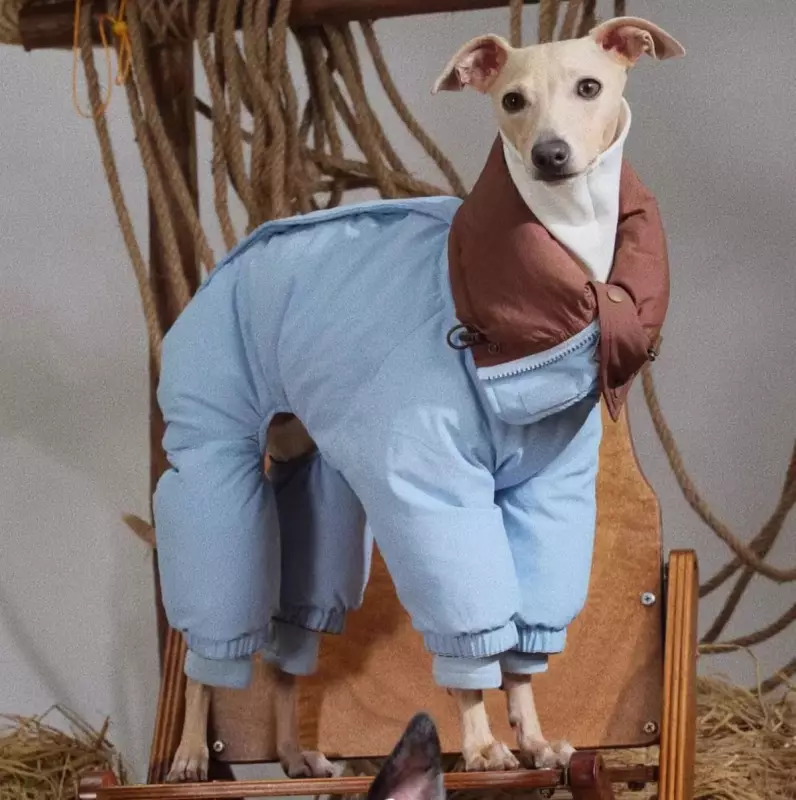
The market for canine couture is experiencing a meteoric rise across the United Kingdom, fuelled by a combination of inclement weather and a cultural shift seeing dogs dressed as cherished family members. What began as a trend for 'mini-me' outfits matching children has now firmly extended to four-legged companions, with winter coats leading the pack in demand.
Luxury Lines and Soaring Searches
At the forefront of this boom is Pawelier, a luxury London-based pet accessories boutique. Their bestsellers exemplify the high-end direction of the market, featuring items like a £135 four-leg puffer coat with a fuzzy hood and a £110 reversible down-filled jumpsuit. The aesthetic is distinctly high-fashion, seemingly ready for the runway rather than the local park.
This surge is not confined to niche boutiques. Major retailer John Lewis reports that searches for dog coats on its website are up 33% year-on-year. Their top-selling item is a more accessible £22 own-brand tangerine puffer jacket, indicating demand spans multiple price points.

Rob Newsome, sales director at Danish Design, a Leeds-based pet product manufacturer, directly attributes the sales spike to Britain's increasingly cold and wet weather. The company's current bestseller is a versatile 3-in-1 coat, reminiscent of a human Dryrobe, with waterproof and windproof layers.
Dogs as Fashion Icons and Family
Oli Port, editor-in-chief of Dogue magazine, credits social media for transforming dogs into "the ultimate fashion icons." High-end brands like Burberry and Louis Vuitton regularly feature dogs in campaigns, while some pets, like Edinburgh-based Afghan hound Samantha, have become influential brand ambassadors in their own right.
The trend is deeply intertwined with changing demographics and attitudes. Millennials and Gen Z bought two-thirds of all dogs in Britain in 2022, and with many having fewer children, pets are occupying a central familial role. Louise Nindi, co-founder of Mutts, explains: "Dogs are getting closer to being family members who understand you... they do naturally become an extension of yourself, your values, your style."
This normalisation, where dogs accompany owners to workplaces, restaurants, and on holiday, creates a practical need for attire. As Port notes, "You wouldn't allow your child to go outside in cold weather without wearing a coat. It's the same thing for us. Dogs are our babies."
Veterinary Advice on Canine Comfort
But does every dog need a winter wardrobe? Julian Hoad, a veterinary surgeon and president of the British Small Animal Veterinary Association, advises that necessity depends entirely on the breed.
He states that thin-coated breeds like greyhounds, lurchers, Chihuahuas, and Yorkshire terriers can benefit from a coat, especially in wet conditions. Conversely, breeds with thick fur like Malamutes and German Shepherds rarely need extra insulation.
He offers crucial cautions: brachycephalic dogs like French Bulldogs and Boston Terriers, with their short skulls, can overheat easily and struggle to cool down by panting. Signs a dog is too hot include a hunched posture and reluctance to walk. Hoad also advises that most dogs dislike hoods, and covering the trunk is usually sufficient for warmth.
The science of heat loss is key. "A small dog will have a higher surface-area-to-volume ratio," Hoad explains. "And if it has a thin fur coat, it'll lose heat more quickly than a great big German shepherd." Proximity to the ground matters too, with short-legged breeds like Dachshunds feeling the chill from cold, wet grass.
With the UK's dog population now at 13 million, nearly double the 2011 figure, this market shows no signs of cooling down. The fusion of practical weather protection, emotional family bonding, and high-fashion statement is ensuring Britain's dogs are dressed for success, whatever the forecast.