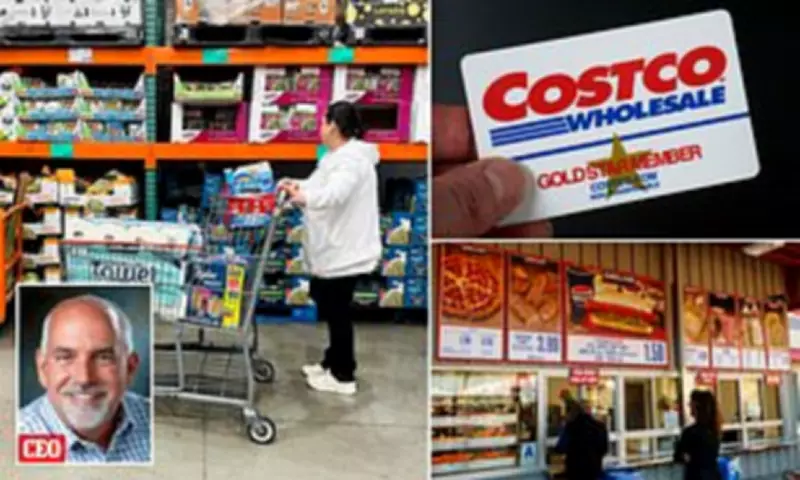
Costco's business model appears almost suspiciously generous to the casual observer. With deep discounts, bulk purchase deals, and a legendary $1.50 hot dog and soda combo that hasn't changed price since 1985, customers naturally wonder how the mathematics behind such value actually works. According to retail experts, the answer lies in what happens long before shoppers even enter the vast warehouse aisles.
The Membership Fee Engine
"Costco's membership fees are the secret sauce, accounting for 50 to 65 percent of total profit," analyst Carol Spieckerman explained to Daily Mail. "This fundamental structure means Costco can afford to operate on razor-thin product margins because a substantial portion of their profit is already secured through membership renewals and the sheer volume of sales."
The company strictly caps its markups at approximately 14–15 percent, significantly below the typical margins seen in conventional supermarkets and department stores, and deliberately avoids promotional gimmicks. "This approach systematically builds trust and removes the psychological need for shoppers to constantly hunt for deals," Spieckerman added. The resulting environment means customers trust that prices are fair, spend less time comparing labels, and ultimately purchase more during each visit. While Costco makes less profit per individual item, they sell them in enormous quantities.

A Predictable Revenue Stream
A significant portion of Costco's profit originates from its annual membership fees. The company has consistently stated that protecting member value and renewal rates across its more than 80 million paid members in the US, and 130 million globally, is its top priority, especially as households continue to face financial pressures. CEO Ron Vachris has emphasised this focus on member value.
The basic Gold Star membership costs $65 per year, while the $130 Executive tier offers additional perks like early store entry and annual reward checks. Although the upfront cost can be a barrier for some, regular shoppers often recoup the fee quickly through lower prices on everyday essentials. These membership fees represent predictable, high-margin income that flows directly to the bottom line, granting Costco the financial freedom to maintain low shelf prices. In essence, shoppers pay an upfront fee for the privilege of accessing consistently low prices, returning repeatedly so long as Costco continues to deliver compelling value.
The Scale and Simplicity Advantage
Despite their massive size, Costco warehouses carry a remarkably limited selection compared to a typical supermarket. Instead of offering 40 different brands of olive oil, for instance, they might stock just four. This curated approach gives Costco enormous negotiating leverage with suppliers, who compete fiercely for shelf space in front of millions of loyal, high-spending members. Fewer products also translate to faster inventory turnover, reduced storage costs, and less waste, ensuring items don't languish on shelves.
"Kirkland Signature is Costco's not-so-secret weapon," according to Spieckerman. By selling its own private-label brand—often manufactured by the same companies that produce premium national brands—Costco earns higher margins while still undercutting competitors on price. The Kirkland brand now generates tens of billions in annual sales, reinforcing Costco's reputation for quality without compromise.
Loss Leaders and Loyalty Drivers
Certain products are intentionally sold at or near cost. The iconic $1.50 hot dog combo, the $4.99 rotisserie chicken, and competitively priced fuel are prime examples. These items function as powerful marketing tools. The immense value of positive public relations and customer goodwill generated by maintaining these low prices far outweighs any potential profit lost from higher margins.
"Yes, Costco knowingly loses money on certain items like hot dogs, rotisserie chickens, and sometimes fuel," said Spieckerman. "Costco’s loss leaders are loyalty generators and traffic drivers. It's a small price to pay for customer devotion." Shoppers are drawn in by these headline deals and subsequently fill their carts with other items once inside.

Ancillary Services and Financial Products
Costco also generates significant revenue from services that many members might not immediately associate with the warehouse. These include travel bookings, optical and hearing centres, pharmacies, tire fitting, insurance referrals, and even car sales through partnerships with thousands of dealerships offering pre-negotiated pricing.
Its partnership with insurers provides members with discounted rates on auto, home, life, and health policies, while Costco earns a referral fee. Similarly, the Costco Anywhere Visa Card, issued by Citi, recently boosted cashback rewards on fuel purchased at Costco pumps to 5 percent, up from 4 percent. Retail analyst Neil Saunders of GlobalData noted this move is designed to enhance loyalty and profitability, as customers with branded credit cards tend to be more loyal to the associated retailer.
Operational Efficiency and Club Psychology
Costco spends remarkably little on advertising compared to rivals. Its no-frills warehouse design, minimal decor, and straightforward displays are deliberate cost-saving measures. Furthermore, the company experiences lower levels of theft, which analysts attribute to the membership model fostering a sense of belonging and a "club" mentality. By paying for the privilege to shop, customers feel part of an exclusive community, creating a psychological contract that encourages repeat visits, higher spending, and generally better behaviour in-store.
"Costco has extremely high loyalty because it offers a strong value equation—good products, high quality, and low prices—combined with a shopping experience many customers enjoy," added Saunders. "That shows up clearly in its membership renewal rates. Of course, the warehouse model is not for everyone. Some shoppers dislike buying in bulk or find the stores overwhelming, but that is not a sign of failure. No retailer can please everyone, and Costco has a very distinct model that it is happy to stick with because it works exceptionally well."
With annual sales approaching $254 billion when membership fees are included, and those fees alone raking in about $5.3 billion annually—or over $14 million per day—Costco's unique formula continues to prove its formidable strength in the retail landscape.