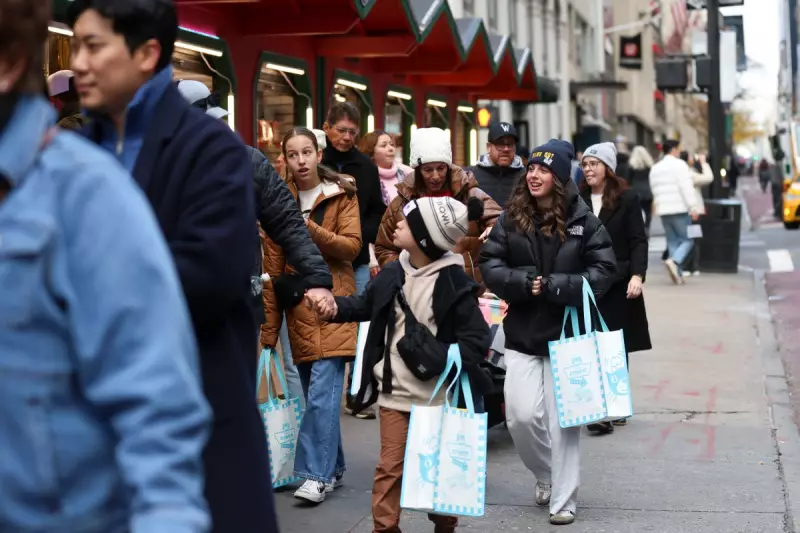
Black Friday Spending Shatters Records Amid Economic Anxiety
American shoppers demonstrated remarkable resilience during the 2025 Black Friday sales, spending a record-breaking $11.8 billion online on the year's biggest shopping day. This figure represents a substantial 9.1 percent increase compared to the previous year's takings, according to data from Adobe Analytics, which meticulously tracks e-commerce transactions.
The shopping frenzy commenced even before Black Friday, with US consumers spending a record $6.4 billion on Thanksgiving Day, up from $6.1 billion in 2024. This surge in consumer activity unfolded against a backdrop of widespread economic uncertainty, with many households grappling with soaring prices and high unemployment rates.
Top Products and Cyber Monday Projections
Adobe's data revealed clear winners in this year's sales bonanza. Showers of discounts propelled significant sales increases in several key areas:

- Video games and consoles
- Electronics
- Toys, including popular items like Labubu Dolls, LEGO sets, and Fisher-Price Little People
Even as budgets remain tight for many, the spending spree was expected to continue through the weekend. Adobe projected that customers would spend $5.4 billion on Saturday and $5.9 billion on Sunday, with discounts remaining elevated.
Looking ahead, Cyber Monday is predicted to reclaim its crown as the holiday season's single biggest shopping day. The data firm anticipates US shoppers will spend a colossal $14.2 billion, a 6.3 percent jump from the previous year.
The 'Trump Bump' and AI's Role in Retail
The robust retail figures did not go unnoticed by the White House. Following the sales period, President Donald Trump took to his Truth Social platform to celebrate what he termed the 'Trump Bump', sharing a news article highlighting the soaring Black Friday expenditure. The phrase originally emerged after Trump's election, describing sudden rises in stock market value or revenue attributed to his administration.
This year's sales surge was partly driven by advanced technology. A report from Adobe highlighted that artificial intelligence-powered shopping tools played a pivotal role, with AI-driven traffic to US retail sites experiencing an astounding 805% year-over-year increase.
"Consumers are using new tools to get to what they need faster," explained Suzy Davidkhanian, an analyst at eMarketer, in a statement to Reuters. "Gift giving can be stressful, and LLMs (large language models) make the discovery process feel quicker and more guided."
This retail success story arrives as businesses continue to navigate a volatile economic climate, complicated by the impact of President Trump's wide-ranging tariffs on imported goods. Nevertheless, the data presents a clear picture of enduring consumer strength. As Michelle Meyer, the chief economist at the Mastercard Economics Institute, told Bloomberg, "It clearly shows that the consumer has the ability to spend."