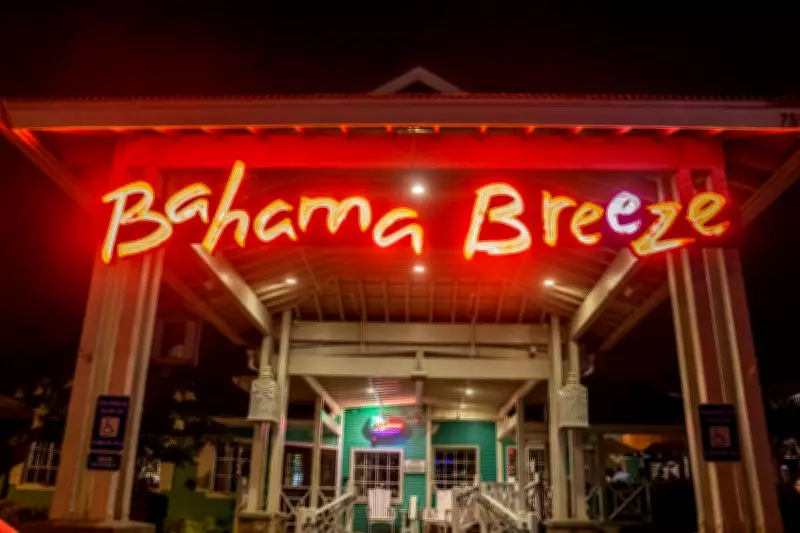
Darden Restaurants has announced the complete closure of its Caribbean-themed Bahama Breeze chain, marking the end of a nearly three-decade run for the tropical dining brand. The parent company, which also operates Olive Garden and LongHorn Steakhouse, revealed on Tuesday that it will shutter 14 Bahama Breeze locations and convert another 14 to different brands within its portfolio.
The Final Chapter for a Casual Dining Staple
The decision represents the culmination of a gradual wind-down that began last year. In May 2025, Darden closed approximately one-third of Bahama Breeze locations, followed by an announcement in June that the company was exploring new opportunities for the brand. Now, the remaining outlets will either cease operations or undergo transformation, with the final operating day for the Bahama Breeze chain set for April 5, 2026.
Geographic Impact of the Closures and Conversions
The restructuring will affect locations across multiple states. According to reports, the 14 stores scheduled for conversion include ten in Florida, plus one each in North Carolina, South Carolina, Georgia, and Virginia. Meanwhile, the 14 closures will impact sites in Virginia, Delaware, West Virginia, Michigan, Pennsylvania, and New Jersey, along with five additional Florida locations.

Darden stated in an official release: "The conversion locations are great sites that will benefit several of the brands in its portfolio." The company has not disclosed what the rebranded restaurants will become, leaving future concepts under wraps for now.
Workforce Transition and Financial Implications
In addressing the human impact of these changes, Darden emphasized its commitment to supporting affected employees. The company said: "Going forward, the primary focus will continue to be on supporting team members, including placing as many as possible in roles within the Darden portfolio." This suggests an internal redeployment strategy aimed at minimising job losses across its restaurant network.
Financially, Darden downplayed the significance of Bahama Breeze's demise, noting that it does not expect the chain's closure to have "a material impact on its financial results." This confidence likely stems from the stronger performance of other brands in its stable, particularly Olive Garden and LongHorn Steakhouse, both of which reported robust same-store sales growth in the most recent quarter.
The Broader Casual Dining Landscape
Bahama Breeze's closure occurs against a challenging backdrop for mid-market restaurant chains. Persistent inflation and a cost-of-living crisis have made dining out more of a luxury for many consumers, squeezing the traditional casual dining sector. Simultaneously, the rising popularity of fast-casual alternatives has eroded the customer base that once sustained chains like those in Darden's portfolio.
This trend is not isolated. The past year has seen several notable casual dining brands face severe difficulties. Bravo Brio, an Italian chain, entered bankruptcy for the second time and closed numerous locations. Outback Steakhouse shuttered several outlets ahead of a planned 2026 brand overhaul. Meanwhile, other chains including Hooters, Bar Louie, and Razzoo's Cajun Cafe all closed stores and filed for bankruptcy in 2025.
Thus, while Darden navigates the sunset of Bahama Breeze, the entire industry grapples with shifting consumer habits and economic pressures that are reshaping America's restaurant landscape.