

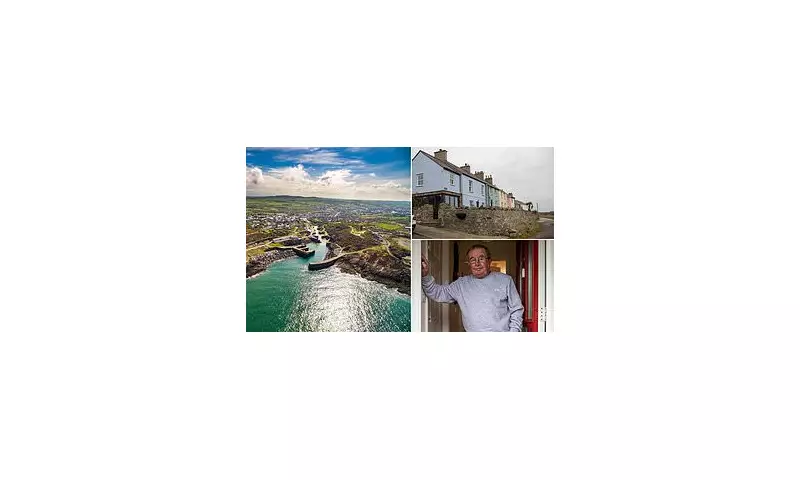
Welsh Seaside Village Divided Over Housing Swap Controversy
The picturesque Welsh village of Aberffraw on Anglesey has become the centre of a heated controversy after claims emerged that Plaid Cymru councillors want to prevent English families from moving into local homes.
Councillors on the island have alleged that people living in council houses in England are using Facebook to swap homes and relocate to the stunning coastal village, known for its long sandy beach and scenic beauty.
Conflicting Views From Local Residents
The claims have deeply divided the local community, with some residents expressing strong anti-English sentiments while others dismiss the councillors' allegations as "nonsense" and "disgusting" attempts to create divisions.

Fifty-eight-year-old dog walker Emlyn Jones stated: "There is anti-English feeling because there are too many second homes here. It doesn't feel like you're in Wales anymore as there are so many English here."
He added that many Welsh people cannot afford to buy houses in their own communities because English buyers "have come in with more money and pushed up the prices".
Councillor Expresses Welsh Language Concerns
Councillor Arfon Wyn raised concerns at a recent meeting of Anglesey County Council, highlighting that many homes remain empty in Aberffraw while people needing housing struggle to find accommodation.
"One thing that concerns me is that people in nice coastal areas can swap homes with people in towns in England on Facebook," he told the meeting. "The impact on the Welsh language can be significant."
The councillor confirmed that the council had received enquiries from the public about this issue, particularly regarding properties that have stood empty for extended periods.
Local Business Owner Defends English Residents
Welsh speaker Julie Jones, who works in the village's only shop at age 60, strongly criticised the councillors for "just causing trouble".
"Times have changed and there are more English here now, but those who come on holidays or own holiday lets try to make an effort with Welsh," she explained. "They always ask how do you say 'thank you' or 'hello' in Welsh."
She acknowledged the difficulty in securing council housing but emphasised that "we need the English tourists here and those who have retired here" for the local economy.
Understanding the Mutual Exchange Scheme
The controversy centres around the official mutual exchange scheme, which allows council house or housing association tenants to swap homes with other social tenants across the UK.
Retired lorry driver Rodney Fox, 78, who moved to Aberffraw from Bradford, dismissed the councillors' claims as nonsense. "I feel welcome here," he stated, adding that he only knows of housing swaps within Wales, not from England.
Mother-of-one Jean Owen, 64, reinforced this view, saying: "I don't know of any English who have come here after swapping council houses with locals. These councillors don't have any common sense."
Tourism Economy Creates Complex Dynamics
The situation highlights the complex relationship between tourism dependence and local community preservation in Anglesey, where one in five people work in the tourism industry - the highest proportion in the UK.
Approximately two million visitors come to the small island annually, many of them English, providing essential economic support. Holiday homes in Aberffraw during summer can cost an average of £1,000 per night.
Retired kitchen fitter James Todd, 77, who moved from Manchester, said: "I have never felt anything but welcome here in Wales. All my neighbours are Welsh and they are always very friendly."
Broader Pattern of Tensions Across Wales
This incident reflects wider tensions across Wales regarding second home ownership and English migration. Last August, stickers bearing sinister messages appeared at Llyn Padarn, including one showing a blazing house with the message "F*** your second home" and another declaring "Death to Airbnb".

Last year, a group of seven English women aged 55-70 from Lancashire reported experiencing anti-English jibes during a walking holiday in Llanberis, claiming they were snubbed in pubs and restaurants.
Council's Crackdown on Second Homes
Plaid Cymru, which controls the council, has implemented measures targeting second homeowners. Owners whose properties are occupied for fewer than 182 days annually now face council tax increases of up to 300%.
Meanwhile, holiday let owners who rent their properties for more than 182 days annually are subject to business rates instead of the punitive council tax charges.
Mother-of-one Jane Williams, 70, a Welsh speaker born in Aberffraw, commented: "Having English people here doesn't damage the Welsh language. We need the tourists but you do hear the odd grumble about the English."
The controversy continues as the community balances preserving Welsh culture and language with maintaining the tourism economy that supports many local livelihoods.





