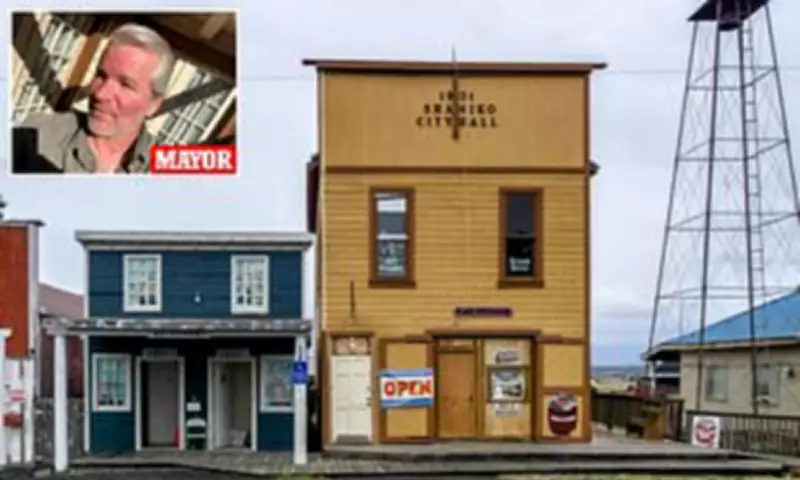
Oregon's Historic 'Living Ghost Town' Faces Financial Ruin, May Sell City Hall
The historic Wild West city of Shaniko in Oregon, with a dwindling population of just 30 people, is teetering on the edge of financial collapse. Officials warn that if immediate funds cannot be raised, the town may be forced to disincorporate entirely, marking the end of its storied legacy.
A Bustling Past Meets a Bleak Present
Located approximately 40 miles northeast of Madras, Shaniko was once a thriving shipping hub for sheep herders and wool buyers during its peak in the early 20th century. In 1910, the population soared to around 600 residents, but as the wool industry declined, so did the town's fortunes. Today, many of the original Old West buildings still stand, and Shaniko markets itself as Oregon's 'only living ghost town', a unique tourist attraction that draws visitors curious about its rustic charm.
However, this ghost-town-themed appeal could become a permanent reality if the city fails to address its mounting financial woes. According to reports from Oregon Live, Shaniko is in dire straits, with only $7,320 available in its bank account against total debts of about $37,000.

Emergency Measures and Urgent Debts
In a recent emergency meeting, the city council took drastic action. The three council members present voted unanimously to authorise Mayor Mark Haskett to sell the historic City Hall building within 24 hours as a last-ditch effort to stay solvent. This move is seen as a Hail Mary pass to save the town from dissolution.
The most pressing financial obligation is a $10,820 bill owed to its insurance provider, CIS, which is due imminently. Mayor Haskett emphasised the severity of this deadline, stating, 'If we do not pay that on Tuesday, in full, they're dropping our coverage.' Losing insurance would have catastrophic consequences: the entire council would be forced to resign because members would become personally liable for any lawsuits against the city.
In addition to the insurance debt, Shaniko owes $6,800 to a well-drilling company for water system equipment and $20,000 in unpaid legal fees, further straining its limited resources.
Political Feuds and Legal Battles
Shaniko's financial troubles have been exacerbated by years of internal strife and costly legal disputes. One resident, Zachary Forrest Marquart, has filed at least 14 lawsuits against the city and its officials since 2020, all of which have been dismissed. The city attorney has labelled these cases as 'frivolous' and intended to harass, stemming from disputes that began when Marquart purchased property in Shaniko in 2021 and claimed the city repeatedly blocked his attempts to build a home.
Defending against these lawsuits has drained thousands of dollars from the tiny city's coffers, money it simply cannot afford to lose. This legal entanglement has only deepened the financial hole, making recovery even more challenging.
The Historic City Hall and a Glimmer of Hope
The City Hall building at 48771 E Street is a false-front wooden structure valued at approximately $84,800. While it no longer serves as the primary municipal office, it has housed the fire department's offices and features old jail cells in the back, often left open for tourists to explore. Its sale is viewed as a critical step toward financial stability.
Mayor Haskett revealed that he has already received a $50,000 offer for the building, though he did not disclose the identity of the prospective buyer. Interested parties were given until 8 PM on Sunday to submit additional offers, highlighting the urgency of the situation.
Haskett expressed a deep sense of duty to the community, warning that disincorporation would be a disservice to the town's founders. 'Over 120 years ago, people came here to Shaniko looking for a new life,' he said. 'They didn't have cars, there were barely roads, they didn't have electricity, they didn't have chlorine in their water. And it's a disservice to these people that founded this community for us to just throw it all away.'
As Shaniko scrambles to avoid collapse, the fate of this historic Oregon town hangs in the balance, with the sale of City Hall representing its best hope for survival.