

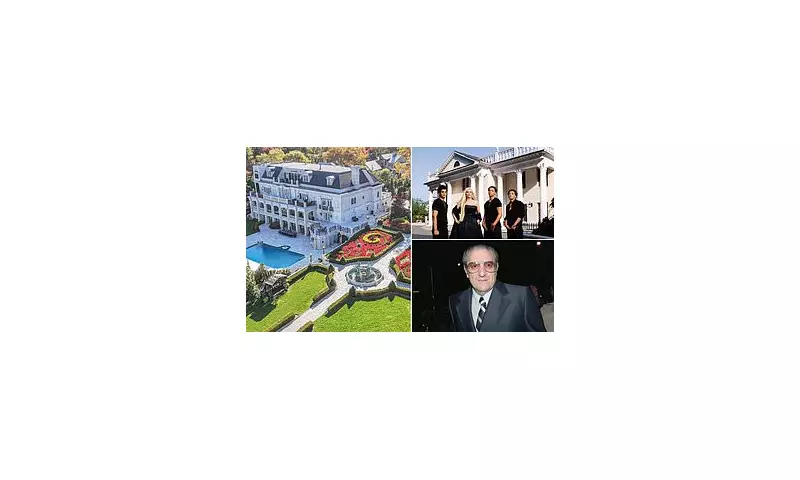
Luxurious properties once owned by some of New York's most infamous gangsters are failing to attract buyers, but surprisingly, it's not their criminal connections putting people off. Instead, prospective purchasers are being scared away by what local estate agents describe as 'criminal décor' - excessively gaudy interior design choices that reflect the ostentatious tastes of their former mobster owners.
The Castellano White House Replica
A prime example is the massive Staten Island mansion at 177 Benedict Road in the Todt Hill neighbourhood, originally built by Gambino crime family boss Paul 'Big Paul' Castellano. This 33,000-square-foot spectacle sprawls across approximately 1.7 acres and was designed to mimic the White House facade.
The property boasts numerous luxury amenities including:
- Indoor and outdoor Olympic-size swimming pools
- A 13-car garage
- A private home theatre
- A gym with sauna facilities
- An extensive wine cellar
- A solarium

Despite these impressive features and an $18 million price tag, the property failed to sell and was withdrawn from the market earlier this month. The fundamental problem, according to potential buyers and online commentators, is that the interior design remains overwhelmingly ugly.
A dedicated Reddit thread discussing the property revealed widespread criticism of its aesthetic. One commenter noted: 'My first impression was this had to be a mob boss's house,' while another observed: 'The black vanity in the bathroom almost looks like a safe to me. It's weird. So much opulence, and it just looks gaudy.'
A Pattern of Failed Sales
Paul Castellano commissioned the mansion in 1976 and saw his vision completed in 1980. He resided there until his dramatic death in 1985, when he was shot outside Manhattan's Sparks Steak House in a hit ordered by rival John Gotti. Since then, the property has experienced a cycle of being listed, removed from the market, relisted, and withdrawn again.
Estate agent Peter Zaitzeff of Serhant explained the challenge: 'Clients want clean, sleek finishes that are not over the top, which they can then further customize to their own taste with furnishings. There is also always a stigma about buying a property that comes with a notable history.'
The situation mirrors other notorious property sales, such as Jeffrey Epstein's New York City townhouse, which sold for significantly below market value due to its past, while his Palm Beach residence had to be demolished and its address changed.
The Gotti Legacy Faces Similar Challenges
The pattern extends to other mob-connected properties. Victoria Gotti, daughter of infamous mobster John Gotti, also struggled to sell her Long Island mansion. The Old Westbury residence, previously featured on her reality television show Growing Up Gotti, fell into severe decline following a federal raid in 2016.
After Gotti failed to maintain mortgage payments, the property was foreclosed upon in 2022. It circulated on and off the market for two years before finally selling in 2024 for just $1.1 million - substantially below its original asking prices.
The 6,000-square-foot home on two acres at 6 Birch Hill Court now sits abandoned, its pool filled with stagnant water and leaves. The five-bedroom, five-and-a-half-bathroom mansion has become a popular destination for urban explorers, with YouTube videos showcasing remnants of the Gotti family's life, including dusty furniture and a secret room concealed behind a built-in bookshelf.
Victoria Gotti had personally selected many of the home's original features, including marble floors and gold-trimmed chandeliers, with an entryway featuring a grand staircase described as 'fit for a king'.
Redevelopment Success Story
Not all gangster-associated properties face the same fate. The historic Brooklyn townhouse where Al Capone grew up in Park Slope has found success through complete redevelopment. The property at 38 Garfield Place was in such poor condition that developers had to gut it entirely to the studs before rebuilding.

The renovated six-bedroom, eight-bathroom townhouse now features a modern formal sitting room, dining area, chef's kitchen, and backyard garden. Originally listed for $6.25 million, the five-story residence recently went under contract, selling for $5.95 million to a private buyer.
Capone's parents purchased the home in the early 1900s when he was just 11 years old, and he lived there until his early twenties before relocating to Chicago to begin his criminal career.
The contrasting fates of these properties demonstrate that while dark histories can be overcome through renovation, the specific aesthetic choices of mob-era luxury continue to deter modern buyers seeking more contemporary, understated elegance in their premium properties.





