

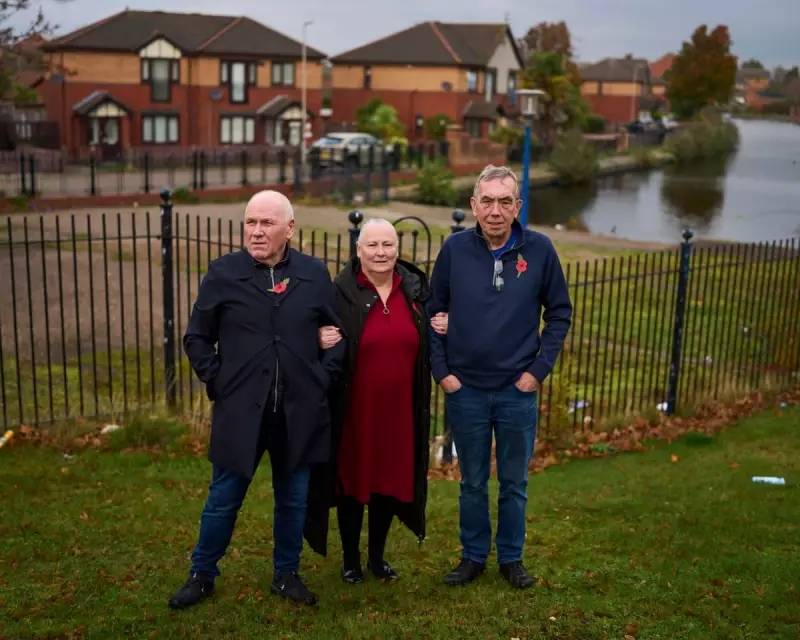
The Rise and Fall of a Liverpool Housing Dream
In the heart of Liverpool's post-industrial landscape, the Eldonian village stood as a beacon of community-led regeneration. Built during the city's economic decline in the 1980s, this pioneering housing project represented something remarkable: 400 redbrick homes managed entirely by their residents, complete with community facilities that promised support from cradle to grave.
The development earned royal praise from the then Prince Charles, who described it as "a leading example of a successful, community-led, bottom-up approach to neighbourhood regeneration." For decades, it served as a model of what communities could achieve when they took control of their own futures.
How the Dream Began to Unravel
The first signs of trouble emerged over a decade ago, coinciding with Liverpool's dockland property boom. Residents watched in dismay as their community assets began disappearing. Football pitches were ripped up, the village hall closed, and the local school demolished - all facilities that had once formed the backbone of their community.

The search for answers launched a small group of determined residents on an extraordinary investigative journey. Their quest took them through the High Court, to the Charity Commission, and revealed a complex paper trail leading to Switzerland and offshore companies in the Caribbean.
What they discovered shocked the community: valuable community assets had been transferred to faceless offshore entities, some apparently sold for as little as £1. The very amenities that defined their community had been quietly offloaded without residents' knowledge or consent.
The Legal Battle for Survival
By early 2025, the Eldonian Community Trust faced existential threat. Its bank balance had dwindled to just £42.66, fundraising had collapsed, and accounts were frozen during the Charity Commission's investigation.
The crisis deepened when Anthony McGann, son of the project's original founder Tony McGann, filed a winding-up petition claiming the trust owed him £14,400 in legal fees. However, the High Court case took a dramatic turn when evidence emerged that key documents had been altered.
Judge Halliwell dismissed the petition, noting significant concerns about the evidence presented. His ruling stated: "I have treated Mr McGann's case and the evidence which he now deploys in support of his case with a great deal of caution."
The Charity Commission welcomed the decision, stating it would allow trustees to "focus on the charity and its beneficiaries in the Eldonian village community."
Community Resilience Amid Intimidation
For residents like campaigners Brian Jones, Maureen Price and Billy Little, the fight to save their community came at personal cost. Price woke one Christmas to find "Maureen the grass" spray-painted on her house wall, while Jones found the nativity crib at his church smashed to pieces.
At a 2021 meeting, residents encountered mixed martial arts fighters stationed at the doors, creating what Jones described as an intimidating atmosphere. Despite these pressures, the campaigners refused to abandon their quest for answers.
Their persistence paid off in September 2024 when the Charity Commission announced a statutory inquiry into the trust's governance. The investigation continues, focusing particularly on whether charity rules were properly followed during trustee appointments.
Looking to the Future
Lord Rennard, the Liverpool-born peer who now chairs the Eldonian Community Trust, has praised the "bravery and determination" of residents who fought to save their community.
As the charity turns what he calls "a new page in its history," the focus shifts to rebuilding and restoring the original vision that made the Eldonian village so special.
For lifelong resident Billy Little, whose father helped establish the original trust, the fight represents something fundamental: "We built this place with our own hands. We are not going to let anyone take it away, not then and not now."

The Eldonian story serves as both cautionary tale and inspiration - demonstrating both the vulnerabilities of community-led projects and the extraordinary power of residents determined to protect what they've built together.





