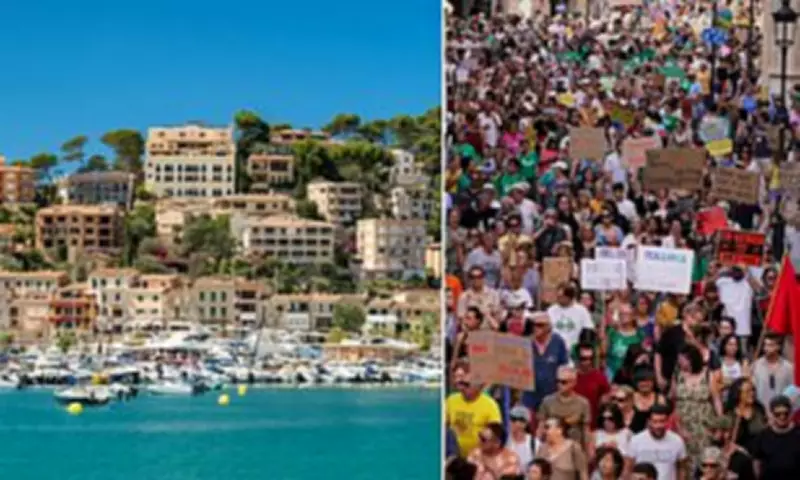
Balearic Islands Propose Five-Year Residency Rule to Block Foreign Property Buyers
British second-home owners could see their Mediterranean aspirations severely curtailed under radical new proposals currently being debated in the Balearic Islands. Lawmakers in Mallorca, Menorca, and Ibiza are set to consider a groundbreaking bill that would prohibit non-residents from purchasing property unless they have maintained continuous residency on the islands for a minimum of five years.
Mounting Fury Over Soaring House Prices and Tourism Impact
The legislation, introduced by the Left-wing party Mes per Mallorca, emerges against a backdrop of escalating public anger concerning skyrocketing property prices and the relentless expansion of tourism. Approximately 90,000 homes across the Balearics are already owned by foreign nationals, representing about sixteen percent of the total housing stock. British purchasers continue to exert significant influence within the Spanish property market, with nearly 12,000 properties acquired by UK buyers in 2024 alone, according to data from Idealista.
Foreign buyers accounted for 13.8 percent of all property sales last year, translating to almost 97,300 transactions and setting a record high for non-Spanish purchasers. Lluis Apesteguia, a Member of Parliament for Mes per Mallorca, asserted that 'extraordinary measures were necessary' following the islands' reception of nineteen million visitors last year. He emphasized, 'We have to prioritise the houses that are for living in – not for those who want to speculate and continue with this game of Monopoly.'

Activist Pressure and Broader Implications
Activist groups are preparing to intensify their campaigns. The campaign organization Menys Turisme Més Vida, which orchestrated large-scale anti-tourist protests last summer, has announced plans to return to the streets, attributing the pricing out of locals in hotspots like Barcelona and the Balearics to second-home owners. Supporters of the proposed crackdown argue that it could establish a precedent across Spain, mirroring regulations in Denmark that mandate UK-born buyers to have resided there for five consecutive years prior to property acquisition.
However, critics contend that the plan contains legal deficiencies. Sebastià Sagreras, representing the centre-Right People's Party (PP), cautioned that European Union regulations imply the proposals 'cannot be fulfilled' and confirmed his party's intention to vote against them. Marc Pons, of the Left-wing Spanish Socialist Workers' Party (PSOE), which advocates for caps on visitor numbers, stated that the government could 'not rely solely on this solution to the problems', even if it contributed to decelerating price increases.
Context of Spain's Broader Housing Crisis Measures
This initiative represents the latest effort by Spanish authorities to regulate foreign property acquisitions. Last year, Prime Minister Pedro Sánchez pledged to implement a tax of up to one hundred percent on properties purchased by non-residents from outside the European Union, vowing that this measure would address the nation's deepening housing crisis. This tax proposal has yet to pass through parliament and has attracted criticism from detractors who argue it might inadvertently drive prices even higher as overseas buyers scramble to complete transactions before new rules take effect.
The pressure is particularly acute in the Balearic Islands, now ranked among Spain's most expensive regions. The average price for a ninety-square-metre home has surged to approximately £403,000, a sharp increase from £248,000 in 2020. Ferran Rosa, a Member of Parliament in the Balearic parliament, commented, 'Housing is certainly the largest problem for Mallorcans, as prices have been rising for years and more and more houses are devoted to non-residential uses.'
He elaborated, 'Our plan is to ensure that houses are used for living, rather than "tourist" uses, considering second homes for non-residents a tourist use. In this respect, we base our bill in similar regulations existing across the EU that intend to guarantee the right to housing.'