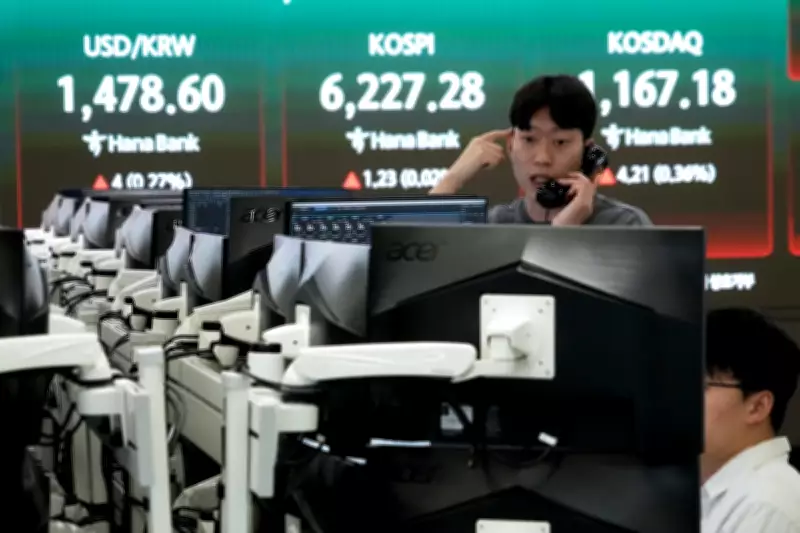
Global Stock Markets Plunge Amid Renewed Iran Conflict and Strait of Hormuz Closure
Global stock markets have experienced a significant downturn at the start of this week, with major indices such as London's FTSE 100 and the US S&P 500 falling sharply. This decline follows a resurgence last week driven by optimism over the potential reopening of the Strait of Hormuz, a critical oil shipping route. However, that positive sentiment was abruptly reversed after Iran declared the Strait closed again and refused further diplomatic talks, while the United States seized an Iranian-flagged container ship.
Market Volatility and Investor Warnings
Market experts are cautioning investors to brace for continued volatility due to the ongoing uncertainty in the Middle East. They emphasize the need for deep reserves of patience as geopolitical tensions escalate. The closure of the Strait of Hormuz has heightened fears of supply disruptions, impacting global trade and energy markets, which in turn has led to widespread sell-offs across European and US indices.
Long-Term Perspective Amid Short-Term Fluctuations
Despite the recent declines, long-term investors are advised to look past the short-term noise. The FTSE 100, for instance, remains up over 7 per cent for the year, indicating underlying resilience. Analysts suggest that while immediate reactions to geopolitical events can be severe, focusing on broader economic fundamentals may help navigate the current turbulence. However, the situation remains fluid, with further developments in the Iran conflict likely to influence market movements in the coming days.

In summary, the stock market's volatility underscores the fragile balance between geopolitical risks and investor sentiment, with experts urging caution and strategic patience in these uncertain times.