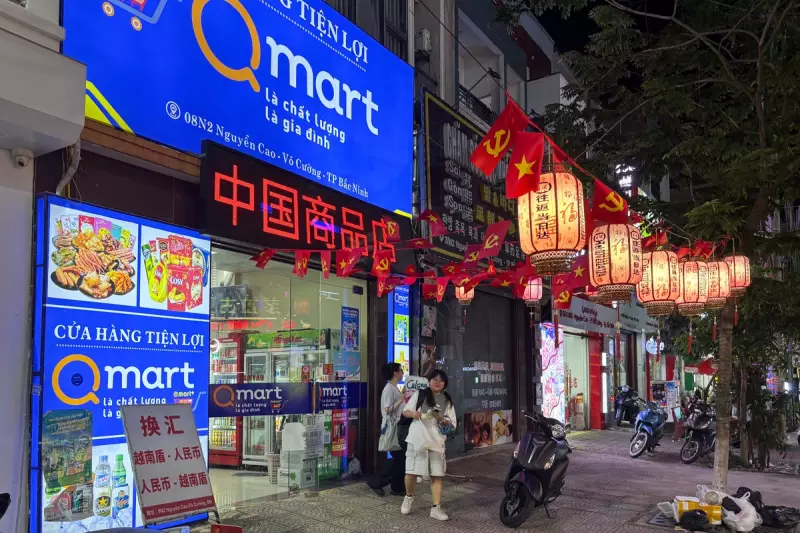
The landscape of Bac Ninh, a province north of Hanoi, tells a story of profound economic transformation. Once famed for its verdant rice paddies and traditional Quan Ho folk music, it now hums with the activity of sprawling industrial parks, a symbol of Vietnam's rapid ascent as a global manufacturing hub.
From Samsung to China: The Making of a Manufacturing Powerhouse
This dramatic shift began in earnest around 2008 when South Korean giant Samsung established its first mobile phone factory in the region. This pivotal move turned Vietnam into Samsung's largest production base outside its home country and ignited Bac Ninh's first major industrial boom.
The momentum accelerated significantly due to geopolitical friction. The trade tensions between Washington and Beijing, particularly the tariff hikes imposed during the administration of former US President Donald Trump, hastened a wave of investment. Factories seeking to diversify away from China under the "China plus one" strategy poured into Vietnam, with Bac Ninh a prime destination.

Chinese companies, in particular, have been increasing their presence, leveraging Vietnam's established electronics supply chains, labour force, and supportive local governance. This influx is visible on Bac Ninh's streets, where signs in Chinese advertise services and Tmall-branded stores reference Alibaba's online marketplace.
Growing Pains: Labour Shortages and Infrastructure Limits
However, this breakneck growth is exposing significant challenges. Rising labour costs and worker shortages are pressing concerns for manufacturers. An employee at a telecoms equipment firm that relocated from Shenzhen, who gave only the name Peng, stated that labour costs had jumped 10–15% since 2024 and were expected to keep climbing.
"It is becoming difficult to recruit workers," Peng noted, highlighting a crunch that forces companies to offer higher wages, bonuses, and even commuting allowances to attract staff.
Infrastructure, while improving, also lags behind the scale of China's ecosystem. Experts like Brian Bourke of SEKO Logistics point out that Vietnam still trails in logistics capabilities. The country is racing to build new roads and railways, including a key highway to the Chinese border that has cut travel time by over an hour, but the gap remains.
The Regional Race and Vietnam's High-Tech Ambitions
Vietnam is not competing in a vacuum. Neighbours like Indonesia and the Philippines are aggressively promoting themselves as alternative manufacturing bases, with the Philippines even passing laws to allow foreign investors 99-year land leases.
Recognising these threats, Vietnam is pushing to move up the value chain. On 19 December, Bac Ninh broke ground on expanding an industrial zone dedicated to high-tech manufacturing in electronics, pharmaceuticals, and clean energy. This is part of a synchronized national push that saw Vietnam launch 234 major projects worth over $129 billion in the weeks before a pivotal Party Congress in January 2026.
The country aims to evolve from low-cost assembly to becoming Asia's next "tiger economy," producing higher-value goods. It offers incentives like tax breaks on imported machinery to help suppliers modernise, though about a third still use non-automated equipment.
Trade dynamics add another layer of complexity. Vietnam's massive trade surplus with the US—$123.5 billion in 2024—drew threats of high tariffs from Trump. While an October 2025 agreement between Trump and Chinese leader Xi Jinping for a year-long trade truce eased some concerns, the underlying corporate strategy to diversify supply chains across multiple countries continues.
"The race to move outside of China is still happening, and it's accelerating," said Jacob Rothman, CEO of Velong Enterprises. Yet, as Frederic Neumann of HSBC observes, companies are now looking to spread risk across several Southeast Asian nations, not just relocate to one.

As Prime Minister Pham Minh Chinh framed the high stakes in December 2025, Vietnam must "reach far into the ocean, delve deep underground and soar high into space." For Bac Ninh and Vietnam, the next phase of growth will test whether this manufacturing miracle can innovate its way past rising costs and fierce regional competition.