Somalia's Tuk-Tuk Industry Grinds to a Halt Amid Global Oil Crisis
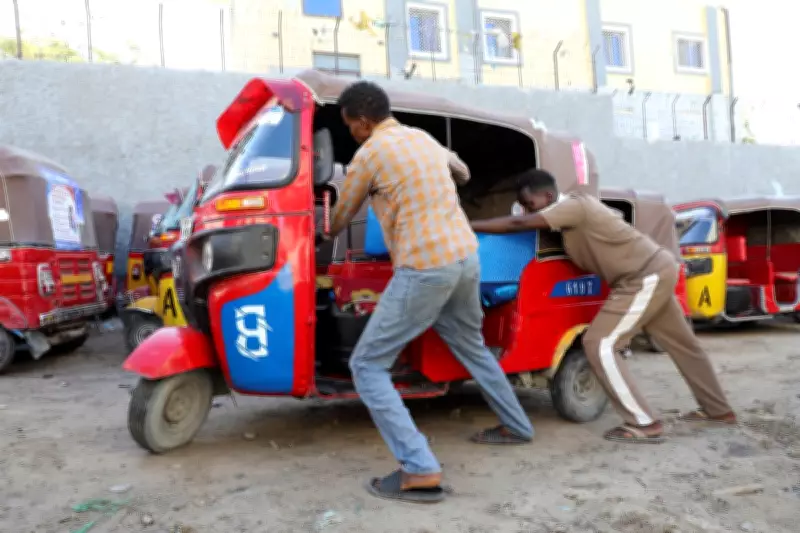
In the bustling streets of Mogadishu, a familiar sight is rapidly disappearing as tuk-tuk drivers are forced to abandon their livelihoods. The global oil crisis, intensified by disruptions to shipments through the Strait of Hormuz due to the ongoing Iran conflict, has sent fuel prices soaring, rendering the three-wheeler taxi businesses unsustainable across Somalia's capital.
Drivers Forced to Park Vehicles as Passengers Vanish
With fuel costs more than doubling in some regions of Somalia, tuk-tuk operators have been compelled to raise fares significantly. This has led to a dramatic decline in passenger numbers, as residents opt to stay home or travel on foot instead of paying the higher transportation costs. Many drivers, facing empty seats and mounting financial pressure, have parked their vehicles in yards, effectively halting operations.
Hasan Suleiman, a 21-year-old tuk-tuk driver, expressed the dire situation to Reuters: "There are no passengers. People stay home or walk on foot. We raised fares because fuel prices went up. The city has few passengers and they won't pay the higher fares. We have inevitably parked the tuk-tuks."

Global Oil Market Turmoil Hits Vulnerable Nations
The conflict has severely impacted the passage of approximately one-fifth of the world's oil and liquefied natural gas through the critical Strait of Hormuz, a narrow waterway between Iran and Oman. This disruption has left African nations, including Somalia, particularly vulnerable to spikes in fuel and food costs. Oil prices have fluctuated wildly, climbing around 40 per cent since the war began four weeks ago.
On Thursday, Brent crude, the international benchmark, rose 1.3 per cent to $98.51 per barrel, after dipping below $95 the previous day. Similarly, benchmark US crude increased by 1.6 per cent to $91.75 a barrel. This volatility follows Iran's dismissal of a US ceasefire plan, which had offered a 15-point proposal to reopen the strait.
Humanitarian and Economic Fallout in Somalia
The crisis compounds existing challenges in Somalia, where approximately 6.5 million people—roughly a third of the population—already face severe hunger amid a prolonged drought. For tuk-tuk drivers like Jamal Omar, a 55-year-old operator, the situation is devastating. "The tuk-tuk needs fuel, and I need to provide for my family from what it earns. We are in a very bad condition," he lamented.
As the Strait of Hormuz remains shut, with Iran conducting attacks on Israel and Gulf Arab countries and the US preparing to deploy more troops, the global oil market continues to experience significant fluctuations. This instability not only threatens transportation sectors but also exacerbates broader economic and humanitarian crises in vulnerable regions like the Horn of Africa.