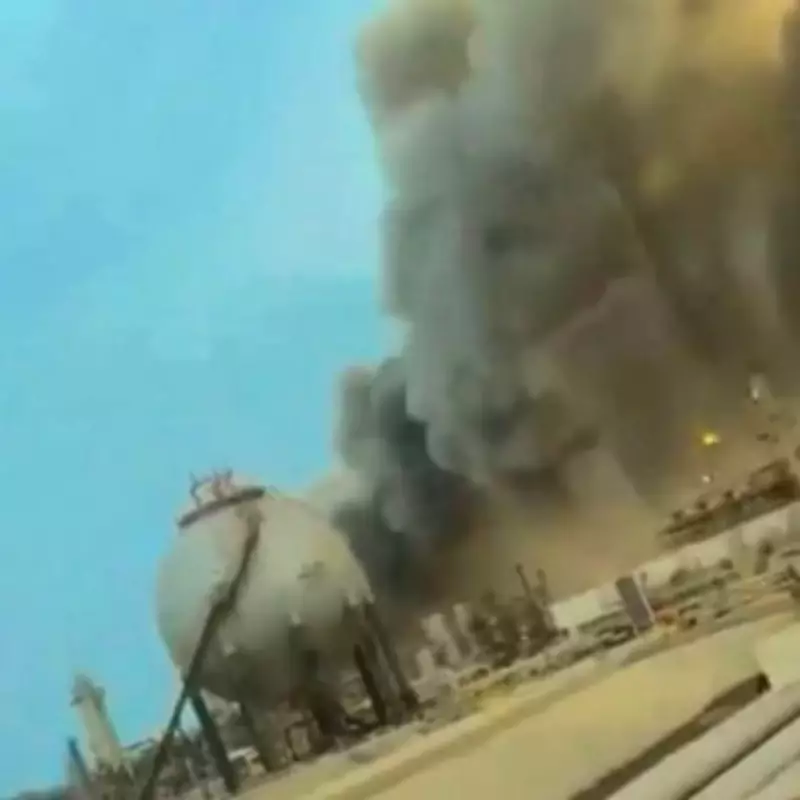
Major Fire at Saudi Aramco's Ras Tanura Refinery Following Suspected Drone Attack
A significant fire has broken out at the Aramco oil refinery in Ras Tanura, Saudi Arabia, one of the largest refining facilities globally, after a suspected drone strike believed to be of Iranian origin. The incident has led to the immediate shutdown of the refinery, with thick, dark plumes of smoke visible billowing from the site, according to eyewitness reports and social media imagery.
Details of the Suspected Attack and Immediate Impact
The fire erupted following what is described as a drone strike targeting the Ras Tanura facility, a critical component of Saudi Arabia's oil infrastructure. Initial reports indicate that the strike has forced Aramco to cease operations at the refinery, potentially disrupting global oil supplies and markets. The timing and nature of the attack suggest a deliberate escalation in regional tensions, with Iran suspected as the perpetrator.
Visual evidence from the scene, including images shared on social media platforms, shows extensive smoke clouds rising from the refinery, highlighting the severity of the blaze. Emergency response teams are likely on-site, though official statements from Aramco or Saudi authorities are pending as this remains a developing situation.

Broader Implications for Global Energy and Geopolitics
This incident at Ras Tanura could have far-reaching consequences, given the refinery's role in processing crude oil for international markets. Any prolonged shutdown might affect oil prices and supply chains, exacerbating existing geopolitical strains in the Middle East. The suspected involvement of Iran adds a layer of complexity, potentially heightening conflicts between Saudi Arabia and Iranian-backed factions.
As a breaking news story, further updates are expected regarding the extent of the damage, casualty reports, and official responses from involved parties. The situation underscores the vulnerability of critical energy infrastructure to asymmetric attacks in volatile regions.