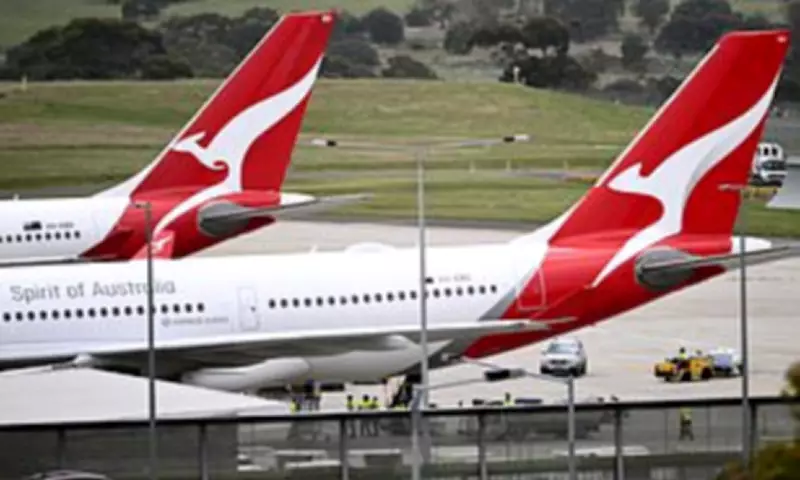
Qantas and Jetstar will extend their domestic flight reductions for an additional three months due to the ongoing conflict in the Middle East and its impact on global oil supplies. The Australian airline group made the announcement on Friday, citing sustained high fuel costs as the primary reason for the capacity cuts.
Capacity Reductions Extended
The Qantas Group stated that it has extended previously announced capacity reductions of 5 percentage points until the end of September, primarily affecting Qantas and Jetstar flights on major capital city routes. The airline had initially planned to implement these cuts from May to June. Customers affected by schedule changes are being contacted directly and offered alternative flights or refunds.
International Network Adjustments
Schedule changes across the group's international network have also been extended. In response to strong demand for travel to Europe, more aircraft have been redeployed for routes between Australia and the continent. Qantas's additional Perth-Rome flights have been extended by another three months, until the end of October. Services to Paris will revert to three return flights per week as planned in August and continue to operate from Sydney via Singapore. The group has also reduced capacity on other markets, including Qantas's Sydney to Bengaluru service, which will be temporarily suspended from August and resume at the end of October. Both Jetstar and Qantas have reduced capacity across the Tasman.

Fuel Supply Concerns
The announcement comes amid ongoing talks between Australian businesses and Chinese state-owned oil companies regarding jet fuel sales. Foreign Minister Penny Wong confirmed the development in Beijing on Wednesday night after meeting her Chinese counterpart Wang Yi, describing it as an early but significant result of sustained high-level engagement between the two governments. Wong stated that the Chinese Government is facilitating engagement with Australian businesses on jet fuel, expressing appreciation for this cooperation.
Airlines have warned that existing fuel assurances may run out by the end of May as export bans and restrictions ripple across global markets. China is Australia's largest supplier of jet fuel, accounting for approximately 30 per cent of the country's supply, and ordered refineries to halt oil exports in March. The Middle East conflict has resulted in the closure of the Strait of Hormuz, a crucial route for around 20 per cent of global oil flows and approximately 80 per cent of oil destined for Australia and the broader region.
Financial Impact
In April, the Qantas Group stated that around 90 per cent of its crude oil supply is hedged, but jet refining margins have surged. As a result, Qantas estimated it could be paying between $3.1 billion and $3.3 billion for the six months up to June 30, the second half of this financial year. This is expected to cost the airline an additional $600 million to $800 million on its fuel bill for the second half of the year. The group is working closely with the government and jet fuel suppliers, who continue to provide confidence in fuel supply for the remainder of April and well into May, while closely monitoring the ongoing uncertainty in global fuel supply chains.