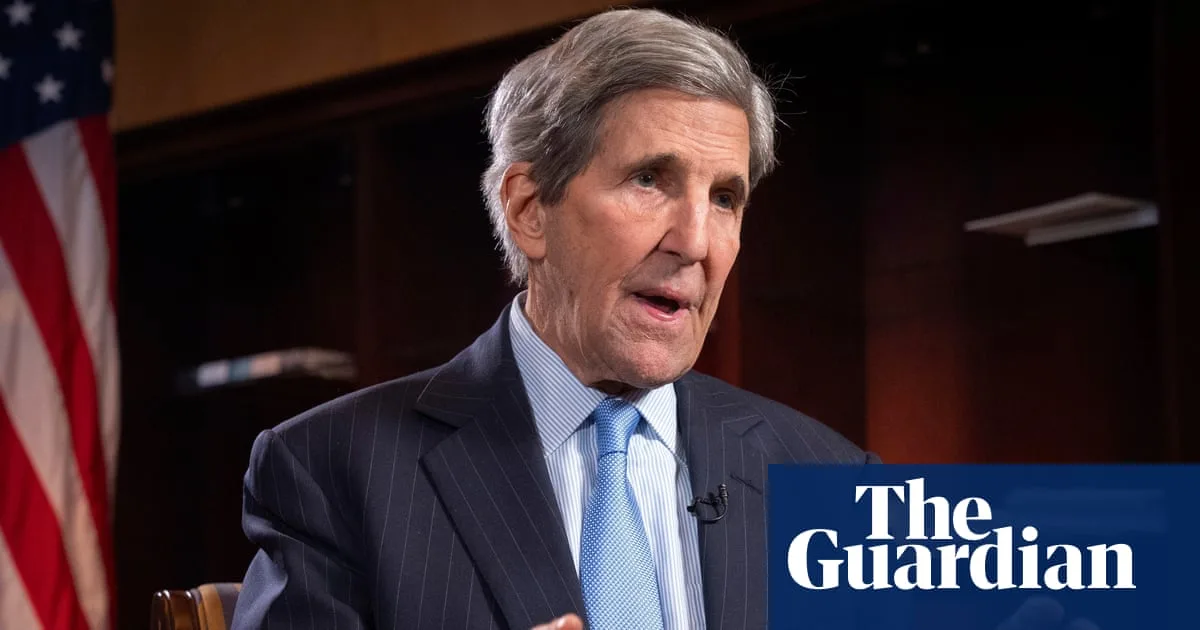
Countries must pursue energy independence through renewable resources and nuclear power to avoid the vulnerabilities of fossil fuel supply, former US secretary of state John Kerry has warned. Speaking at the sustainable markets initiative summit, he highlighted how the war in Iran has sent oil prices soaring, with refineries closing and tankers stranded in the Strait of Hormuz, causing global economic disruption.
Kerry emphasised that the crisis underscores the security challenge posed by oil and gas dependence. “Energy independence is even more important going forward, because you don’t want to be the prisoner of a choke point,” he told the Guardian. He noted that the conflict, led by the US and Israel, is not an oil war per se but reveals how reliance on oil makes economies fragile.
The former diplomat argued that the economic and security impacts of the oil shock could accelerate the clean energy transition more effectively than climate appeals. He cited China’s rapid shift since 2019 as an example, moving “at a staggering pace” away from fossil fuels. Kerry also called for building new nuclear plants, including small modular reactors, to meet low-carbon power demands, especially for AI datacentres that require as much energy as a small city.
Kerry warned of a future divided between “electrostates” and “petrostates”, with the former enjoying greater national security. “Electricity is the holy grail right now for everybody,” he said, urging investment in smart grids to harness and distribute power efficiently.