Can Home Batteries Truly Shield You from Soaring Energy Costs?
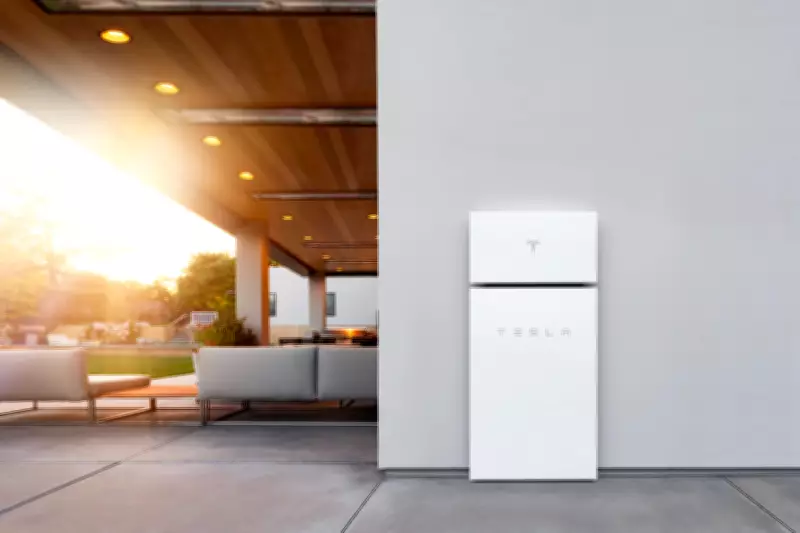
Home batteries, such as Tesla's Powerwall, are increasingly promoted as a financial safeguard against escalating energy bills. The concept is straightforward: charge the battery during off-peak hours when electricity rates are low, then utilise the stored power during expensive peak periods, potentially avoiding high costs from 4pm to 7pm. Some systems even allow users to earn money when wholesale prices drop below zero. This proposition is particularly appealing in a nation still anxious about unexpected bill shocks. However, the critical question remains: how much genuine protection does a home battery actually provide?
The Nuanced Reality of Battery Protection
According to Phil Steele, a future technologies evangelist at Octopus Energy, the answer is more complex than marketing suggests. A battery can significantly reduce exposure to peak prices, but it does not completely detach households from the energy market. The effectiveness hinges on several factors, including what the battery is paired with and how it is used. Batteries enable users to shift their electricity consumption, absorbing cheap off-peak power or surplus solar energy to cover more expensive evening demand. Yet, the size of the battery, the specific tariff in place, and fluctuating price spreads mean the financial benefits are not always stable.
First Principle: Batteries Make Most Sense with Solar
Steele emphasises that batteries are most effective when combined with solar panels. "My preference is always to have a solar system installed," he states. "Because the moment you've got solar, you're generating your own energy and you are storing any excess energy." During spring and summer, typical domestic solar panels often produce more electricity than a household can consume. Without a battery, this surplus is exported to the national grid, with tariffs like Octopus's outgoing rate currently paying 12p per kilowatt hour (kWh). However, if grid electricity costs around 27p per kWh to repurchase later, storing that energy instead becomes more economical.

Steele explains: "You forgo the 12p that you could have got from exporting it, but you're not then having to buy it back again at 27p. So there's a difference – about 15p per kilowatt hour – for each unit that you store in a battery." In this scenario, a battery is not speculative; it maximises the value of self-generated electricity. With a sufficiently large solar array and battery, some households can dramatically reduce bills. Under Octopus's Zero Bills model, which integrates substantial solar generation, battery storage, and electrified heating, Steele notes it is possible to "actually get it down to zero" through strategic self-consumption and export.
Battery-Only Systems: Engaging in Energy Trading
The situation changes for households without solar. A standalone battery operates by purchasing electricity when it is cheap and using it during expensive periods. On time-of-use tariffs, overnight rates can drop to 7p-12p per kWh, while peak evening rates may approach 27p. "You buy it at seven and use it later instead of 27p," says Steele. "You're saving 20p or so per kilowatt hour." While this math appears compelling, it relies heavily on the spread between cheap and expensive periods.
Steele cautions: "You might do your maths on today's tariff, and then discover that the tariffs change." If the gap narrows, the financial return diminishes accordingly. He points to current trends: from 1 March 2026, Octopus's simple flat export rate on Outgoing Octopus falls from 15p to 12p per kWh. Simultaneously, Ofgem's price cap for electricity on standard variable tariffs decreases from 27.69p to 24.67p per kWh from 1 April 2026, reducing the spread by just over 3p. This narrowing means households with battery-only systems are effectively participating in energy trading, exposed to tariff shifts over time. Steele suggests payback periods of three to four years may be achievable in some cases, but vigilance is required.

Smart Tariffs Enhancing Battery Power
Batteries become more potent when paired with smart tariffs. Static time-of-use products, offering guaranteed cheap overnight windows, allow straightforward scheduling. "You can go into the software on the battery system and just say, always charge during these six hours until you're fully charged," Steele explains. Dynamic tariffs, like Octopus's Agile, are more intricate, with prices changing every half-hour based on wholesale market conditions. On windy or sunny days, prices can plummet, sometimes turning negative.
"There are lots of people who have got battery systems and who are using this to charge their battery on those lower or negative rates," Steele says, "to then use later on in the day or to actually export." Automation is crucial here; Octopus provides tariff data via an API, enabling third-party apps and home energy systems to optimise charging and discharging automatically. Tens of thousands of customers use these tools to integrate pricing signals directly, transforming batteries into dynamic assets rather than passive storage.
Covering Evening Peaks: Capacity Limitations
A common misconception is that batteries offer full energy independence. In reality, capacity is a limiting factor. "A typical battery is about 10 kilowatt hours," says Steele. In a three-bedroom home with a heat pump, cooking appliances, and evening screen time, this might cover "about a quarter of the day" in winter. Summer conditions improve, especially with solar, but a 10kWh battery rarely sustains a fully-electrified household from dusk to dawn alone.
To achieve more substantial bill reductions, capacity must increase. Steele provides a theoretical example: if a home charges enough overnight at 7p per kWh to cover its entire daily usage instead of paying 28p during peak hours, "you've got your bill down by three quarters." However, this would necessitate a much larger battery, perhaps 40kWh, and a significantly higher upfront investment.
Costs, Constraints, and Future Grid Potential
Home batteries typically cost several thousand pounds, with prices varying by size and installation complexity. While battery degradation has proven less problematic than anticipated – "batteries are lasting years and working really well," Steele notes – the financial case still depends on tariff conditions. "The main thing is just be mindful that tariffs can change before you do all your numbers based on a particular tariff," he advises. Essentially, a battery does not lock in today's price spreads indefinitely; it secures the ability to respond to them.
Looking ahead, Steele believes batteries could gain value as the grid relies more on intermittent renewables like wind and solar. Renewable generation is variable, with rapid output swings affecting grid frequency. "The National Energy System Operator control room's responsibility is to keep the frequency within range," Steele explains. "They're able to call on battery systems to quickly jump in and either charge or discharge." As flexibility markets evolve to manage these fluctuations, domestic batteries may increasingly serve as coordinated grid-balancing assets, playing a larger role in a renewable-centric energy system.
Conclusion: Do Batteries Really Protect You?
With solar, a battery can materially reduce electricity purchases at peak prices, potentially driving bills close to zero in optimal setups. Without solar, it can still cut costs by shifting consumption to cheaper periods, possibly reducing bills by 10-20%, depending on usage, capacity, and tariff spreads. However, a home battery is not a force field against high prices. It does not remove households from the energy market; instead, it provides greater control over when to engage with it and how to respond to its dynamic swings, offering a nuanced layer of financial protection in an uncertain energy landscape.