

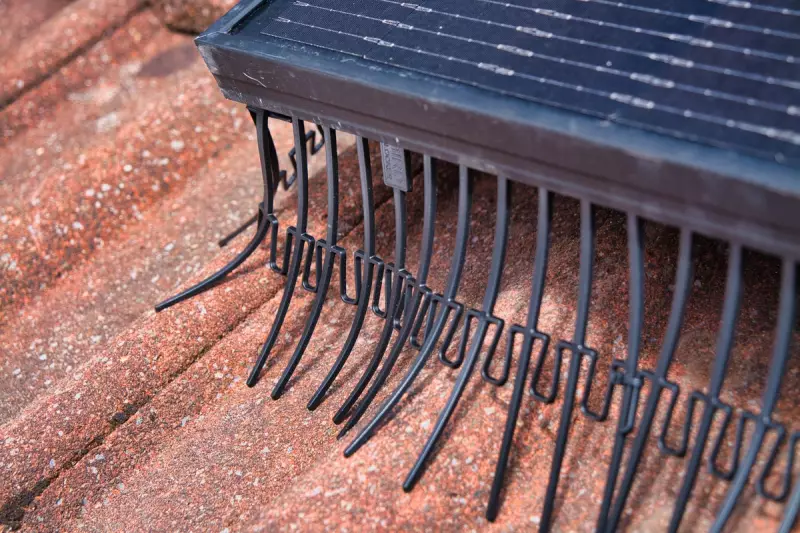
While solar panels are famously low-maintenance, many UK homeowners discover an unexpected side effect after installation: birds. The small, warm gap between roof-mounted panels and the tiles can become an ideal nesting spot, leading to noise, mess, and potential damage. Bird proofing is often sold as an essential add-on, but it isn't always necessary. Understanding when you need it – and what it truly costs – is key to deciding if it's a worthwhile investment for your home.
Why Birds Love Solar Panels and the Problems They Cause
Most solar panels are mounted a few inches above the roof to allow for crucial airflow. For birds like pigeons, starlings, and gulls, this gap offers a sheltered, warm haven from predators and the elements. Once they establish a nest, they are likely to return year after year, especially in built-up areas with plentiful food sources.
The most immediate issue homeowners face is noise, with scratching and fluttering sounds often amplified through the roof structure. This is frequently followed by problems with droppings and nesting debris, which can stain roof tiles, patios, and walls, clog gutters, and create a persistent cleaning burden. The acidic nature of bird droppings can also contribute to corrosion on metal roof components over time.

There is also a tangible, if smaller, risk to your system's performance. Nesting materials can obstruct airflow beneath the panels, causing them to run hotter and slightly reducing their efficiency. In rare instances, birds may peck at or damage cabling and fixings, potentially leading to more serious electrical faults.
Bird-Proofing Solutions: What Works and What It Costs
So, is bird-proofing always essential? The answer is no. Many installations, particularly those on steeper roofs or with minimal panel clearance, never encounter issues. However, proofing is strongly recommended if birds have already nested under your panels, you live in an area with a high bird population, or you're dealing with recurring noise and mess.
Effective Bird-Proofing Methods
The most reliable solution is a mesh bird-proofing system. Typically made from galvanised or stainless steel, a mesh is fitted around the perimeter of the solar array. It blocks access while maintaining vital airflow and is usually clamped to the panel frames, avoiding the need to drill into the roof. Quality systems can last up to 10 years.
Other methods, like bird spikes, visual deterrents, or sonic devices, are generally less effective for solar panels. Birds quickly adapt to fake predators or reflective strips, and spikes don't prevent access to the space underneath. While nest removal provides temporary relief, active nests are legally protected in the UK during breeding season, and birds will often return unless access is permanently blocked.
Understanding the Costs in the UK
For a standard residential system, bird proofing typically costs between £300 and £800 on top of your initial solar panel investment. This price, based on quotes from UK pest control and specialist firms, covers mesh systems fitted to existing roof-mounted arrays. The final cost depends on the number of panels, roof height, and ease of access. If scaffolding is required, or if existing nests need professional cleaning and sanitisation, the bill can rise further.
Crucially, most proofing systems can be retrofitted to existing solar panels by specialist technicians. It's vital to choose an installer experienced with solar systems who uses non-invasive fixing methods to avoid affecting panel warranties or performance.
Is Bird-Proofing Your Solar Panels Worth the Investment?
The value of bird proofing ultimately depends on your circumstances. For homeowners with no prior issues, it may be an unnecessary upfront cost. However, for those already experiencing problems, it represents a cost-effective, long-term solution to prevent ongoing nuisance, maintenance, and potential efficiency losses.

As with many protective measures for your home, the benefit lies in prevention. A one-off investment in a quality mesh system can provide peace of mind and avoid repeated cleaning and repair bills over the 20+ year lifespan of your solar panels, allowing your system to operate with minimal intervention.





