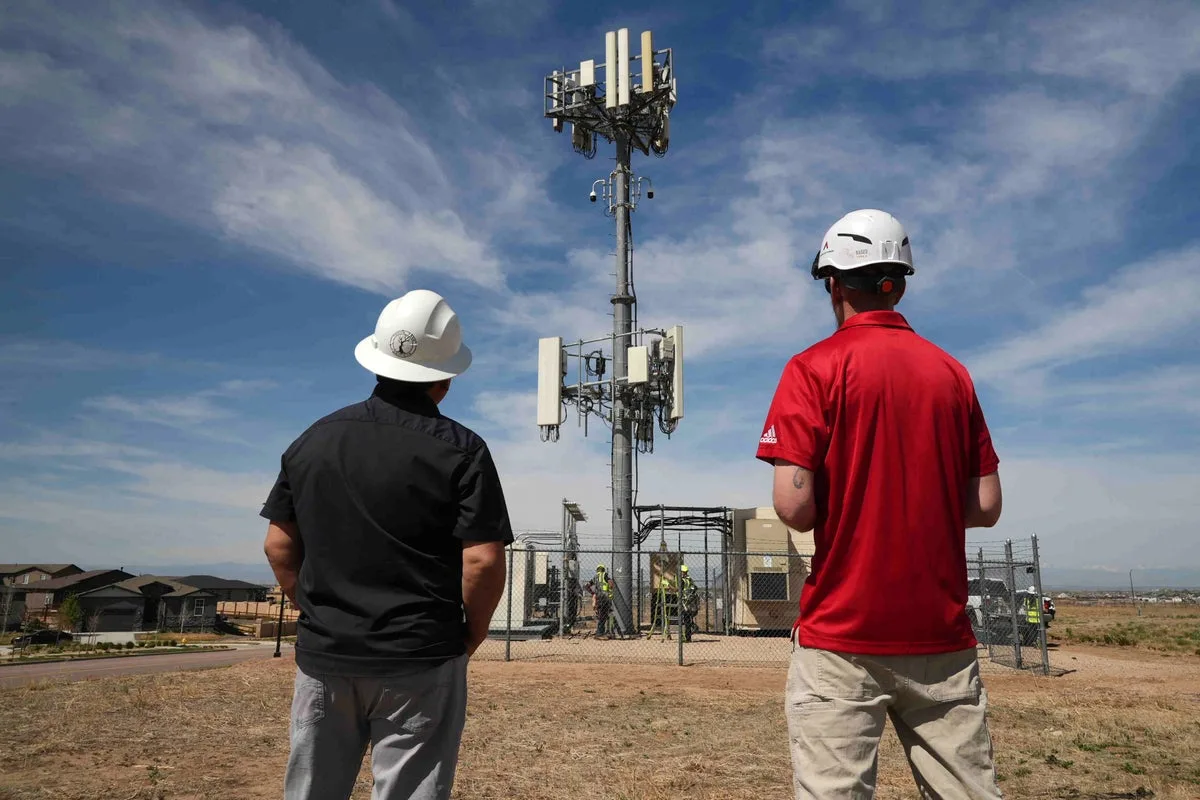
States across the wildfire-prone Western US are increasingly turning to artificial intelligence to detect fires earlier, as record-breaking heat and a poor snowpack raise concerns about a severe wildfire season. In March, AI detected smoke on a camera feed from Arizona's Coconino National Forest. Human analysts confirmed it was not a cloud or dust, then alerted the state's forest service and Arizona Public Service, the largest electric utility. This early detection allowed firefighters to contain the Diamond Fire before it grew beyond 7 acres.
How AI Cameras Work
Arizona Public Service now operates nearly 40 active AI smoke-detection cameras and plans to have 71 by summer's end. The state's fire agency has deployed seven of its own. In Colorado, Xcel Energy has installed 126 cameras and aims to cover seven of eight states it serves by year's end. ALERTCalifornia, a network of about 1,240 AI-enabled cameras, works similarly. Human analysts verify detections to minimize false positives and train the AI to improve accuracy. According to Neal Driscoll, founder of ALERTCalifornia, the AI often beats 911 calls in reporting fires.
Advantages in Remote Areas
The technology is especially valuable in sparsely populated, rural, or remote high-risk areas where fires might not be quickly spotted. Brent Pascua, a Cal Fire battalion chief, noted that in many cases, a response is initiated before 911 is called, and sometimes the fire is extinguished without any 911 call. Pano AI, which combines high-definition camera feeds, satellite data, and AI monitoring, has seen growing interest since 2020. Its cameras are deployed in Australia, Canada, and 17 US states. Last year, Pano AI detected 725 wildfires in the US. Cindy Kobold, a meteorologist for Arizona Public Service, said the technology provides notifications about 45 minutes faster than the first 911 call.
Driven by Worsening Wildfires
Arvind Satyam, co-founder of Pano AI, explained that the technology was developed due to a lack of hardened solutions to combat worsening wildfires, which are fueled by climate change. The AI helps firefighters respond safely and effectively while protecting communities and infrastructure. However, there are challenges. The cost is significant: Pano AI charges about $50,000 annually per camera, which includes fire risk analysis and a 24/7 intelligence center. False alarms can also be costly in terms of time and attention, said Patrick Roberts, a senior researcher at RAND. Moreover, AI detection does not prescribe the best course of action; human decision-making remains essential.
Complementing Human Response
In highly populated areas, people often spot fires quickly, and the technology is less useful during extreme weather events like hurricane-force winds. Pascua emphasized that AI complements Cal Fire's work by providing real-time information for better decisions on the fire ground. AI is also being explored for other firefighting tasks, such as identifying optimal areas for vegetation thinning and controlled burns, and monitoring air quality for smoke. At George Mason University, researchers are developing a system to forecast fire spread and smoke pollution impacts, aiming to provide real-time maps for evacuation and closure decisions within three years.
Roberts concluded that AI in wildfire detection is no longer speculative but is actively used, and its role will only expand. "The future is AI everywhere," he said, "and the lines will blur between AI wildfire detection and just wildfire detection."