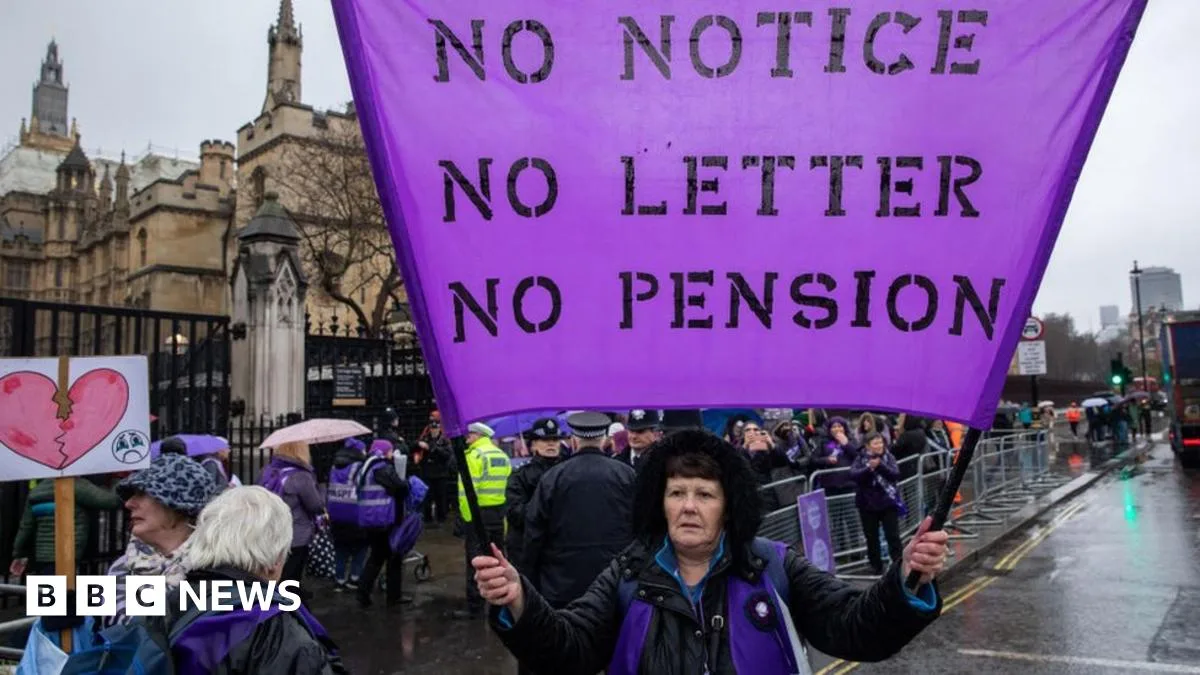
The government has rejected a recommendation to compensate millions of women affected by changes to the state pension age, sparking outrage among young voters who are demanding justice for the Waspi (Women Against State Pension Inequality) campaigners. Work and Pensions Secretary Liz Kendall accepted that the changes were not communicated quickly enough, but said there was no evidence of direct financial loss and refused to pay up to £2,950 per person as recommended by the Parliamentary and Health Service Ombudsman (PHSO).
The PHSO found that the Department for Work and Pensions had failed to adequately inform thousands of women about the increase in the state pension age from 60 to 65, and later to 66. The ombudsman recommended payments between £1,000 and £2,950, but noted the government had indicated it would refuse to comply. Chancellor Rachel Reeves defended the decision, saying it would not be the best use of taxpayers' money given widespread awareness of the changes.
Waspi campaigners, who have held protests and lobbied successive governments, argue that women born in the 1950s suffered financial and emotional distress due to inadequate notice. The group estimates at least 300,000 affected women have died during its campaign. While Kendall and Prime Minister Sir Keir Starmer previously supported the campaign, Labour did not commit to compensation in its 2024 election manifesto, leading to accusations of betrayal.
Young voters have taken up the cause, with many expressing frustration that the government is ignoring the ombudsman’s findings. Social media campaigns and student-led protests have highlighted the intergenerational injustice, calling for fair treatment of those who planned their retirements based on outdated information. The government maintains that the vast majority of women were aware of the changes, but campaigners insist that compensation is long overdue.