
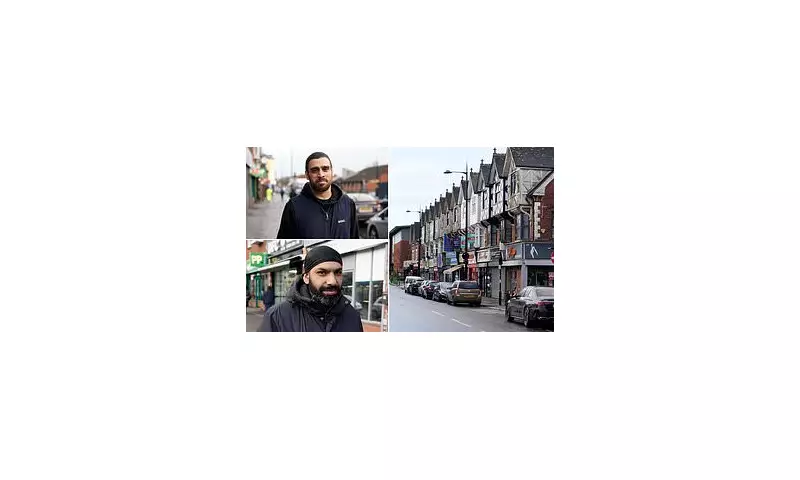
The recent Budget announcement by Chancellor Rachel Reeves, which included the controversial decision to lift the two-child benefit cap, has reignited a fierce national debate over welfare. The move, labelled a 'Budget for Benefits Street' by critic Kemi Badenoch, allows parents to claim Universal Credit and tax reductions for their third and subsequent children.
Ground Zero of the Benefits Debate
Nowhere is the division over this policy more apparent than in the Lozells neighbourhood of Birmingham. Official data from the Office for National Statistics reveals this area holds the unenviable title of the UK's Universal Credit capital. More than a fifth (22.3%) of its working-age residents are signed up to Universal Credit or Jobseeker's Allowance.
Lozells is one of Birmingham's most deprived wards, characterised by a high proportion of residents with no formal qualifications. Its high street shows visible signs of disrepair, and the area struggles with one of the city's highest crime rates. Amidst this backdrop, hard-working families express growing frustration, claiming some neighbours have learned to 'exploit' the welfare system.
A Community Divided
During a weekday visit by the Daily Mail, the tension was palpable. An anonymous local pharmacy owner voiced a common sentiment, stating, 'They're taking everything from us and giving it to these people.' He fears the situation will deteriorate further, arguing that removing the two-child cap and increasing Universal Credit by 4% removes the incentive to work. 'This black hole is never going to end. The more they put into the system the more they need,' he concluded.
This perspective was echoed by Haroon Nawaz, owner of Nawaz Fashions, who has worked on the high street for years. The 42-year-old believes the majority of benefits claims in Lozells are 'fraudulent'. 'If you are able-bodied you should be working,' he asserted, suggesting the council should conduct door-to-door checks. He acknowledged the child cap change could help families but maintained that 'half the people claiming it are fraudulent.'
The Other Side of the Coin: Lack of Opportunity
However, other residents pointed to a stark lack of opportunity as the root cause of the high claimant count. Basant Singh, 40, has been searching for employment for two years and relies on housing and child benefits. 'It's the lack of jobs and people are not skilful enough for them,' he explained, noting that the intense competition for online applications makes securing work even harder.
He welcomed the scrapping of the two-child cap, stating, 'They are kids that need food at the end of the day.' However, he criticised the 4% Universal Credit increase as insufficient, saying the extra £5 a month 'doesn't even get you bread and milk these days.'
Another local, named only as Ahmed, blamed a deficit of funding and positive intervention. 'It's the lack of opportunity,' he said, calling for apprenticeships for young people. He argued that cuts to youth services and high criminality create barriers that politicians in Whitehall fail to understand. 'This is a community who need these opportunities to be brought to their door,' he added.
The issue is not confined to Lozells. All ten of the UK's areas with the highest rates of Universal Credit and Jobseeker's Allowance claims are located within Birmingham. In neighbouring Handsworth, which has the second-highest claimant rate, 'White Dee' from Channel 4's Benefits Street now runs a community hub. She pointed to unregulated shared accommodation and rogue landlords as factors driving deprivation and vulnerability, which in turn fuel the benefits dependency and crime statistics.
The government's policy, aimed at lifting 450,000 children out of poverty, is estimated by the fiscal watchdog to bring an additional 25,000 families onto benefits. As the debate continues, Lozells stands as a stark microcosm of a national dilemma, caught between the need for a compassionate social safety net and the pursuit of a system that incentivises work.




