Fences are often the first thing you see when you look out into your garden, and frequently the first hello for anyone arriving at your home. Once, just three types of fencing framed British streets: the simple lap panel, the slightly sturdier featherboard, and the wholesome-looking picket. Not so anymore. Technology and trends have transformed home boundaries, with everything from minimalist slatted screens to weather-proof composite affairs on offer.
The Importance of Boundaries
Renovating or replacing existing fencing can be a notoriously thorny issue, and a tempting quick spruce-up can often lead homeowners down the garden path of bad taste, say design experts. Such is the nature of a shared border: if you get it wrong, it often isn't just you who has to live with it, but those who reside next door too.
Jordana Ashkenazi, founder of award-winning design studio Element One House, tells the Daily Mail that fences are often a prime site for DIY disasters, and you can often tell what kind of homeowner owns a property just by the fences that fringe their exterior space. She explains: "People spend fortunes on kitchens, bathrooms, even cushions, and then completely forget the one thing everyone sees first, particularly in the front garden. The boundary. Whether it's a fence, a wall, railings, or even a hedge, it's the opening line to your home. It sets the tone before anyone steps inside and, consciously or not, people take it in straight away."

In some homes, it's front and centre. In others, it sits quietly in the back garden or along a side return. But wherever it is, it still becomes the backdrop to your space, and that matters just as much. "The biggest mistake people make is treating their boundary as an afterthought. If it feels considered, it lifts everything around it. If it feels rushed, it brings everything down with it. And people notice that more than you think."
Fence Types and Their Messages
Cheap and Cheerful: The Lap Panel
Secured within a wooden frame, the lap panel is a traditional fencing type with overlapping timber slats. Jordana says: "This is the most basic and widely used option. It's cheap, functional, and does exactly what it needs to do. It's not about design, it's about practicality. You tend to see this in more no-frills, everyday gardens where the priority is simply getting something up and moving on." She adds: "It has a very 'that'll do' energy. Nothing offensive, nothing exciting, and not really driven by style."
Retirees' Favourite: Featherboard Fencing
Sensible and a little bit pricier than a standard lap panel, featherboard is a frequent sight in suburbia. More expensive than lap panel, it doesn't deviate too far from tradition but lets people know it's better quality. Jordana's verdict: "This is a step up. It's more solid, more durable, and feels more considered than a basic panel. You'll often see this in tidy, well-kept gardens where everything is done properly, but not overly designed." If a featherboard boundary edges your garden, then you probably care about what your neighbours think and are keen not to be the house that lets down your middle-class neighbourhood. "It sits firmly in that middle ground. Slightly more polished, slightly more intentional, often associated with family homes or middle-aged gardens where things are meant to look correct and finished."

Bordering Bad Taste: A Grey Painted Fence
Nothing wrong with reaching for a tin of paint come spring to tart up a lap panel fence, is there? Well, says our design expert, investing £50 in some paint and brushes might sound like an affordable outlay, but it could equal a taste fail, and it all comes down to which colour you choose. "At one point, everything went grey. Grey sofas, grey kitchens, grey floors, and then, naturally, the fence had to follow. It became the fastest way to feel modern. If it's grey, it must be design-led." She continues: "So suddenly everyone was out there painting their fences grey. I'll do mine too. Now it looks current. Now it feels expensive. The reality is, it doesn't always work like that. Grey outdoors can feel quite flat and lifeless if it's not balanced properly. Without planting, texture, or warmth around it, it can end up dulling the space rather than elevating it. It often gives off that slightly try-hard, trend-chasing energy. The intention is there, but the execution doesn't always land, and instead of looking high-end, it can tip into something that feels a bit downmarket." Can you ever paint a fence without it looking downmarket? Yes, says Jordana. "If you are going to paint a fence, warmer tones tend to work far better. Soft olives, earthy neutrals, and more natural shades sit much more comfortably in a garden setting and feel less trend-driven."
'Doing Well for Themselves' Millennials: Venetian Panels
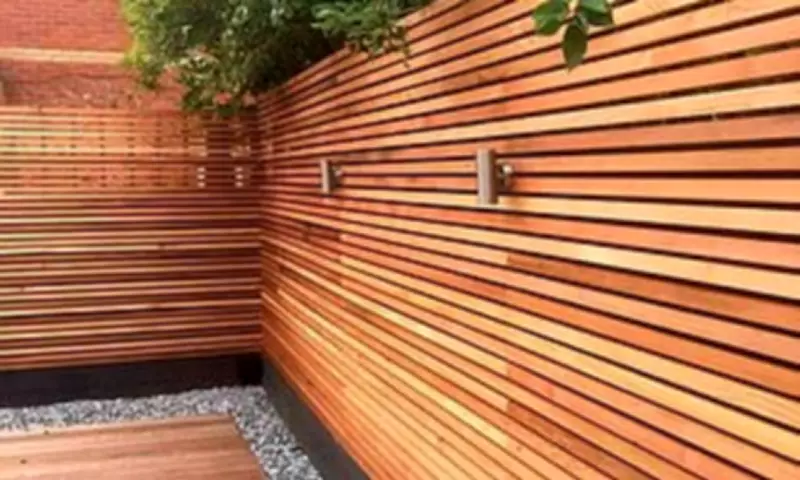
Minimalist battens of red-hued wood might point to a thirtysomething couple, but they can make a garden feel a little characterless, warns our expert. There is no way an upwardly mobile thirtysomething would utter the words lap or featherboard to their fence installer; it's all about the batten, ideally in classy red cedar. Laid inch-perfect apart, they create a modern-looking screen. Our expert's lowdown: "This is the more curated, contemporary option. It's clean, architectural, and very intentional. You can tell it's been chosen as part of a wider look, not just thrown in at the end. This is very much the domain of younger, design-conscious homeowners or well-to-do couples who want their garden to feel considered and on trend. It has that very polished, slightly Instagrammable feel. It looks great when done well, but it can feel a little over-styled if everything around it is just as controlled."
Too Classy for an Actual Fence? A Natural Boundary
You don't get many fences in the Cotswolds, and that could be for good reason. Boundaries that don't rely on the kind of fences seen in suburbia are often much preferred in England's prettiest towns and villages. Skipping the lap panel or featherboard is arguably the most 'refined' border you can have, says Jordana. "An ivy-covered wall or boundary softened with planting feels very English. It looks traditional, established, and like it's always been there. There's a softness to it that makes the whole garden feel calm and effortless. It doesn't shout for attention, it just works. No boundary required if you're properly posh and living in rural England. You tend to associate this with older, more established homes or people who understand that a garden should feel natural, not over-designed." You'll need to put the graft in every year though, or risk a boundary that quickly becomes untamed and irks your neighbours. "It only works if it's maintained," says our expert. "Ivy has a habit of taking over if you leave it to its own devices, and what starts off looking romantic can very quickly feel messy and overgrown. Keep it trimmed, keep it intentional, and it stays elegant rather than chaotic." A simple brick or stone wall with planting in front, or ivy growing up it, can achieve a very similar look. It feels solid, timeless, and far more considered than most off-the-shelf fencing options. That said, stone or brick boundaries are not always possible. Where they are, they bring a natural, grounded quality to a garden that is hard to replicate. More generally, having some form of natural element within a garden, whether through planting, materials, or texture, makes a noticeable difference to how calm and cohesive the space feels.
The Statement Fence: Black Decorative Panels
The one big flaw with installing a fleet of statement fences, often black decorative metal panels with floral designs, is that they can look on point one season and tacky the next. Hello nouveau riche, basically. Jordana offers a word of caution: "They can look striking, but they're not the easiest to get right. A lot depends on the pattern and how much of it you use. They often appeal to people trying to create something more design-led or eye-catching, but there's a fine line. Some designs look great, others can feel dated quite quickly, and it's the kind of thing you might fall out of love with." The other pitfall? "They also don't feel particularly natural. At the end of the day, they are large, quite chunky pieces of metal in a garden setting. Used sparingly, they can be interesting. Overdone, they can start to feel heavy and a bit forced. This is where things can lean slightly nouveau riche, where there's an effort to stand out, but it doesn't always feel effortless."
The Student Spruce-Up: Wicker or Bamboo Screens
Who needs to lever out a concrete fence post when you can just tack on a wicker screen and have a new look by lunchtime? Says Jordana of the wicker and bamboo screens you can pick up on Amazon for around £17 a panel: "These have a softer, more rustic feel, but they can also come across as a bit temporary. They often feel like a quick fix or a budget solution rather than something designed to last. There's a slightly student, stop-gap energy to them, like something that's been put up for now and might be replaced later. If you like that natural look, bamboo can actually be a better option when it's done properly. It has a similar warmth but can feel more intentional and more durable if it's well installed and maintained."
Height and Social Signals
The height of a fence can say a lot about its owner too, says our interior designer. "Shorter fences feel open and sociable. They suggest you're happy to be part of your surroundings and not completely closed off. A full 6ft fence is more about privacy and control. It creates a clear boundary and a sense of separation. Neither is right or wrong, but they do give off very different signals."
Lighting and Accessories
Lighting up a fence or highlighting planting in the evening instantly creates a much more elevated, considered feel, designer Jordana Ashkenazi says. "It adds depth, warmth, and that slightly atmospheric quality that makes a garden feel far more luxurious than it actually is. It's one of the easiest ways to make something quite ordinary feel far more intentional." If budget is a concern, even small details like good-quality pots can make a noticeable impact. "A few well-chosen planters with layered greenery can soften a boundary and make it feel styled rather than purely functional. It's often these smaller additions, rather than the fence itself, that make a garden feel finished."
Who Should Pay for the Fence?
Replacing or renovating a boundary can be a tinderbox conversation between neighbours who don't see eye-to-eye on responsibility. Kate Fowler, Senior Associate Solicitor at BRM Legal in Birmingham, who works with outdoor hot tub brand Platinum Spas, told the Daily Mail it might feel like a difficult conversation to have, but if you stick to the facts, it doesn't need to be tense. First, she says, look for the 'T' mark in the deeds to your home, which shows clearly who owns a boundary structure or is responsible for repairing and maintaining it. "If the 'T' mark points inwards onto your land, it usually means that the responsibility is yours. This should be confirmed in the body of the relevant title deed." What if the deeds are unclear? Fowler advises: "It may be necessary to look at other evidence. For example, information provided on purchase of the property, knowledge as to who erected the boundary feature, or any long-standing agreement between neighbours. Where ownership or the responsibility for maintenance remains unclear, and the fence is on the boundary line, the parties may decide that the feature is a shared boundary. In this case, repairs or replacement should be agreed jointly, with costs shared. It is also possible to formalise arrangements through a boundary agreement, which can be registered at HM Land Registry." And what if a neighbour simply won't play ball? "If your neighbour is responsible for repair and maintenance of a fence, but refuses to do so, a solicitor can assist you by determining whether you may have a contractual claim for damages, or a potential claim in private nuisance, depending on the facts."