The Treasury has delivered its verdict on a substantial campaign for pensioners to receive double their personal tax allowance following a crucial House of Commons debate. Yesterday evening saw Westminster Hall host discussions after a significant petition attracted 120,000 signatures demanding reform that would increase the UK state pension tax threshold from its present £12,570 to £25,140.
Chancellor Rachel Reeves' Treasury delivered a decisive response to the proposal - bringing disappointing news for those anticipating change. The Government has formally rejected doubling the personal tax allowance for state pensioners, following a Westminster Hall debate triggered by an e-petition exceeding 120,000 signatures.
During the debate on 15 June 2026, MPs from across the political spectrum voiced concerns that increasing state pensions, safeguarded by the triple lock, alongside frozen personal tax thresholds, are pulling thousands of elderly people into the income tax net. Conservative MP John Lamont, who initiated the debate, emphasised that managing unexpected tax demands from HM Revenue and Customs or being compelled to complete self-assessment forms can be "both distressing and deeply worrying for those hard-pressed pensioners".
The Petition's Demands
The petition, established by Tim Mason, was submitted because numerous pensioners who worked diligently and saved throughout their working lives are discovering their relatively modest private or occupational pensions being substantially taxed once they start drawing the state pension. Conservative MP Mr Lamont stated: "There are growing concerns that increasing numbers of pensioners are finding themselves liable to pay tax on their pensions. That is because the triple lock has increased the state pension year on year, while personal tax allowances have remained frozen. As a result, some pensioners are required to complete a self-assessment tax return, while others receive unexpected tax bills from HM Revenue and Customs."
"That matters to pensioners, because the state pension will soon rise above the income tax threshold due to the triple lock, which we all agree is a good thing to remedy the ills that happened when the state pension fell to, I think, about 13% or 14% of average earnings. That means that pensioners will now have to start paying income tax."
The Government have proposed that basic-rate state pensioners will not have to fill in a tax return, although this seems to be a specific sort of form-filling break for the over-67s rather than an actual hiking of the allowance.
"I look forward to hearing from the Minister whether he is willing to raise the tax-free threshold, as identified in this petition, from £12,500 or thereabouts to £25,140, and will then maintain it at 200% of the working person's tax-free threshold."
Liberal Democrat MP Charlie Maynard also launched an attack on the frozen thresholds, branding them a "stealth tax grab" that drags pensioners and low-income earners into paying greater levels of tax. Raising tax thresholds represents the most effective and equitable means of reducing taxes.
The Liberal Democrats would champion this approach as a method of lowering income tax for everybody at every point in their lives, removing the lowest-paid, including state pensioners, from income tax entirely when public finances permit. During their time in government, the party raised the personal allowance, lifting millions out of income tax, returning money to people's pockets and helping guarantee that work and hard-earned state pensions would pay.
"By contrast, the Conservatives and Labour have frozen it again and again. That has left us in a position in which the state pension is nearly equal to the threshold. The full rate of the new state pension for 2026-27 is £240.30 a week, or £12,547.60 a year, while the standard personal allowance is £12,570 a year. It is an absolutely tiny gap."
Government's Response
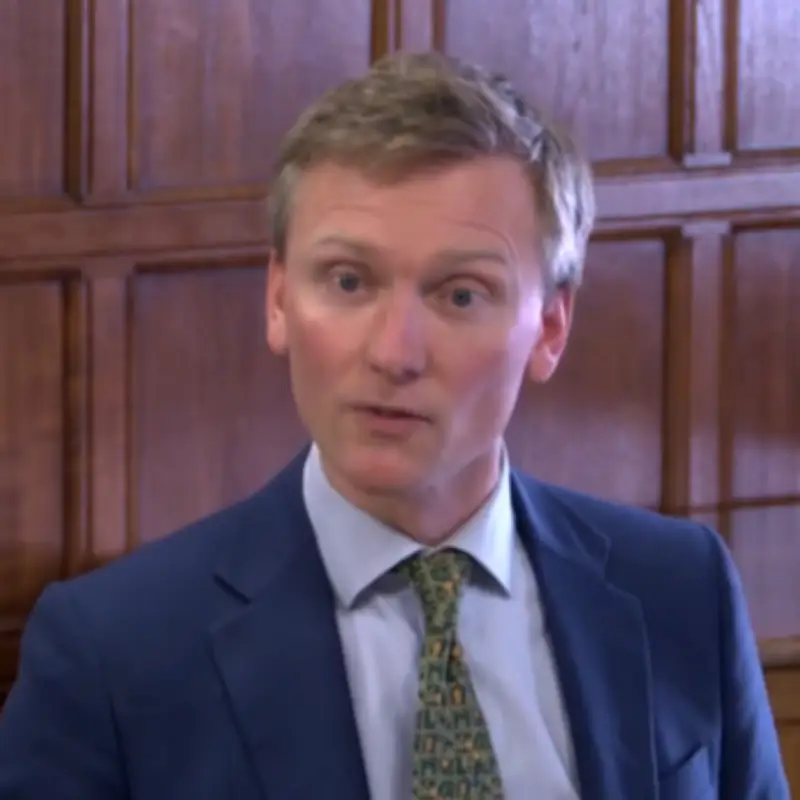
Pensions Minister Torsten Bell delivered a firm rebuttal to campaigners on behalf of the Government, stating unequivocally that "no political party will deliver a doubling of the personal allowance for pensioners". He outlined that such a substantial increase would carry a fiscal cost of "several billion pounds each year," which he contended sits at odds with the Government's two principal priorities: increasing the basic state pension and rescuing the NHS.
Mr Bell stood by the Government's stance, highlighting that the tax system has long treated pensions as taxable income, and pointing out that more than 80% of pensioners were already subject to income tax by the close of the previous Conservative administration. He further argued that extending the freeze on the personal allowance was an unavoidable decision to place public finances on a stable footing, emphasising that the UK's tax system remains progressive and "those who have more contribute more".
He said: "The yearly amount of the full new state pension is projected to rise by about £2,100 over this Parliament, reflecting our manifesto commitment to uprate via the triple lock throughout this Parliament."
While the £25,140 threshold was ruled out, Bell did confirm some forthcoming administrative relief for older taxpayers. He revealed that the upcoming Finance Bill will incorporate specific provisions to reduce the administrative burden on pensioners, guaranteeing they will not be required to navigate the "simple assessment" process to settle modest tax amounts from 2027-28.
"Members will know that the basic and the new state pensions increased by 4.8% in April; I think it is a matter of cross-party consensus that that is a good thing. It will boost pensioner incomes by up to £575 a year. We are also protecting the poorest pensioners with a 4.8% increase in the pension credit minimum guarantee."
Although the petition's primary objective was not fulfilled, MPs from all sides of the House were in agreement on the fundamental message underpinning the debate: that pensioners who have grafted hard and contributed to society "deserve dignity, security and peace of mind in retirement".