

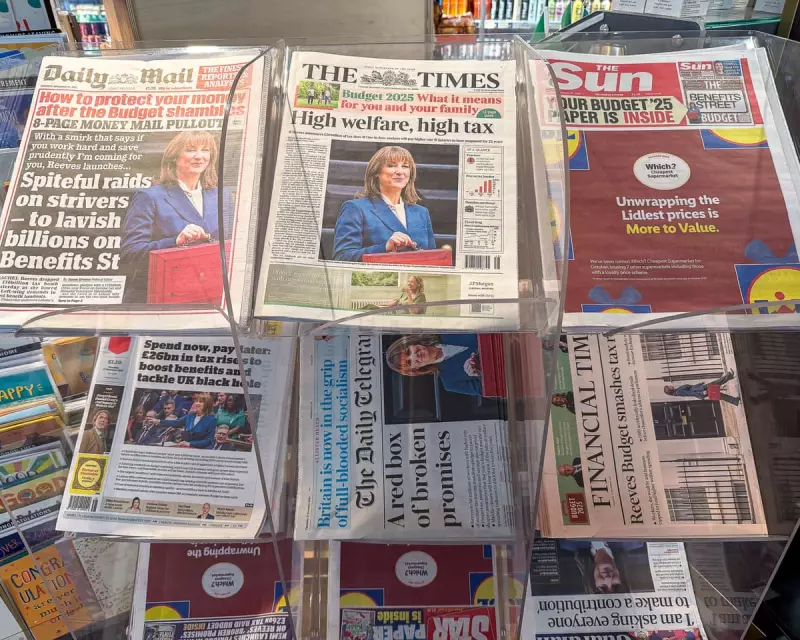
Chancellor Rachel Reeves's first budget has been met with a mixed response, delivering immediate relief to some but facing significant criticism for its short-term focus and missed opportunities for deeper economic reform.
A Budget of 'Jam Today'
Colin Hines, convener of the UK Green New Deal Group, characterises the budget as one of 'jam today', designed to appease bond markets and Labour backbenchers in the immediate term. While acknowledging welcome gains for children and struggling families, he argues that the long-term economic revival craved by businesses and the public will only materialise with government spending on a much larger scale.
In a recent report titled 'A Popular Budget', Hines's group outlined that the government's political survival will depend on funding a massive programme of social and environmental jobs and infrastructure before the next election. This ambitious transformation, he contends, requires the courage to take back control of the economic reins from institutions like the Bank of England and the Office for Budget Responsibility, which often dictate austerity.

Missed Opportunities for a Green Transition
A pivotal opportunity was missed, according to Hines, by not redirecting the tens of billions saved annually by UK residents in Isas, premium bonds, and pensions into a social and green transition. Such an investment could have dramatically reduced the UK's dependence on the bond markets.
The group proposes a nationwide jobs programme focused on a massive project to decarbonise the UK's 30 million homes and improve energy efficiency. This initiative would benefit every constituency, require a diverse range of skills, and have the added advantage of creating jobs resilient to the threat of automation from AI. As Nobel prize winner Geoffrey Hinton observed, AI struggles with physical manipulation, making trades like plumbing a 'good bet'.
Criticism of Tax Fairness and Political Strategy
From Liverpool, Bernie Evans expresses deep disappointment in the budget's predictability. He agrees with analysis that suggests ending the two-child benefit cap was a move to placate Labour MPs and buy the government time, rather than a sign of genuine change. With Labour trailing in opinion polls, Evans warns that tinkering is not enough to avert electoral defeat.
A major criticism centres on tax fairness. Evans points out that the budget allowed 'those with the broadest shoulders' to get away lightly. The government missed a crucial chance to equalise Capital Gains Tax (CGT) with income tax, a reform even Margaret Thatcher's chancellor, Nigel Lawson, advocated for in 1988. According to Tax Justice UK, this move could have raised approximately £16.7 billion a year.
Evans argues that few voters would support a system where wealthy City workers can legally pay lower taxes than teachers and nurses through CGT loopholes. The absence of a wealth tax, windfall taxes on banks, and the freezing of income tax thresholds—which disproportionately affect middle-income earners—lead him to conclude that this was not a truly progressive budget. He starkly predicts that this budget will be remembered not for 'taking from the well-off' but as a key reason Labour loses the 2029 election.






