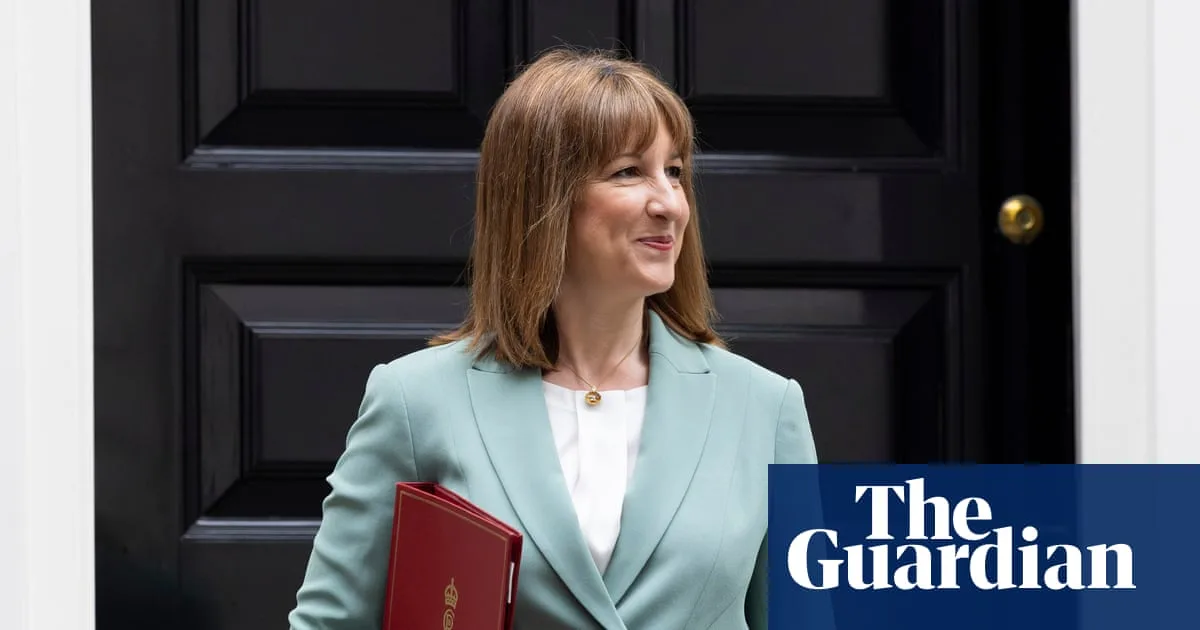
OBR Confirms No Growth Measures in Labour Budget as 650,000 Britons Emigrate
Labour's 'Zombie Economy' Fails to Deliver Growth, OBR Confirms

The UK economy is lurching forward in a state of precarious stagnation, likened by critics to a 'zombie' sustained by inertia rather than vitality. This grim prognosis follows the official confirmation that the Labour government's first major fiscal event contained no significant measures to stimulate growth.

A Budget Devoid of Growth Drivers

The Office for Budget Responsibility (OBR) has delivered a damning assessment, confirming that Chancellor Rachel Reeves' recent Budget included not one policy designed to significantly drive economic expansion. This revelation starkly contrasts with the government's promises of stability and growth, leading opponents to describe the current trajectory as offering 'the stability of a coma, and the growth prospects of a brick'.

The critique centres on a perceived lack of vision and real-world business experience within the Cabinet. Detractors argue the government views profit with suspicion, risk as a failing, and entrepreneurs merely as sources of revenue to fund other priorities. The consequence, they warn, is an environment where businesses become trapped—unable to generate enough profit to invest, yet too fearful of punitive costs to restructure.

Policy Blows to Business Competitiveness

A series of forthcoming policies are compounding business anxiety. A particularly contentious proposal, championed by trade unions and set for a parliamentary vote, involves removing the long-standing caps on compensation awards in employment tribunals for unfair dismissal.

While most disputes are settled out of court, these financial limits form the basis of negotiation. Their removal is expected to make settlement agreements far more difficult and costly. The British Chambers of Commerce has labelled the idea 'hugely damaging', and law firm Lewis Silkin stated it 'does not sound like a recipe for growth'.

For small and medium-sized enterprises (SMEs), the change could be ruinously expensive, discouraging them from dismissing unproductive staff due to the risk of unlimited payouts. In the public sector, the taxpayer would ultimately foot the bill, with funds intended for services potentially diverted to employment lawyers and settlements.

Squeezing the High Street and the Talent Drain

Concurrent pressures are hollowing out Britain's town centres. Labour's planned business rates increases will see a typical shop facing a 45% rise, pubs a 70% hike, and hotels up to 80% higher bills by 2026. This threatens to leave high streets dominated by charity shops and 'To Let' signs.

Perhaps the most telling indicator of economic sentiment is a dramatic talent drain. Official figures show approximately 650,000 Britons emigrated last year, with nearly half aged between 16 and 34. This exodus of young, ambitious talent—seeking destinations seen as more rewarding of enterprise—underscores a growing competitiveness crisis.

Further strain comes from an £11 billion government scheme to compensate those mis-sold motor finance, a sum critics argue the nation can ill afford while essential services and businesses struggle.

The Political Divide on Economic Revival

The government defends its approach, focusing on workers' rights and redistribution. However, the opposition Conservative party frames the situation as a fundamental failure to understand wealth creation. They accuse Labour of being a government of 'bureaucrats, managers and moralisers' who see business as a spreadsheet exercise rather than a real-world endeavour.

Conservatives point to their own unified policy platform as the alternative: promising welfare savings, cheaper energy, and a rollback of diversity mandates in finance to spur growth. They argue recovery will come from cutting red tape, capping waste, and freeing the market to create jobs and opportunity.

The central charge remains that the Labour government believes 'prosperity is a pie to be divided rather than baked'. With the OBR's confirmation of a growth-free Budget, a choked private sector, and a swelling public sector, the fear is that the UK's zombie economy will merely shuffle on until it eventually collapses under its own weight.