Teton County: America's Richest County Where Billionaires Hide in Plain Sight
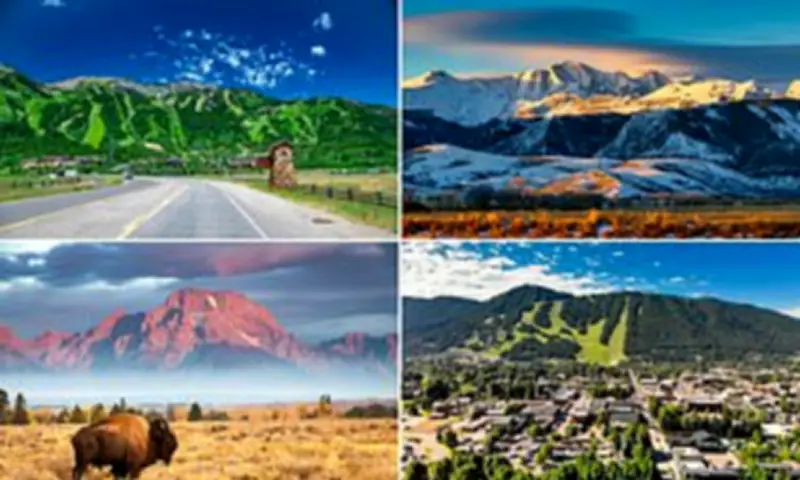
In Teton County, Wyoming, America's wealthiest enclave presents a surprising paradox. Billionaires queue for coffee in faded denim and scuffed boots, driving aging Ford pickups through snow-dusted streets beneath elk-antler arches. This rugged stretch of northwest Wyoming, framed by the Tetons and Snake River, has become the quiet capital of America's new gilded age—where wealth is meticulously camouflaged rather than flaunted.
The Unassuming Billionaires of Jackson
The man waiting in line at the local coffee shop might own a private jet parked at Jackson Hole Airport. The woman in hiking boots could be sitting on a fortune that has multiplied several times over since 2017. Unlike Palm Beach or the Hamptons, where wealth performs openly, Jackson's elite deliberately blend in, wearing trucker hats and walking dogs like ordinary residents.
One of the county's most prominent residents exemplifies this phenomenon. Joe Ricketts, founder of TD Ameritrade, started with $12,500 borrowed from friends and family and built a discount brokerage that transformed retail investing. Today, his estimated net worth stands at roughly $8 billion. Ricketts has donated to conservation efforts, contributed $1 million toward hospital construction, and raised a herd of white bison, yet his wealth has also reshaped local debates.

When neighbors resisted his plan to develop a ranch into a luxury resort—objecting to proposals that could bypass seasonal construction limits protecting wildlife—Ricketts purchased a different $9 million parcel that officials had hoped might become public land. "There is not much we can do to rein that in," admitted Luther Propst, a Teton County commissioner.
Staggering Wealth Concentration
Teton County now ranks as the wealthiest county in the United States on a per-capita basis, with estimated total wealth exceeding $14 billion concentrated among fewer than 10,000 households. The county's top 1 percent of households have an average annual income of about $35 million—221 times that of the bottom 99 percent. The average single-family home price climbed past $7 million last year.
This transformation reflects broader national trends. A New York Times analysis found the richest Americans saw their net worth grow by 120 percent between 2017 and 2025, far faster than the previous decade. The number of U.S. billionaires jumped by roughly 50 percent, surpassing 900. The top 1 percent now control an estimated $55.8 trillion in assets—more than the combined gross domestic product of the United States and China.
Tax Policies Fueling Inequality
Economists trace the acceleration to the 2017 Tax Cuts and Jobs Act, which slashed the corporate tax rate from 35 percent to 21 percent, combined with asset-price surges compounded by pandemic-era market rebounds. According to the Brookings Institution, more than $750 billion of projected tax savings from the 2017 law will flow to the richest 1 percent.
Federal Reserve data reveals the wealthiest 1 percent now own about $25.6 trillion in stocks and mutual funds—roughly the same as the bottom 99 percent combined. During the pandemic's market crash in early 2020, many wealthy investors bought assets at depressed prices, then reaped enormous gains when markets rebounded. UBS reported the world's billionaires added more than $2 trillion to their wealth in just four months after global shutdowns began.
Remote work untethered executives from traditional financial hubs, making Wyoming—with no state income tax and no real estate transfer tax—irresistible. In 2024, Wyoming's conservative Freedom Caucus gained power, approving a 25 percent property tax cut on a home's first $1 million in value and considering legislation to eliminate property taxes altogether.
"Those tax dollars covered personnel and other costs that towns could use at schools, police forces, road and parking maintenance crews, and hospitals," explained Mike Yin, a Democratic state legislator representing Teton County.
Strained Services Amidst Billions
Despite the billions circulating, basic services struggle. Dr. Brent Blue, the county coroner, conducts autopsies in a garage once used to park pest-control vehicles. "I'm not trying to build a Taj Mahal," he said. "I'm trying to build a functional facility."

The county housing director, April Norton, summarized the imbalance: "We've added 4,300 jobs in the last 10 years, but only added 300 year-round residents." Workers commute from Idaho towns like Driggs and Victor, navigating steep mountain passes daily, with some seasonal employees living in their cars.
At Jackson Hole High School, locker rooms and bathrooms lack wheelchair accessibility, students eat lunch in hallways due to overcrowded cafeterias, and teachers leave because of high living costs. Meanwhile, the Jackson Hole Classical Academy, co-founded by the family of late investor Foster Friess, moved into a 75,000-square-foot campus with new athletic fields and laboratories.
Rosie Read, founder of the Wyoming Immigrant Advocacy Project, observed: "I've never seen anything like the explosion of wealth, the influx of wealth in the past five years." She noted immigrants working as housekeepers, dishwashers and landscapers cannot earn the roughly $150,000 annually needed to live comfortably in the area.
The Power of Discreet Wealth
Scott Ellis, a former technology executive and member of Patriotic Millionaires, warned of broader implications: "At some point there's nothing you can spend money on that actually makes your life materially better, so money simply becomes power. The question for us is not how much wealth we want other people to have, but how much power."
Margot Snowdon, a philanthropist living in the county for nearly 50 years, captured the tension: "I remember a friend bragging about us having the highest net worth in the country, and I said to him, 'You know that means we also have the most inequality.' It means we have so much money that people don't have to care if they don't want to."
This tension surfaced during a July rally in Jackson's town square honoring civil rights leader John Lewis, where one sign read: "Let's Take Care of More Hungry Kids Before Billionaires Get More Tax Cuts."
Andrew Munz, who grew up in Jackson and works to revive the Pink Garter Theatre downtown, pays $3,300 monthly for a 495-square-foot townhouse. "I keep caring and honoring my own love for the place, and my own fight to preserve some semblance of my hometown that, hopefully, these new people will value just as much," he said. "That has been the biggest fight of the past decade." Asked whether he felt he was winning, Munz answered simply: "No. I'm losing."