

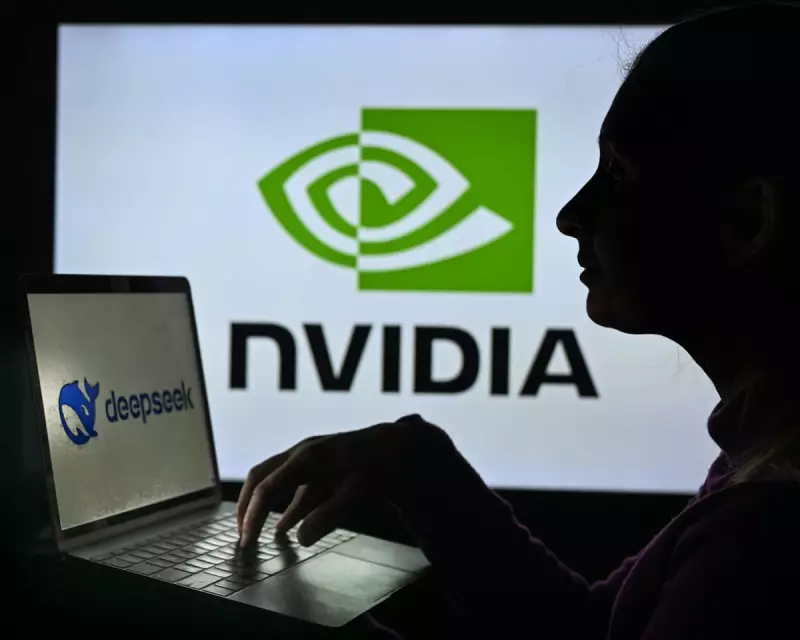
The frenzied investment surge into artificial intelligence, centred on Silicon Valley, is drawing stark comparisons to historic economic bubbles, from the 1849 California Gold Rush to the dot-com boom of the late 1990s. The critical question for analysts and investors is no longer if the AI bubble will burst, but what kind of economic legacy it will leave behind once it does.
From Gold Fever to Chip Fever: A Historical Pattern
Economist Eduardo Porter draws a direct line from the 19th-century prospectors who flocked to California to today's tech investors. Just as the "49ers" rarely struck gold, while suppliers like Levi Strauss made fortunes, today's AI rush sees similar dynamics. Nvidia, selling the essential computer chips, is a modern-day equivalent, its stock price more than doubling between April and November 2023 on AI hopes.
Yet the valuations of many pure AI firms, like OpenAI or Anthropic, are built largely on the dream of achieving superhuman general intelligence. This pattern of "besotted investors in pursuit of a dream" is a hallmark of bubbles throughout history, from Dutch tulip mania to the South Sea Bubble and the more recent housing and dot-com crises.

Defining the Fallout: Dot-Com vs. Housing Crisis
The paramount analytical challenge is determining what flavour of bubble this represents. The consequences vary wildly. The bursting of the US housing bubble ravaged the global financial system, triggering a prolonged recession as mortgage-backed securities collapsed.
In contrast, the dot-com bubble's implosion led to a shallower downturn and ultimately bequeathed the world the modern, productive internet. Gita Gopinath, former chief economist of the International Monetary Fund, has calculated that a stock market crash on the scale of the dot-com bust could erase around $20 trillion in US household wealth and $15 trillion abroad, potentially strangling consumer spending.
The Debt Question and a Shifting Technological Foundation
A key determinant of the potential damage is how the AI investment surge is financed. The housing crisis was fuelled by toxic mortgage debt. Currently, Big Tech has raised nearly $250 billion in debt this year alone, a record, according to Bloomberg. If the bubble is financed by risky borrowing rather than corporate cash piles, a burst could again jeopardise the financial system.
Furthermore, doubts are emerging about the technological foundation of the current boom. Yann LeCun, Meta's former chief scientist and a Turing Award winner, argues that the massive spending on Large Language Models (LLMs) is misguided. He contends that achieving true Artificial General Intelligence will require a shift to "world model" architectures, potentially rendering much of today's investment obsolete.
As with the Gold Rush, the ultimate winners may not be the prospectors, but those selling the tools. The world now watches to see whether the AI frenzy will leave behind a crippled economy, a transformative new technology, or simply a cautionary tale for the history books.






