
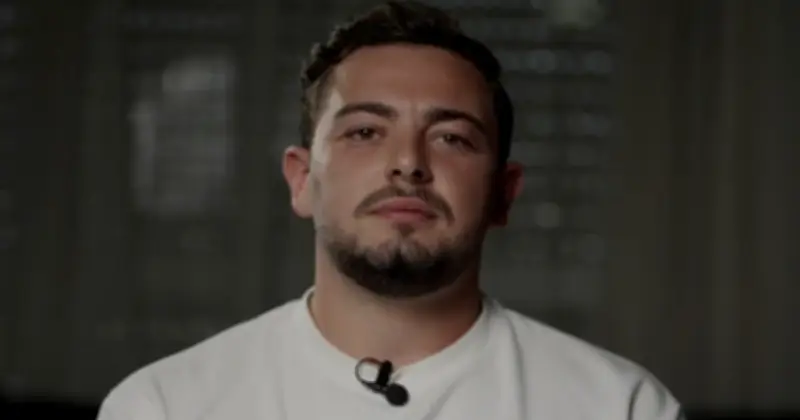
Almog Meir Jan, a former Hamas hostage, has revealed that after 246 days in captivity, he has developed an unshakeable patience. Speaking exclusively to the Express, the 24-year-old Israeli described how his ordeal transformed his outlook on life.
The Day Everything Changed
On October 7, 2023, Almog was attending the Nova music festival in southern Israel. 'It was a beautiful party. There was amazing music. People were just happy, dancing, smiling,' he recalled. At 6:29 am, the music stopped abruptly, and organizers announced an evacuation as Hamas militants attacked.
Almog fled in a friend's car, but gunfire forced them to abandon the vehicle. 'During my running, I heard the bullets whispering inside my ears,' he said. After running about a mile, he hid in bushes and texted his mother, who told him not to be a hero. After 40 minutes, a terrorist found him, grabbed him by the shirt, and said, 'If you want to live, come with me.'
Entering Captivity
Almog was taken to Gaza, where crowds celebrated his capture. He was first held in a dark basement, beaten, and chained. Then, wrapped in a blanket, he was moved again. 'I thought, this is how I am going to die,' he said. Instead, he spent eight months in various locations, eventually held in an apartment in the Nuseirat refugee camp with fellow hostages Shlomi Ziv and Andrey Kozlov.
For the first five days, he was blindfolded with hands tied behind his back, forbidden from speaking to the other hostages. They survived on half a pita bread daily and could use the toilet only once every 24 hours. To maintain his sanity, Almog disconnected from reality but constantly worried about his mother.
Psychological Warfare
His captors used psychological abuse, giving them Arabic names and forbidding Hebrew. They pressured the hostages to convert to Islam, offering better conditions if they cooperated. 'Every time they actually did it, I felt more and more proud to be who I am,' Almog said. Sometimes, captors taunted them with plates of food before taking them away.
One morning, Almog woke to a gun pointed at his head. The captor pulled the trigger, but the gun was unloaded, then laughed. One guard, Abdallah Aljamal, a journalist with ties to Hamas, was deeply unpredictable. 'He had two faces,' Almog said. 'You never knew what you were going to get.'
Learning to Survive
Almog learned to study his captors' moods and sleeping habits. He stopped challenging them during conversations about the war after a punishment left him barely able to stand. 'When I managed to stop doing that, it saved my life,' he said. He focused on cooperation, cleaning and cooking as needed.
To build resilience, Almog practiced gratitude. He reminded himself that many at Nova had been murdered, and he was not in a tunnel. He created a paper calendar, marking each day until his imagined release in two years. 'Every day is a gift,' he repeated. Despite fears of a military rescue, he kept marking the boxes. 'This is faith,' he told a fellow hostage.
Rescue and Aftermath
On June 8, 2024, Israeli forces stormed the apartment, rescuing the hostages in an operation that killed 274 Palestinians, according to Gaza's health ministry. Almog was reunited with his mother and sister. 'It was like I was reborn again,' he said. But two hours after his release, he learned his father had died of a heart attack the night before. 'The first place you go after you came back to life is your father's funeral,' he said.
Almog now uses the perspective he gained in captivity. 'It's really hard to annoy me now,' he said. 'I learned how to be patient.' He recently shared his testimony at the Nova Exhibition in London.




