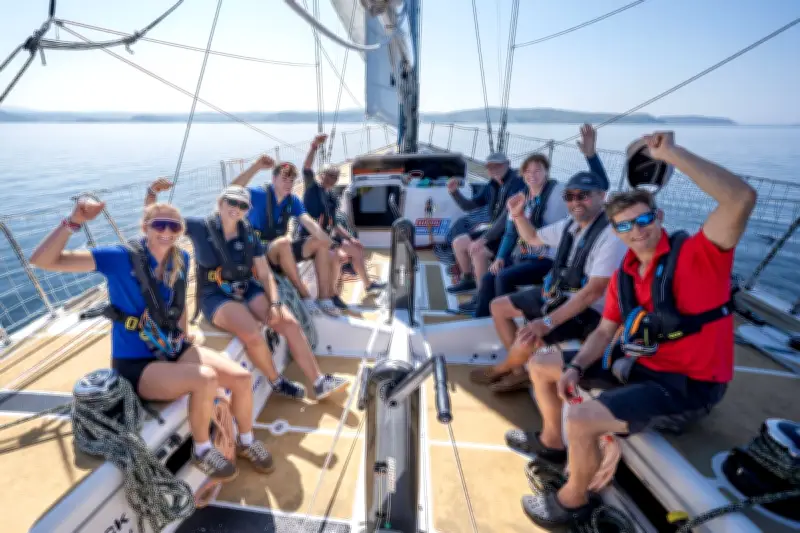
Two Scots taking part in this year’s Clipper Round the World yacht race have spoken of their joy at arriving in Scotland after crossing the Atlantic Ocean. Sue Smith, 67, and Joanne Currie, 56, were among the hundreds of sailors who arrived in Oban, Argyll and Bute, last week, having sailed 3,115 nautical miles from Washington DC in the US.
It marked the end of the 12th stage of the race, which began on August 31 last year when the 10 70ft yachts sailed from Portsmouth on the south coast of England to Puerto Sherry in Spain. It is only the second time the 40,000-nautical mile race has come to Scotland, following its stop-off in Oban in 2024.
The crews were given a warm welcome on arrival, with a piper and cheering spectators, while each sailor was treated to a dram of whisky on reaching shore. The yachts will remain in Oban until Sunday, when they will depart for Portsmouth on the final stage of the 25/26 edition of the race.

Challenging Weather Conditions on the Atlantic Crossing
Ms Smith, from Helensburgh, was part of the Team Scotland crew that made the crossing in just under 16 days – despite some challenging weather conditions. “It was really hot for probably a week, and then the rain started, and it was like day and night, endless rain for about five days, and you were just wet all the time,” she said.
“You’re half thinking it’d be so nice to just put on a dry pair of merino leggings or something. But you know that what is actually going to happen is they’re just going to get wet, so you endure this process of taking off wet clothes, and then four hours later, once you’ve had your sleep, putting these wet clothes back on again. That takes a bit of grit actually because it’s the last thing you want to do.”
Ms Smith, who completed three legs of the previous edition of the race, said the boat then spent a week in “a lot of fog” – before finding itself becalmed in a “windhole” within sight of land. She added there are days when “it’s just quite hard” – but crew members have no choice but to “get on with it”. She said: “It’s just the kind of relentlessness. When it’s a bit rough, well, everything is just so hard to do.”
Emotional Welcome and Dolphin Sightings
The former massage therapist, who joined this year’s race in Washington, spoke of her joy at finally crossing the stage finish line, about two miles off Oban. “We had a great reception,” she said. “There were a lot of boats that had come out to wave and cheer and blow horns. Then we were met by some dolphins leaping about, which was really nice. Then we motored into Oban, and it was just like people in the dock and people shouting. It was great, and the bagpipes were playing, and so I think everyone actually thought, oh, this is good. For me, when I hear the bagpipes, it’s quite emotional sometimes. So the reception was just fantastic.”
This was echoed by Ms Currie, who is originally from Campbeltown in Argyll and Bute but now resides in Falkirk. She also joined the race in Washington, and was on the Power of Seattle Sport boat that made the Atlantic crossing in 16 days, 15 hours. She said of the crossing: “Within the first week I had seen the big wide open skies that I wanted to see, and just experiencing ocean sailing, helming, seeing dolphins and whales. That was fantastic.”
Unexpected Skills and First Sight of Land
She also said she had developed some unexpected skills, like learning to make bread and use a sewing machine to repair sails. She was the first person on her boat to spot land on Friday evening, having been on deck at the time – though soon after she caught sight of the Isle of Mull the boat found itself becalmed in a windhole. “The boat was going really, really slow, but it meant we watched this beautiful sunset,” she said. “We could see Jura, Colonsay, so the scenery was fantastic. (We hadn’t had) phone signal for about two weeks, so everyone was checking their phone to see if we could get phone signal, and we all made the first phone calls or first texts to friends and family.”

She also described the reception on finally crossing the finish line the next morning. “There were a couple of boats with friends and family, so we had a really good reception,” she said. “One boat had a piper on it, which was fantastic. Then, as we came into Oban, there was lots of people in the pontoon, music, pipes, a dram of whisky at 8 o’clock in the morning.”