British holidaymakers might experience some relief from the EU's new Entry/Exit System (EES) during the peak summer travel season, as an official has indicated that requirements could be temporarily eased. However, this relief is not permanent.
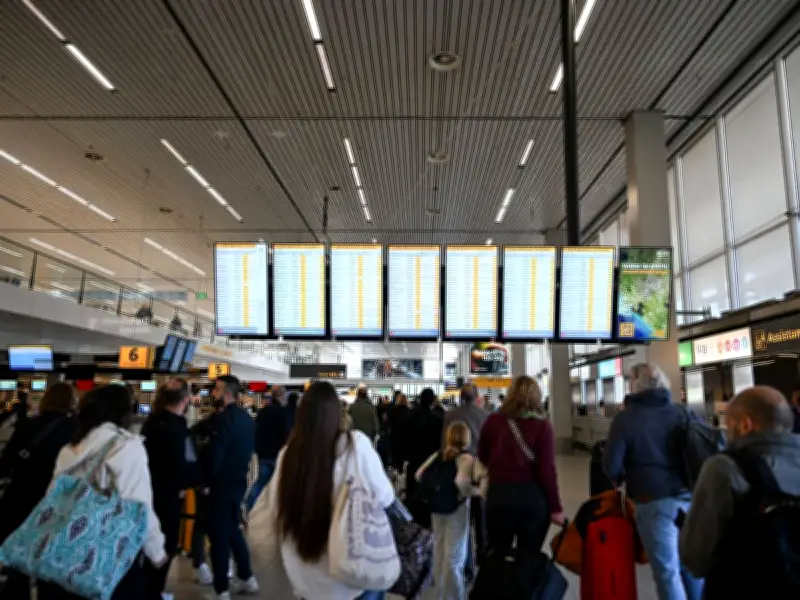
Since the EES was fully implemented on 10 April, there have been widespread reports of significant travel disruptions. Holidaymakers have faced queues lasting up to four hours, leading to missed flights and ruined plans. The system replaces manual passport stamping and requires all Brits entering the Schengen area to provide biometric data, including fingerprints and a photograph.
There have been growing concerns about how the EES will affect travel during the summer holidays, one of the busiest periods for flying. However, an EU official has suggested that European airports could relax EES requirements until September.
Uku Särekanno, Deputy Executive Director of Frontex, which manages the EU's external borders, stated: "The biometric registration, taking fingerprints and facial images, is probably the most challenging part of the entry-exit system rollout." He explained that during peak hours, member states have the option to temporarily lift biometric registration to alleviate long queues. "We have until the end of the summer, the possibility during the tourism season to lift the biometric controls or the biometric registration temporarily," he said.
However, Särekanno clarified that this is a "temporary relief and is ending in September." He added at ABTA's Travel Matters conference that there is "no intention" of further easing, as procedures are expected to be "aligned by that time."
After the summer holidays, it could take up to two years for the EES to operate smoothly. Särekanno noted: "We expect that the situation will stabilise in one or two years, because the most challenging part is the first enrolment." He elaborated that once a significant number of visitors have completed their first enrolment, the process will become much easier.
Despite initial registration, some British holidaymakers have reported being asked to provide biometric details again on subsequent trips. Särekanno acknowledged this issue, stating that it "needs to be corrected" by the border crossing point of the member state. "We are on it and we are trying to ensure that there is a coherent approach to the border procedures," he concluded.