Sky-watchers across the United Kingdom were treated to a breathtaking celestial display as the first Wolf Moon of 2026 rose as a brilliant supermoon. The event provided a dramatic start to the year's lunar calendar, with the full moon appearing larger and brighter than usual against the winter sky.
A Supermoon Spectacle Across the Nation
The supermoon illuminated skies throughout the day, reaching its fullest phase at 10am GMT. However, the most impressive views were reserved for the evening, when the moon appeared largest and most dramatic as it climbed close to the horizon at moonrise. Forecasts of clear skies offered perfect viewing conditions for Brits hoping to catch a glimpse.
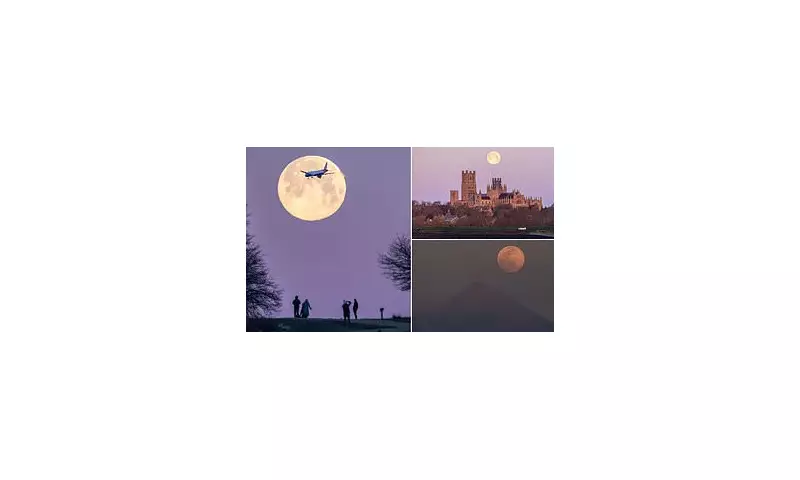
From North Yorkshire to London, photographers captured the event. A charming image from the village of Stokesley showed the supermoon rising over a traditional farmhouse. In Richmond Park, an aircraft bound for Heathrow was silhouetted against the enormous lunar disc. Meanwhile, in Ely, Cambridgeshire, the moon provided a majestic backdrop to the city's historic cathedral.

Last night, sightseers on the London Eye gathered specifically to photograph the capital's full moon, adding to a nationwide collection of stunning snaps.
Global Wolf Moon Gallery
The celestial phenomenon was not confined to British shores. Avid astronomers worldwide shared their own spectacular images. In Baltimore, USA, the supermoon was seen ascending over the city's iconic skyline. Down in Mexico, the Wolf Moon shone beside the active Popocatepetl volcano in Cocoyoc, brightening the hazy night sky.
One particularly surreal photograph emerged from Srinagar, in Indian-administered Jammu and Kashmir, where the full moon appeared perfectly aligned behind the crescent moon symbol atop a mosque's minaret.
The Folklore and Science of the Wolf Moon
The term 'Wolf Moon' for January's full moon is thought to have roots in medieval Europe. It was traditionally believed that wolves howled more frequently during this time due to winter hunger and a scarcity of food. These historical names helped communities track the seasons, with examples like May's Flower Moon and September's Corn Moon.
Scientifically, a supermoon occurs when a full moon coincides with perigee—the point in its elliptical orbit where it is closest to Earth. This proximity makes it appear roughly 14% larger and 30% brighter than a full moon at its farthest point (apogee).
This Wolf Moon marks the fourth consecutive supermoon, following October's Harvest Moon, November's Beaver Moon, and December's Cold Moon. For those who missed it, the next supermoon will not occur until November 2026. Interestingly, 2026 will be a rare year with 13 full moons instead of the usual 12, with two extra full moons occurring in May—a phenomenon that gives rise to the phrase 'once in a blue moon'.