Why Rainy Weekends May Feel Like the New Norm Across the US
Why Rainy Weekends May Feel Like the New Norm Across US

The Memorial Day holiday stretch was the wettest Vermont’s city of Burlington had seen in over 100 years, as many other areas also experienced a near-total washout. While it does not actually rain every weekend, many parts of the southern and eastern U.S. have seen their beach trips and picnics upended this spring due to a spate of weekend storms, making it seem as though each weekend is a washout lately.

Record Rainfall and Social Media Lamentations

The Memorial Day holiday weekend was the wettest Burlington, Vermont, had seen in over a century, according to WCAX. In Beeville, Texas, flooding rain forced water rescues. Many social media users posted desperate messages of woe, lamenting their spoiled fun. “Death. Taxes. Austin Memorial Day Rain,” Texas user @EvilMopacATX wrote on the platform X.

Experts Weigh In on the Driving Factors

Experts do not believe weekends actually attract more rain; it is simply that there is an increased chance of rainstorms this hot and humid time of year — and we may notice the downpour more when it is on a day off. So what is actually driving these Saturday and Sunday storms?

Wide Pickt banner — collaborative shopping lists app for Telegram, phone mockup with grocery list

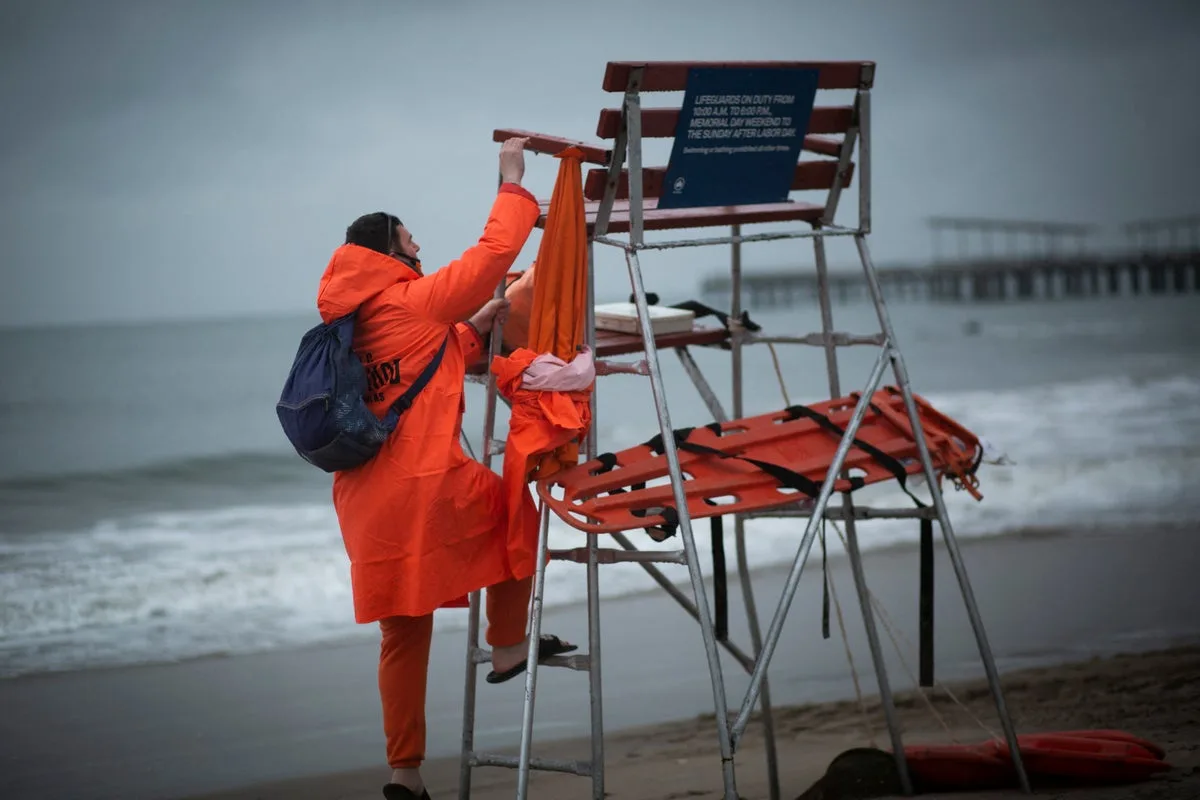
“I believe the issue with rain on holiday weekends is simply luck of the draw,” Steve Decker, an associate professor at Rutgers University, said, explaining the increasingly frequent sight of beach lifeguards in rain gear.

Some have posited on social media that city air pollution, human-caused climate change and even cloud seeding are responsible for the frequent soggy weekends. But the reasons for weekend rain in the U.S. have been different from month to month, AccuWeather senior meteorologist Paul Pastelok told The Independent.

Over Memorial Day weekend, it was an upper-level area of high pressure that produced a lot of moisture. “And so, everything was going from Texas through Missouri, Illinois, Ohio and then getting into the east and even parts of the Southeast ended up getting into a little bit of a rainfall as well,” Pastelok said. In previous weeks, there was a different explanation. The polar jet stream — narrow bands of wind that blow around the planet from west to east — was pushing storm systems from the northeastern Pacific region through the Northwest and into the Ohio Valley. Areas with recent rainy weekends, like the Northeast, were in a “sweet spot,” he explained.

Timing and Climate Change Considerations

“Timing wise, I can’t explain that. It just seems like we got into a funk that everything wanted to come on weekends and spoil things,” said Pastelok. He did not think climate change or air pollution played into the timing or formation of these weekend storms, either. Other experts agreed. “I believe the issue with rain on holiday weekends is simply luck of the draw,” Steve Decker, an associate professor at Rutgers University, said. “Climate change can make rain events heavier when they happen, but that doesn't affect the timing of the rain.”

Past studies had connected vehicle emission pollution to precipitation levels on weekdays and weekends, he noted, but the air has gotten cleaner since then. That said, 44 percent of Americans are living in places with unhealthy levels of ozone or particle pollution, according to the American Lung Association latest “State of the Air” report.

Air pollution can influence the behavior of precipitation, including how much rain falls, John Nielsen-Gammon, the Texas State Climatologist, said. But, “any weekend effect ought to be minor,” he told The Independent.

There is also “no connection” between recent rainy weekends and the impending shift to an El Niño climate pattern, James Booth, a professor at The City College of New York, said. El Niño patterns, which are natural parts of the climate, typically bring wetter and colder weather to the southern U.S. This year’s El Niño is projected to be incredibly strong, although climate change can hamstring predictions and analysis based on past years.

Pickt after-article banner — collaborative shopping lists app with family illustration

Climate Change’s Role in Storm Intensity

While there is a consensus among these experts that air pollution and climate change are not influencing the timing of weekend storms, that does not mean they are not factors in the storms at all. Scientists know that polluting greenhouse gases from fossil fuel combustion – like carbon dioxide and methane – are responsible for warming the Earth’s atmosphere.

A warmer atmosphere can hold more moisture. That leads to an increased chance of storms and heavy rainfall. “Climate change is certainly increasing the upper limit on moisture in storms but that influence is most clear in intense storms and in increasing variability,” Matthew Barlow, a professor of climate science at the University of Massachusetts Lowell, told The Independent.

Where these storms dump may vary, says Nielsen-Gammon. But there is another factor that can make them especially dangerous. They may be more likely to stay in one place for a while. “Add to that changes in the jet stream tend to slow storms down which means they can dump more rain in one place,” noted Tom Rickenbach, a professor of atmospheric science at East Carolina University.