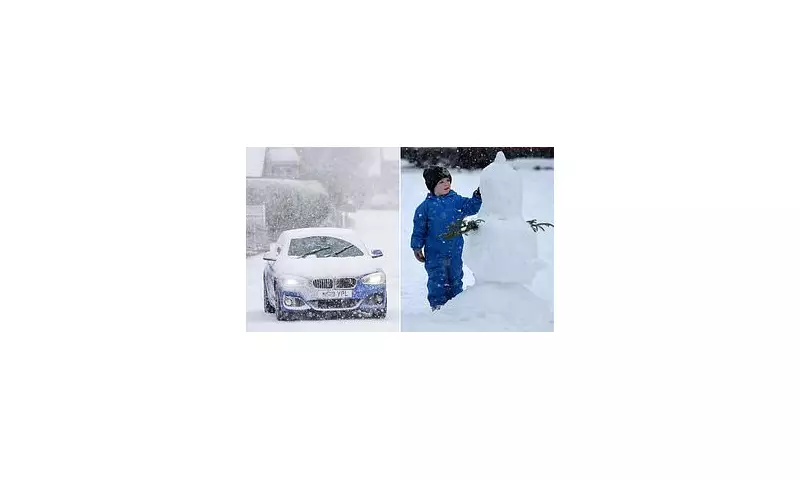
The new year has been plunged into a deep freeze as a severe Arctic blast sweeps across the United Kingdom, bringing widespread snow, ice, and significant travel disruption. The Met Office has issued a swathe of amber and yellow weather warnings, with the coldest conditions expected to persist through the weekend and into next week.
Widespread Warnings and Transport Chaos
Amber snow warnings were in force for Shetland and parts of northern Scotland until noon on Saturday, with the forecaster warning that heavy snow showers could cut off some rural communities and cause power cuts. Nearly all of Scotland above Edinburgh and Glasgow, along with the whole of Northern Ireland, remain under a yellow snow and ice alert until 12pm on Monday.
The severe conditions have already caused major transport issues. ScotRail announced several train cancellations on Saturday, affecting services in Wick and Inverness. Network Rail Scotland reported snow accumulations of around 20cm on some lines in the north, with strong winds causing drifting snow that closed the northbound line at Laurencekirk. Avanti West Coast also warned of blocked lines between Carlisle and Lockerbie, affecting services to Glasgow Central and Edinburgh.

On the roads, the A171 between Whitby and Scarborough saw blizzard conditions, leaving dozens of vehicles stuck and forcing some drivers to abandon their cars. A number of roads in Scotland were also closed due to the hazardous conditions.
Bitter Temperatures and Health Alerts
The UK is shivering under a blanket of Arctic air, with temperatures plunging well below zero. Overnight on Friday, the mercury dropped to -6C in Hurn, Dorset, and -5.7C at Drumnadrochit on the shore of Loch Ness. Daytime temperatures on Saturday struggled to rise above freezing in northern Scotland and remained in low single figures for much of the country.
In response to the prolonged cold spell, the UK Health Security Agency (UKHSA) has issued amber cold health alerts for all regions of England, lasting until 10am on January 9. This level of alert indicates that the weather is likely to have severe impacts across health and social care services, with an expected rise in deaths, particularly among the elderly and those with pre-existing health conditions.
The British Heart Foundation highlighted the specific risks cold weather poses for people with heart problems, noting thousands of additional deaths from heart and circulatory disease occur each winter. Health officials are advising the public to wrap up warm, ensure they have sufficient food and medicine, and heat main living rooms to at least 18C if possible.
Coastal Tragedy and Ongoing Risks
The severe weather was underscored by a tragic incident off the East Yorkshire coast. A major rescue operation was launched near Withernsea on Friday afternoon after reports of people in difficulty in the water. A 67-year-old man was pulled from the sea but died at the scene. A second body was later recovered, and search efforts for one more person were set to resume at first light on Saturday.
Met Office Chief Meteorologist Rebekah Hicks stated: "Arctic air and brisk northerly winds are gripping the UK as we start the new year. Bitterly cold conditions will persist through the weekend and into next week, with daytime temperatures struggling to rise above freezing for some, and overnight lows dipping to minus double figures in places."
The public is urged to stay #WeatherAware, keep up to date with forecasts, and plan journeys carefully due to the high risk of icy roads and slippery surfaces. The Mayor of London, Sadiq Khan, has activated the Severe Weather Emergency Protocol (SWEP) to provide emergency accommodation for rough sleepers as temperatures are set to plummet further.