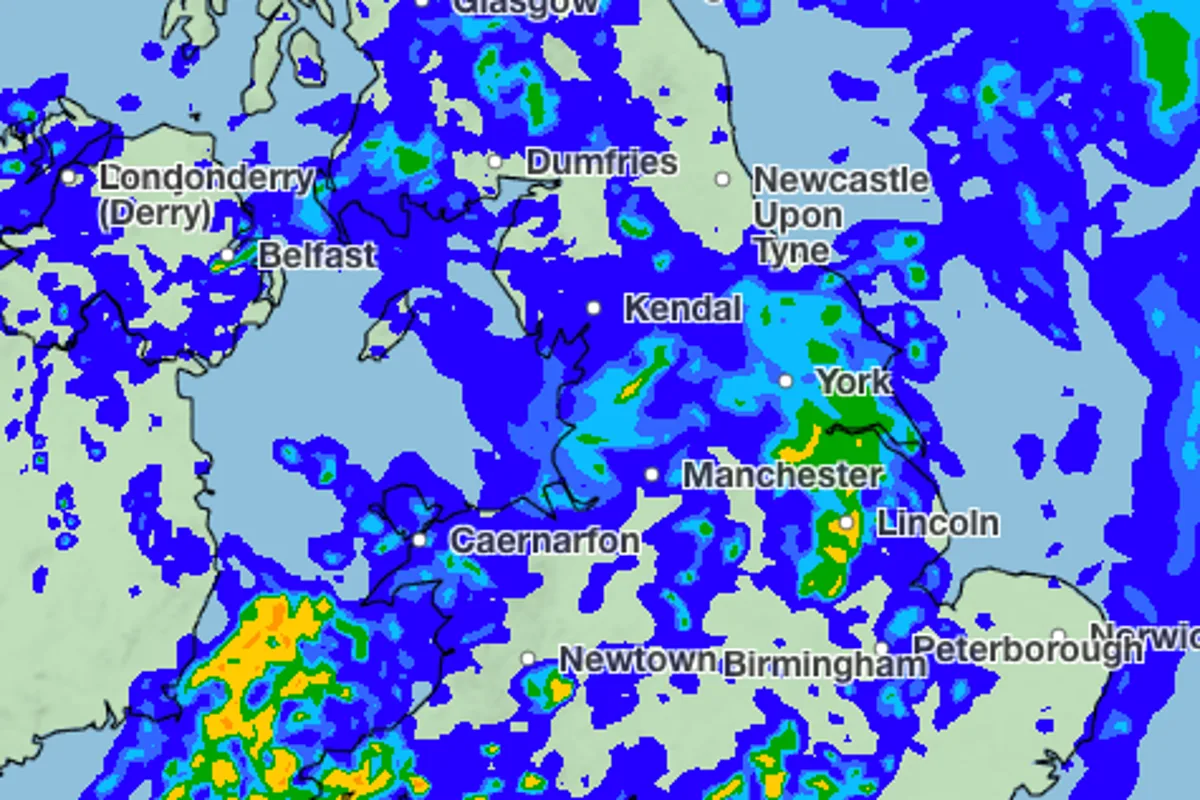
This time last week, Britain was enduring its hottest May day on record as temperatures surged beyond 35C during an unprecedented spring heatwave. Now, however, the UK is experiencing a drenching start to summer, which officially began yesterday, with further heavy rain and thunderstorms forecast in the coming days.
Temperature Drop and Contrasting Conditions
Temperatures are approximately 14C lower in some areas compared to last week, with highs today reaching 19C in the North and 21C in the South—around average for this time of year. While this week marked the beginning of meteorological summer, conditions for many felt more like spring or autumn, a stark contrast to the recent heatwave.
Last Tuesday became the hottest May day for both England and Wales, with 35.1C recorded at Kew Gardens in London and 32.9C at Bute Park in Cardiff. The Met Office has warned that this week will bring thunderstorms, strengthening winds, and heavy rain—a welcome change for farmers and gardeners.
Regional Rainfall and Thunderstorm Forecast
Wales faced particularly heavy downpours yesterday, while the highest rainfall accumulation across the UK was 36.4mm (1.4in) at Shobdon in Herefordshire. Central and southern areas are the main regions likely to experience thunderstorms today, with heavy thunderstorms also forecast anywhere in the UK on Thursday.
Senior operational meteorologist Rebecca Mitchell stated that the rest of the week will bring unsettled weather to the UK, interspersed with some sunny spells and highs in the low 20s Celsius.
Heatwave Aftermath and Tragic Incidents
The cooler weather follows at least 17 deaths during the heatwave, as individuals got into difficulties in bodies of water, prompting emergency services to issue safety alerts. The latest incident involved the recovery of the body of 11-year-old Mackenzie Swift, who entered the River Don near Mexborough in South Yorkshire on Saturday. The alarm was raised when Mackenzie did not resurface, leading to a 48-hour search. South Yorkshire Police confirmed the recovery of a body this morning.
Record-Breaking Spring Temperatures
Yesterday, the Met Office revealed that England and Wales experienced their warmest spring on record this year, partly due to the 'exceptionally early' heatwave. The mean average temperature in England across March, April, and May was 10.41C, surpassing the previous record of 10.23C set in 2025. This marks the third consecutive year a new record has been set for the warmest spring in England.
Wales recorded a mean of 9.73C, pushing 2025 (9.69C) into second place, with 1893 third (9.66C) and 2024 fourth (9.44C). Scotland experienced its eighth warmest spring, and Northern Ireland its joint sixth warmest, while the UK as a whole saw its third warmest spring.
The 'exceptionally early and record-breaking spell of heat at the end of May' contributed to pushing the seasonal mean temperature in England and Wales to its highest level since comparable data began in 1884, according to the Met Office. Amber heat-health alerts were issued for several regions of England, indicating risks to vulnerable people and potential pressure on health services.
Rainfall Deficits and Drought Concerns
Several counties in the South and East of England received only about a third of their average rainfall this spring. Cambridgeshire had 35% of its long-term average, Essex 34%, while Kent and Suffolk both had 33%. There was a clear north-south divide in England, with the north receiving 90% of average seasonal rainfall compared to just 50% across the south.
The Environment Agency announced that a meeting of the National Drought Group will be held in the coming weeks to assess the impact of the heatwave.